
Curated by Vishaljeet Singh, Lisbon, Portugal
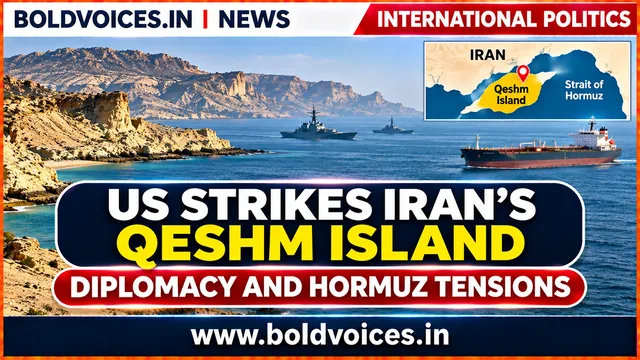
Reuters reported that US forces carried out limited strikes on Iran’s Qeshm Island, citing US officials. The Associated Press separately reported that the United States struck Iranian targets near the Strait of Hormuz and that explosions were reported on Qeshm and Hengam islands and near Bandar Abbas. US officials described the operation as defensive, saying it targeted Iranian forces using surface-to-air missiles against US assets. Iranian state media also reported explosions on Qeshm late on Monday, November 2.
The strikes have renewed questions about the risk of escalation in the Gulf. They also come at a sensitive moment, as Washington and Tehran are exploring diplomatic options to end the conflict. US Vice-President JD Vance has expressed optimism about the prospects for a negotiated settlement, while Iran says Washington must address its demands before an agreement can be reached.
What happened on Qeshm Island?
Qeshm is Iran’s largest island and lies close to the Strait of Hormuz, one of the world’s most important maritime chokepoints. US officials described the latest operation as limited defensive action against Iranian forces using surface-to-air missiles against American assets. A US official also told reporters that the strikes followed fire directed at a US aircraft.
Iran’s state news agency IRNA reported explosions on the island. Reports also described blasts near the coastal area of Bandar Lengeh. Publicly available details about the precise targets, damage and any casualties remained limited at the time of reporting. The US officials said the action did not represent a return to major combat operations.
Why Qeshm Island is strategically important
Qeshm sits beside the Strait of Hormuz, which connects the Persian Gulf with the Gulf of Oman and the wider Indian Ocean. The narrow passage is vital for international energy trade: a substantial share of the world’s seaborne oil and liquefied natural gas normally passes through it.
Its location gives the island importance for monitoring maritime movement and for military operations around the waterway. Any confrontation near Qeshm can therefore affect not only Iran and the United States, but also commercial shipping, energy markets and countries that depend on Gulf exports.
Washington calls the operation defensive
US officials have characterised the strikes as a response to threats against American assets, rather than the beginning of a new large-scale campaign. The distinction is significant because the Trump administration has been balancing military pressure with efforts to negotiate an end to the conflict.
The Pentagon referred questions about the operation to US Central Command. At the time of the initial reports, Central Command had not publicly provided a detailed account of the targets or the results. The full operational picture therefore remains incomplete.
Iran keeps the Strait of Hormuz at the centre of the dispute
Tehran has made the security and control of the Strait of Hormuz a central part of its position in the wider confrontation. Shipping through the waterway has been severely disrupted, with reports of attacks on commercial vessels and concerns about mines and other maritime threats.
Iran has indicated that it could consider reopening the waterway and resuming nuclear negotiations if Washington addresses its conditions. These include demands connected to the US naval blockade, sanctions and a broader ceasefire arrangement. The two governments have not announced an agreement on these terms.
Diplomacy continues despite the strikes
Vice-President JD Vance has said that Washington sees progress in indirect discussions with Iran and remains hopeful that a negotiated settlement is possible. Qatar has been involved in mediation efforts, while regional governments are concerned that renewed military action could destabilise the Gulf further.
The latest strikes underline the fragile nature of the diplomatic process. Military action may be presented by Washington as a limited response to an immediate threat, but Tehran could interpret it as evidence that pressure will continue while negotiations are under way.
Possible consequences for oil and global trade
Even limited military action near the Strait of Hormuz can influence energy markets because traders and shipping companies must account for the possibility of further disruption. Oil prices moved higher in early Asian trading after reports of the Qeshm strikes, reflecting renewed concern about supply risks.
For import-dependent economies, including many in Asia, a prolonged disruption could increase energy costs, freight charges and insurance premiums. The effects would extend beyond crude oil to petrochemicals, liquefied natural gas and other goods transported through the Gulf.
What happens next?
- Whether Washington provides further details about the targets and outcome of the Qeshm operation.
- Whether Iran responds militarily or continues to use diplomatic channels.
- Whether mediators can narrow differences over the naval blockade, sanctions and the Strait of Hormuz.
- Whether commercial shipping can resume more predictable passage through the waterway.
- Whether the latest incident changes the US position on a wider ceasefire or future military action.
A dangerous balance between force and negotiation
The Qeshm Island strikes illustrate the difficult balance facing Washington and Tehran: both sides are signalling military resolve while leaving the door open to diplomacy. The immediate operation has been described by US officials as limited, but the strategic risks remain considerable because it took place beside a waterway essential to global energy and trade.
The next phase will depend on whether diplomatic contacts can produce practical commitments on maritime security and the wider conflict. Until then, the Strait of Hormuz is likely to remain a focal point for military calculations, energy-market uncertainty and international diplomacy.
#Iran #UnitedStates #QeshmIsland #StraitOfHormuz #MiddleEastCrisis #USForeignPolicy #JDVance #Geopolitics #InternationalPolitics #GlobalEnergy #WorldNews


