
Curated by Vishaljeet Singh, Lisbon, Portugal
Updated: Sunday, 1 November 2026, 1:34 PM IST
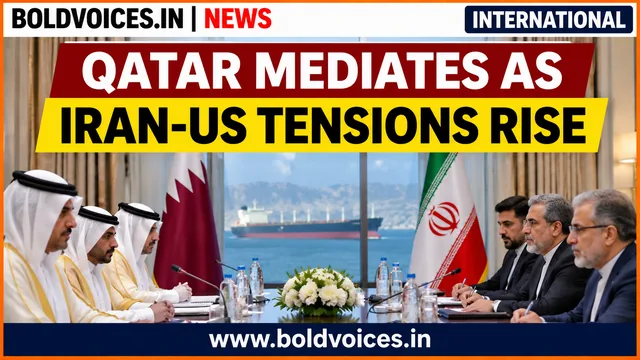
Latest diplomatic update — Sunday, 1 November 2026, 1:34 PM IST: Iranian Foreign Minister Abbas Araghchi told Al Jazeera that consultations with Qatari mediators had reduced the proposed implementation period for Iran’s plan to reopen the Strait of Hormuz from five days to two. The timetable is conditional on the United States meeting Tehran’s demands; it is not a confirmed reopening or an agreement accepted by Washington. Araghchi said Iran’s conditions include lifting sanctions imposed after the Islamabad memorandum, reducing US forces in the region, restoring oil waivers, releasing frozen Iranian funds, and recognising shipping routes discussed with Oman while closing other routes. He said reopening on those terms could allow talks with Washington on outstanding issues. Al Jazeera’s 1 November live coverage repeated the two-day proposal, while the outcome of mediation remained unresolved.
The diplomatic activity comes at a particularly sensitive moment. US President Donald Trump has not announced a decision to launch fresh military action, but his administration has maintained that military options remain available. Iran, meanwhile, has warned that any renewed attack would trigger a forceful response. Qatar is attempting to bridge the widening gap between the two sides before diplomatic channels collapse and the Gulf region faces another dangerous escalation.
Iran’s Hormuz proposal moves to a two-day implementation window
Araghchi’s remarks mark a revision to the implementation timetable. He said Qatar had proposed five days, while Tehran had reached a proposal to reduce the implementation period to two days. The timetable would begin only if Washington accepted the stated conditions. The announcement describes Iran’s offer; it does not mean the Strait of Hormuz has reopened or that a deal has been agreed.
The conditions remain substantial: lifting sanctions imposed after the Islamabad memorandum, reducing US military forces in the region, restoring oil waivers and releasing frozen Iranian funds, including those held in Qatar. Iran also wants recognition of shipping routes it discussed with Oman and closure of other routes. Iran’s security chief Mohsen Rezaei has said seven conditions must be fulfilled before diplomacy can proceed. These are Tehran’s demands, not concessions accepted by Washington.
The disagreement is therefore not simply about whether negotiations should take place. It concerns the order in which concessions must be delivered and which side should take the first meaningful step.
Washington wants nuclear issues addressed from the beginning
The nuclear programme remains one of the most difficult obstacles. Washington wants Iran’s nuclear activities to form part of negotiations from the outset. The United States is seeking arrangements that address international concerns about uranium enrichment, nuclear transparency and the future monitoring of Iranian facilities.
Tehran has resisted making nuclear concessions before receiving assurances that the United States will change its approach to economic restrictions and maritime pressure. This difference in sequencing has repeatedly complicated diplomatic initiatives.
For Washington, an agreement that does not address nuclear concerns could leave the central strategic dispute unresolved. For Tehran, entering negotiations without first obtaining practical relief would risk repeating earlier diplomatic experiences in which promises did not translate into lasting economic benefits. The two sides therefore face a fundamental trust problem. Each wants the other to demonstrate good faith before making concessions that could weaken its negotiating position.
Strait of Hormuz becomes a central bargaining issue
The Strait of Hormuz is another major element of the negotiations. The narrow waterway connects the Persian Gulf with the Gulf of Oman and the Arabian Sea. It is one of the world’s most important routes for international energy transportation, making its security a concern for oil-producing countries, importing economies and commercial shipping operators.
Iran’s proposal links the restoration of normal maritime passage to specific US concessions. Tehran has called for an end to restrictions affecting Iranian ports and for the creation of an arrangement under which shipping through the strait would follow a route backed by Iran. Foreign Minister Abbas Araqchi has described Iran’s proposal as the available framework for reopening the waterway.
The United States, however, is unlikely to accept an arrangement that could give Tehran decisive control over international commercial navigation. Freedom of navigation through an internationally important shipping corridor is not merely a bilateral issue between Washington and Tehran. It affects countries across Asia, Europe and the wider global economy. Any arrangement that changes access conditions could influence shipping costs, insurance premiums, energy prices and the confidence of international trading companies.
Trump keeps military options open
US Secretary of State Marco Rubio said on 31 October that President Trump had not decided whether to resume military strikes against Iran. Rubio indicated that the administration would prefer a diplomatic solution, while also emphasising that the United States retained the capability to act militarily if required.
The comments reflect the administration’s attempt to keep pressure on Tehran while allowing negotiations to continue. The timing is politically sensitive because the United States is approaching its midterm elections. The possibility of renewed military action after the vote has become a major concern for governments across the Gulf.
Regional countries fear that another round of US strikes could produce Iranian retaliation against American facilities, Israeli interests and strategic infrastructure in neighbouring states. Such an escalation could quickly extend beyond the original military targets.
Iran raises military readiness and warns of retaliation
Iran’s Supreme Leader Mojtaba Khamenei has instructed the country’s armed forces to remain prepared for possible attacks. A statement issued on 31 October warned that threats would receive an immediate and forceful response. Iranian officials also indicated that military readiness had been strengthened along the Gulf coast, around the Strait of Hormuz and the Gulf of Oman, as well as near the country’s northwestern and southeastern borders.
Tehran has repeatedly warned that renewed attacks could lead to retaliation against US and Israeli interests in neighbouring countries. These warnings are particularly concerning for Gulf governments that host American military installations or maintain close defence partnerships with Washington.
The risk is not limited to direct military exchanges. Energy infrastructure, ports, shipping routes and other critical facilities could also face heightened security threats if the conflict expands.
Why Qatar has become an important diplomatic channel
Qatar has developed a significant role as an intermediary in regional and international disputes. Its diplomatic relationships, geographical position and ability to maintain communication with competing sides have allowed Doha to act as a channel for negotiations when direct engagement becomes difficult.
In the current crisis, Qatar’s challenge is especially complicated because it must maintain communication with both Washington and Tehran while addressing the security concerns of other Gulf countries. Doha is not negotiating in isolation. Regional governments have also been involved in wider diplomatic efforts to prevent the conflict from spreading.
Saudi Arabia, Pakistan and Turkey have participated in discussions with Iranian officials in recent days, reflecting growing concern that another round of fighting could destabilise the wider Middle East. For Qatar, a successful interim arrangement would reduce the immediate threat of escalation and provide an opportunity for more comprehensive negotiations.
The wider economic consequences of another escalation
The economic stakes extend far beyond the Gulf. A renewed military confrontation could disrupt energy exports, increase uncertainty around maritime transportation and place additional pressure on already sensitive international markets.
Oil-importing economies would be particularly exposed to prolonged disruption around the Strait of Hormuz. Higher energy costs could feed into transportation, manufacturing, electricity generation and consumer prices. Shipping companies could also face higher insurance costs or reconsider routes if military activity increases near major commercial corridors.
The consequences would be especially serious if the conflict affected both the Strait of Hormuz and other strategic waterways connecting the Middle East with international markets. For countries dependent on imported energy, the priority is therefore not simply preventing a wider war but ensuring that commercial navigation remains safe and predictable.
What happens next?
The immediate diplomatic question is whether Qatar can persuade Washington and Tehran to accept a limited confidence-building arrangement. The most difficult issues remain the sequencing of sanctions relief, restrictions on Iranian ports, nuclear negotiations and the future operating arrangements for the Strait of Hormuz.
Neither side has publicly indicated that it is ready to abandon its core demands. The next few days could therefore prove decisive. If the mediators fail to narrow the differences, military uncertainty may increase as the US midterm elections approach and Iran maintains its heightened state of readiness.
For now, diplomacy remains active, but a breakthrough has not been secured. Qatar’s efforts represent an important opportunity to prevent renewed fighting, although the gap between the American and Iranian positions remains substantial.
#Iran #UnitedStates #Qatar #MiddleEast #IranUSRelations #Diplomacy #StraitOfHormuz #GulfSecurity #DonaldTrump #Geopolitics #InternationalRelations #WorldNews #BoldVoices


