
24 November 2026 · Team of Boldvoices
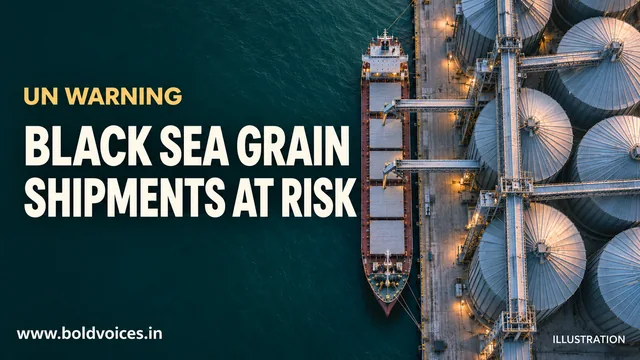
The World Food Programme warned the UN Security Council on Monday that about 10 million tonnes of Russian and Ukrainian wheat could fail to reach global markets this year as attacks disrupt Black Sea shipping. At the same briefing, UN political affairs chief Rosemary DiCarlo said Russian strikes on Ukraine’s electricity, water and heating systems were leaving civilians exposed as winter approaches. The two warnings show how the war is disrupting essential supplies inside Ukraine and well beyond it.
What the World Food Programme reported
WFP Executive Director Luke Lindberg told the Council that 63% fewer vessels carrying wheat and maize were passing through the Bosphorus as of mid-October, compared with the same point in 2025. The figure measures vessels carrying those two crops. WFP’s separate estimate of 10 million tonnes concerns wheat that could miss global markets over the full year.
A shipping disruption can raise the cost of food even when grain is available. A delayed cargo can force an importer to buy elsewhere, pay more for transport or draw down stocks while waiting for the next shipment. Lindberg singled out Somalia, where parts of the country face a risk of famine, and Yemen, which he said imports 90% of its food. In places where households already struggle to afford basics, higher costs leave less room to absorb another shock.
Why the threat extends beyond Ukrainian ports
Commercial ships flying the flags of several countries have been caught up in recent Black Sea incidents. Romanian authorities reported drone strikes on four commercial vessels near the Sulina canal between 13 and 15 November. On 16 November, a Somali-flagged vessel carrying wheat sank off Bulgaria after a reported drone strike. Responsibility for those incidents remained unconfirmed in the reporting reviewed.
At the Council, Russia’s deputy UN representative accused Ukraine of targeting Russian export infrastructure and civilian shipping. Those were Moscow’s allegations. The WFP focused its briefing on keeping civilian crews safe and getting food to people who depend on imports.
Ukraine’s winter emergency goes beyond electricity
DiCarlo said Russian attacks had reached a wider range of infrastructure in recent weeks, from power generation and transmission to water and heating systems, railways, warehouses and agricultural facilities. A damaged transmission network can leave homes without electricity even when a power station is still operating. Disruptions to water and heating can compound the impact of the same outage. The UN said the attacks were driving humanitarian needs far beyond the front lines.
What the UN meeting could lead to
Latvia, which holds the Security Council presidency this month, initiated the briefing with support from Liberia and Panama. Lindberg said the WFP was ready to help facilitate humanitarian grain shipments from both Russia and Ukraine. He called for clear coordination among the parties. That was a proposal for moving humanitarian cargo, and the briefing did not announce an agreed shipping mechanism.
The next signs of progress would be a publicly agreed arrangement for humanitarian shipments, evidence that more grain vessels are getting through, and confirmation that Ukrainian communities are regaining reliable heat, water and electricity. Those measures would show whether the diplomatic discussion is improving conditions for the people affected.
#BlackSea #Ukraine #UnitedNations #FoodSecurity #Geopolitics


