
Curated by Vishaljeet Singh, Lisbon, Portugal
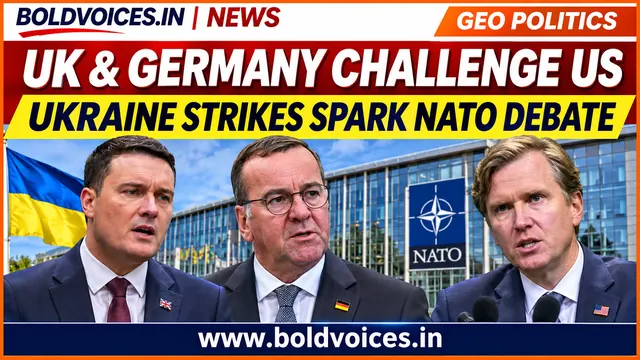
A disagreement between Washington and two of its closest European allies has brought Ukraine’s military strategy into sharper focus. At NATO headquarters in Brussels on 17 November, Britain and Germany challenged a senior Pentagon official’s criticism of Ukrainian long-range strikes inside Russia. The exchange raised questions about military priorities, European security and the future of Western assistance to Kyiv.
The dispute concerns which military operations are most effective, how escalation risks should be managed and how limited resources should be allocated.
What happened at the Brussels meeting?
The disagreement emerged during a meeting of the Ukraine Defence Contact Group, a coalition coordinating military assistance for Ukraine.
US Under Secretary of Defense for Policy Elbridge Colby questioned the effectiveness of attacks deep inside Russian territory, particularly those involving oil infrastructure and commercial facilities. He argued that such operations had not demonstrated an ability to end the war or halt Russian advances.
Colby also warned that attacks affecting civilian-linked infrastructure could strengthen public resistance within Russia and increase Moscow’s willingness to escalate. His preferred approach was to concentrate military assistance on protecting Ukraine’s front lines and operations against Russian logistics directly supporting battlefield activity.
Colby’s criticism concerned the strategic value and consequences of particular categories of attacks, not a blanket rejection of Ukraine’s right to defend itself.
Germany responds
German Defence Minister Boris Pistorius disagreed with the American assessment. He argued that operations against strategically important military facilities and infrastructure supporting Russian military activity should not be dismissed. He also emphasized continuing Russian attacks against Ukraine’s electricity, water and heating infrastructure.
For Germany, the broader context matters: Ukraine is defending itself against an invasion while attempting to reduce Russia’s ability to sustain military operations. The usefulness and legality of any individual strike nevertheless depend on its target, circumstances and consequences.
Britain’s position
British Defence Secretary Wes Streeting supported Ukraine’s use of long-range capabilities, arguing that strikes against Russian military capabilities had helped weaken its war effort and given Ukrainian forces additional time.
Britain has also worked with Germany on defence cooperation. Earlier this month, the governments reaffirmed plans to develop precision-strike systems with ranges exceeding 2,000 kilometres within the decade. That separate programme is not an announcement that these systems are being supplied to Ukraine.
Why are the US and European assessments different?
Washington’s argument emphasizes defending territory, disrupting battlefield logistics and avoiding operations that could increase Russian public support for the war. Britain and Germany emphasize the potential benefits of striking military capabilities beyond the immediate front line, including infrastructure sustaining operations.
Both approaches involve trade-offs. A strike on a distant military facility might damage supply capacity without producing an immediate battlefield change. Concentrating exclusively on frontline defence might leave other elements of Russia’s military system less exposed. Reliable evidence about targets, damage, replacement capacity and battlefield consequences is needed to judge effectiveness.
Is NATO facing a serious division?
The disagreement is significant but does not establish a formal NATO policy split or a breakdown in the alliance. The Ukraine Defence Contact Group coordinates assistance among supporting countries; its discussions are not identical to NATO’s collective decision-making.
The debate highlights the difficulty of coordinating military support among governments with different assessments of escalation, defence priorities and political responsibilities. European countries and Canada have assumed a greater role in financing arms purchases for Ukraine, increasing their importance in future assistance decisions.
Ukraine’s response and international law
Ukraine maintains that its long-range operations respond to Russia’s continuing attacks. Ukrainian Defence Minister Yevhenii Khmara defended Kyiv’s approach and indicated an intention to expand deep-strike capabilities.
International humanitarian law applies to both sides. Civilian objects cannot lawfully be attacked merely to pressure a population. Military objectives must be distinguished from civilian infrastructure, and attacks must comply with rules on proportionality and precautions. These distinctions matter when assessing refineries, warehouses, transport systems and other facilities with potentially mixed uses.
What does this mean for peace negotiations?
Washington has pursued efforts to bring Russia and Ukraine toward a negotiated settlement, while US officials have warned that fighting could continue through winter. European governments are concerned that any settlement should include credible security arrangements and avoid renewed aggression.
Military capabilities can influence negotiating positions, but neither approach has been demonstrated to produce an acceptable peace agreement on its own. The challenge remains securing an end to hostilities that parties can implement and sustain.
Implications for India
India is not involved in NATO military planning, but the conflict affects Indian interests. Disruptions to Russian energy infrastructure and international sanctions can influence global supply conditions, shipping and prices. Actual effects on Indian import costs depend on market conditions and purchasing arrangements.
India also maintains important relationships with Russia, the United States, Britain and European countries. The war’s lessons about drones, air defence, precision weapons and supply chains are relevant to Indian defence modernization. Prolonged fighting can affect international trade, inflation and food security.
For New Delhi, maintaining strategic flexibility while supporting diplomatic efforts toward a durable resolution remains important.
What happens next?
Attention will focus on whether Washington adjusts military assistance priorities, whether European governments expand support for long-range capabilities and whether diplomacy makes measurable progress toward a ceasefire or broader settlement.
The Brussels disagreement demonstrates an active debate among Ukraine’s supporters. It does not establish that NATO’s wider commitment to European security has changed.
#UKPolitics #Germany #UkraineWar #NATO #RussiaUkraineWar #USForeignPolicy #EuropeanSecurity #Geopolitics #InternationalRelations #IndiaForeignPolicy #WorldNews #BoldVoices


