
10 November 2026
Curated by Vishaljeet Singh, Lisbon, Portugal
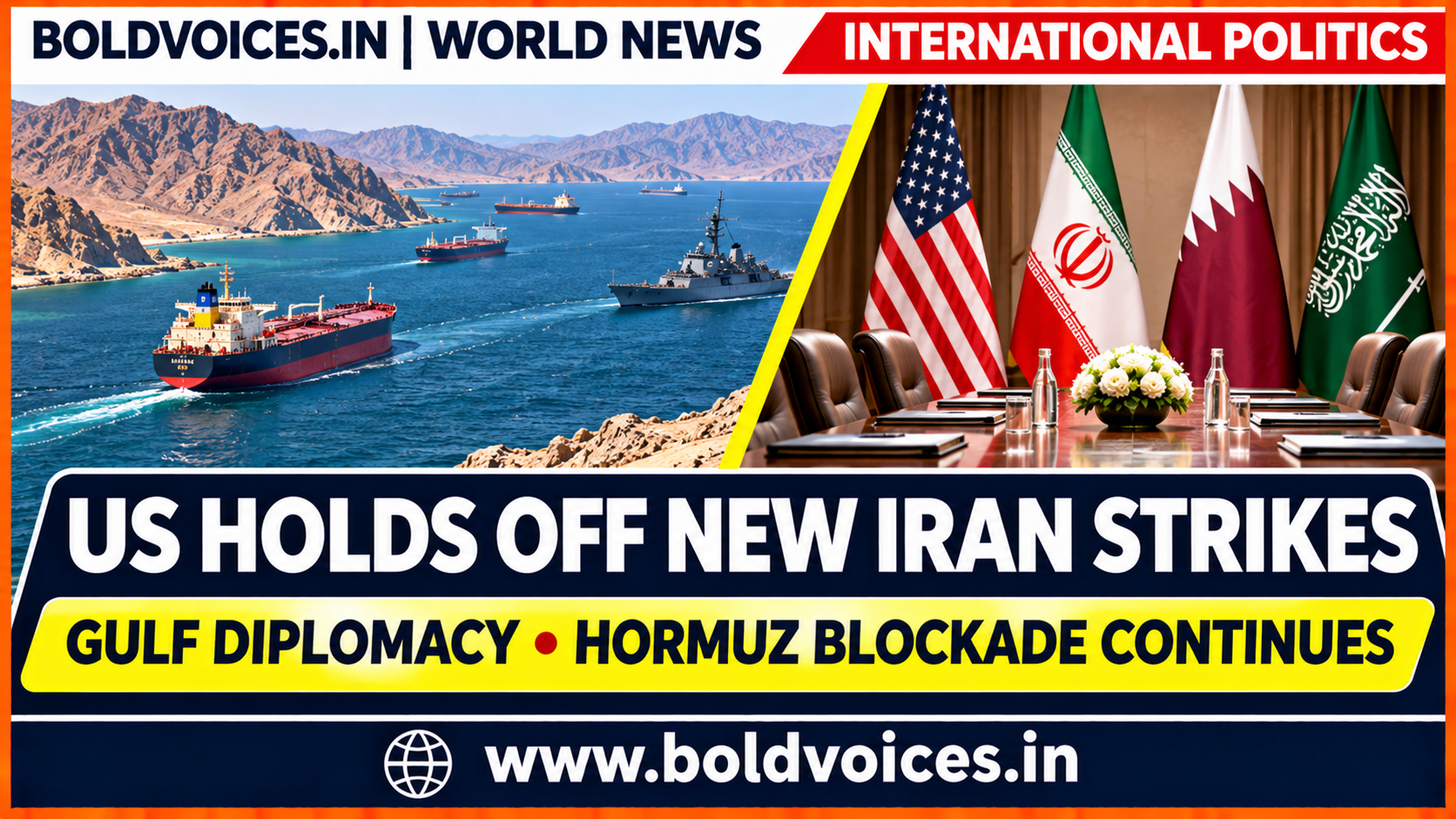
US President Donald Trump says Washington will hold off on launching fresh military strikes against Iran for the time being, following appeals from Gulf and other regional governments to give diplomacy more room. The decision signals a temporary pause in the prospect of renewed US attacks, but it does not amount to a ceasefire or a settlement of the nearly nine-month conflict.
Trump made the comments after meeting Qatari Prime Minister Sheikh Mohammed bin Abdulrahman Al-Thani at the White House on 9 November. He said countries including Qatar, Saudi Arabia, the United Arab Emirates, Bahrain and Kuwait preferred that the United States avoid another round of attacks. The US, however, plans to maintain its naval blockade connected to the Strait of Hormuz, keeping pressure on Iran even as diplomatic contacts continue.
Why Washington is holding back from fresh strikes
Regional leaders have warned that another major escalation could widen the conflict, endanger shipping and energy infrastructure, and destabilise neighbouring countries. Qatar has played a key intermediary role between Washington and Tehran, with its prime minister travelling to Iran before meeting Trump.
Saudi Arabia, the UAE, Bahrain and Kuwait also have direct security and economic interests in preventing a wider confrontation. The Gulf region contains critical energy facilities and shipping routes. A prolonged disruption around the Strait of Hormuz could affect oil and gas movements, insurance costs, freight schedules and energy prices well beyond the Middle East.
Trump’s decision is therefore a diplomatic opening, but not evidence that the two sides have reached common ground. US officials have cautioned that a breakthrough is not imminent, and Secretary of State Marco Rubio has described Iran’s current conditions as unacceptable to Washington.
The Strait of Hormuz blockade remains a major pressure point
Although Trump says new strikes will be held back for now, the US naval blockade remains in place. This distinction is important: a pause in fresh attacks does not remove the economic and strategic pressure created by restrictions on Iranian maritime trade.
The Strait of Hormuz is one of the world’s most important energy chokepoints, linking the Persian Gulf with the Gulf of Oman and international shipping routes. Any prolonged disruption can affect tanker movements, crude oil and liquefied natural gas deliveries, marine insurance and freight costs. The conflict has already heightened concern over attacks on commercial vessels in and around the Gulf.
Reuters reported that attacks on tankers in the Gulf and the Strait of Hormuz had increased sharply in October and continued at a high rate. Iran has also said that a tanker struck a mine east of the strait. These developments underline why regional governments are pressing for de-escalation even while the naval and economic confrontation continues.
What Iran wants in return
Iran’s proposal for ending the conflict includes an end to the US blockade of its ports, the lifting of some sanctions and a halt to bombing. In return, Tehran says it would stop its own blockade of the Strait of Hormuz, with negotiations on its nuclear programme and other sanctions to follow at a later stage.
Washington has rejected the proposal in its current form. The two sides remain divided over the sequence of steps, the scope of sanctions relief, maritime access and the nuclear issue. Iran’s leadership has also insisted that the United States accept conditions Tehran has repeatedly presented as the basis for ending the war.
The disagreement is not only about whether hostilities should stop. It is also about what security and political arrangements would follow, how compliance would be monitored and whether either side would retain leverage during negotiations.
Regional diplomacy is intensifying
Qatar’s role is especially significant because it maintains channels with both Washington and Tehran. Its prime minister’s meetings are part of a broader diplomatic effort involving Gulf governments that fear the conflict could spill across borders or disrupt vital economic infrastructure.
Turkish President Recep Tayyip Erdoğan has also urged Trump to avoid renewed escalation, arguing that dialogue and diplomacy remain possible. The combined pressure from regional capitals shows that governments near the conflict are seeking to prevent a return to wider military operations, even though their preferred end-state may not be identical.
United Arab Emirates presidential adviser Anwar Gargash has warned that a comprehensive political settlement appears difficult and that the region may face a prolonged period of uncertainty. That assessment reflects the gap between the immediate goal of stopping attacks and the much harder task of resolving the underlying disputes.
Why a diplomatic breakthrough remains uncertain
There are several obstacles to a quick agreement:
- Different conditions: Iran wants the blockade and bombing addressed alongside sanctions, while Washington rejects Tehran’s proposal as presented.
- Nuclear negotiations: The US wants the nuclear issue included in a broader framework, while Iran’s proposal places those discussions later in the process.
- Maritime security: The Strait of Hormuz and access to Iranian ports remain central points of disagreement.
- Regional security: Gulf states want to avoid escalation but also need credible guarantees for their own security and infrastructure.
- Domestic politics: The US midterm election results have increased political pressure in Washington over the cost and direction of the conflict.
The US midterm elections have added another layer to the political calculations. Senior Republicans have faced criticism over the war, and some members of the administration have linked the election setback to public concern about the conflict. That pressure may strengthen the case for diplomacy, but it does not automatically produce an agreement with Tehran.
What the latest developments mean for global energy and trade
For energy markets, the most important signal is that the risk of immediate additional US strikes has eased, but the maritime risk has not disappeared. Traders, shipowners and insurers will continue to watch the blockade, vessel incidents and the movement of tankers through the Gulf.
For countries that import energy, including India, prolonged uncertainty around the Strait of Hormuz can translate into higher freight and insurance costs, volatility in crude prices and pressure on supply planning. The actual impact will depend on the duration and intensity of the disruption, the availability of alternative supplies and the response of global producers and shipping companies.
Businesses should avoid treating the announcement as a return to normal shipping conditions. A durable improvement would require a verifiable reduction in attacks, predictable maritime access and a clear diplomatic framework accepted by the parties involved.
What to watch next
- Whether Qatar and other regional governments can arrange another round of US-Iran contacts.
- Whether Washington changes its position on the blockade or Iran’s proposed conditions.
- Whether tanker traffic and maritime insurance conditions improve in the Strait of Hormuz.
- Whether attacks by the parties or their regional allies decline in the coming days.
- Whether the US administration sets out a clearer negotiating framework for the nuclear and sanctions questions.
Bottom line
Trump’s decision to hold off on fresh strikes against Iran gives regional diplomacy more time, following appeals from Qatar, Saudi Arabia and other neighbouring governments. But the continuing US naval blockade, attacks on shipping and sharp differences over sanctions, nuclear negotiations and maritime access mean the conflict remains unresolved. The next test will be whether regional mediation can turn this temporary restraint into a verifiable de-escalation and a negotiating process with concrete terms.
This report reflects developments reported on 10 November 2026. Military and diplomatic claims are attributed to the parties or reporting cited; the pause in fresh US strikes should not be interpreted as a ceasefire or a confirmed peace agreement.
#USIranConflict #DonaldTrump #Iran #Qatar #SaudiArabia #StraitOfHormuz #MiddleEastPolitics #GulfDiplomacy #InternationalPolitics #WorldNews #BoldVoices


