
Curated by Vishaljeet Singh, Lisbon, Portugal
Former Russian president Dmitry Medvedev has raised fresh concerns about nuclear escalation in Europe. Writing in the Moscow Journal of International Law on 23 November 2026, the deputy chairman of Russia’s Security Council argued that Moscow could consider preventive nuclear action in exceptional circumstances.
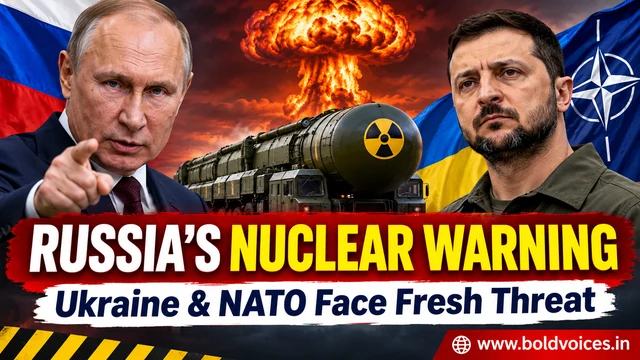
No imminent nuclear attack or presidential launch order has been publicly confirmed. The featured image is an editorial illustration, not a photograph of an actual nuclear explosion.

What did Medvedev say?
Medvedev argued that catastrophic conventional attacks and threats to Russia’s survival could bring nuclear options into consideration. He also discussed hypothetical transfers of nuclear weapons to Ukraine. His remarks do not establish that such transfers have occurred.
He acknowledged that Russia had not identified a direct necessity to use nuclear weapons in Ukraine. He described the final decision as resting with President Vladimir Putin, following an assessment of the circumstances and proportionality.
Understanding Russia’s nuclear doctrine
Moscow revised its nuclear policy in November 2024, expanding the circumstances in which it might consider nuclear use, including certain conventional threats against Russia or Belarus. A public doctrine is not an operational order. Medvedev acknowledged that preventive use is not explicitly codified in the doctrine.

Ukraine and NATO
Ukraine is not a NATO member. NATO’s collective defence commitments therefore do not automatically apply to Ukraine. The United States, United Kingdom and France are nuclear-armed members of the alliance. A direct confrontation between Russia and NATO would create additional risks for European and international security.

Concerns over space security
German media have reported Western intelligence assessments concerning a suspected Russian nuclear-capable satellite. These reports remain unconfirmed. Nuclear weapons stationed in orbit would violate the Outer Space Treaty. A nuclear explosion in space could damage satellites supporting communications and navigation.
Potential economic consequences
A wider confrontation could disrupt energy supplies, increase shipping and insurance costs, and heighten financial market volatility. India could face higher energy import costs if international oil prices rise. These are conditional risks, not confirmed market outcomes.
What happens next?
Official statements from Moscow, Kyiv and NATO, diplomatic engagement and independently verified developments are important indicators to follow. Nuclear threats deserve serious attention, but warnings should not be confused with evidence of an authorised attack. Military communication and diplomacy remain important mechanisms for reducing the risk of miscalculation.
Sources
- Anadolu Agency — 23 November 2026
- Fox News — 23 November 2026
- NDTV Profit — 25 November 2026
- Critical Threats / ISW assessment — 23 November 2026
#Russia #Ukraine #NATO #NuclearWarning #Medvedev #Geopolitics #GlobalSecurity #WorldNews #BoldVoices


