
Curated by the Team of Boldvoices
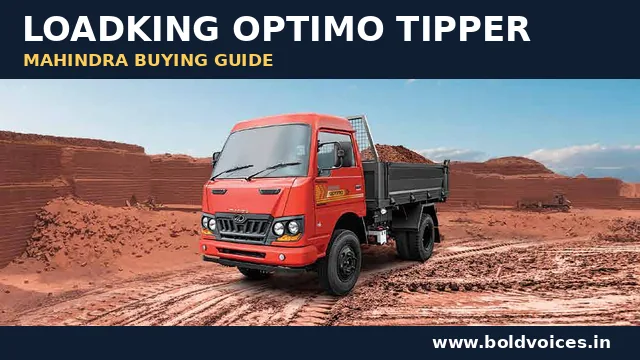
The Mahindra Loadking Optimo Tipper BS6 is a six-tyre light commercial truck built for jobs where the load needs to be tipped out at the destination. It is worth comparing for short runs between a material yard and a construction site, especially when access is tight. Start with the material, actual load weight and number of paid trips your route can support. Those figures will tell you more about whether the truck pays for itself than the body volume alone.
Specifications that matter on the job
| Item | Mahindra specification |
|---|---|
| Gross vehicle weight | 6,950 kg |
| Engine | 2.5-litre four-cylinder mDi CRDe diesel |
| Maximum power | 60.5 kW at 3,200 rpm |
| Peak torque | 220 Nm at 1,250–2,200 rpm |
| Gearbox | MNT 40 five-speed |
| Wheelbase | 2,500 mm |
| Cabin width | 1.7 m |
| Tyres | 7.5 × 16, 16 PR, six tyres |
| Diesel tank | 60 litres |
| Variants listed | CBC PTO and FBT 2.8 m³ |
| Listed internal body dimensions | 3,125 × 1,692 × 530 mm |
The wheelbase and cabin width are handy starting points for a site survey. Measure the completed truck’s overall width and height, including mirrors and any body fittings, then check the most restrictive gate, bend and unloading bay. Have the dealer demonstrate the exact configuration you intend to buy, with a representative legal load where feasible. Include the loaded approach and empty return when measuring fuel use.
Factory body or chassis with PTO?
Mahindra lists a CBC PTO configuration and an FBT with a 2.8 m³ body. With a factory-built tipper, confirm which structural and hydraulic parts the vehicle warranty covers and where they can be repaired. If the quote is for a cowl-body chassis with a power take-off provision, get written confirmation of which components come with the chassis. Ask the body builder for the completed dimensions, estimated tare weight, delivery time and separate coverage for the body and tipping gear.
Compare both offers at the same point, with the vehicle ready to register and work. Include the body, subframe, hydraulics, taxes, registration, insurance and delivery. Ask who handles an issue that involves both the truck and body builder. Put any agreed body specifications and delivery milestones in the purchase order.

Calculate the payload using the completed vehicle
The 6,950 kg figure is gross vehicle weight. To estimate how much material you can carry, weigh the completed truck in working condition with the usual fuel, crew and tools, then subtract that weight from the applicable gross limit. Confirm the registered limits and the axle loads as well. A truck can be within its gross limit while carrying too much weight on one axle.
Suppose the weighbridge records 4,050 kg before loading. Using the listed GVW, the gross-weight headroom would be 2,900 kg, subject to axle and registration limits. For a hypothetical material weighing 1.6 tonnes per cubic metre, filling the 2.8 m³ body would add about 4,480 kg. With 2,900 kg of headroom, even 1.8 m³ would add about 2,880 kg. Both the tare and material density in this example are assumptions. Use a weighbridge ticket and the actual material density, which can change when a load is wet.
Price and availability checked 23 November 2026
Mahindra’s official model and specifications pages did not show an ex-showroom price when checked on 23 November 2026. Local stock and delivery times were unconfirmed. Ask for a dated quote for the exact build and registration location. Have the dealer separate the chassis or complete truck price, body-builder costs, statutory fees, insurance and optional items. If financing, compare the down payment, processing fees, tenure and total amount repayable.
Operating economics for a short-haul route
Assume a 40 km round trip, 7 km/L across the loaded and empty legs combined and diesel at ₹92/L. That gives about ₹526 in fuel per completed trip. Add an illustrative ₹140 for maintenance and tyres and ₹150 for driver cost allocated to each trip. The total is approximately ₹816 before finance, insurance, permits, downtime, tolls or site fees. These inputs are examples, with no claim about Mahindra’s mileage or current local fuel prices.
Suppose you charge ₹1,100 per completed trip and annual fixed costs work out to ₹18,000 a month. The contribution before fixed costs is ₹284 per trip, so roughly 64 paid trips are needed to cover those fixed costs with the example inputs. At 80 paid trips, the monthly surplus is only about ₹4,720 before the omitted charges and taxes. At 60 trips, the same model shows an approximately ₹960 shortfall. If the driver is paid a fixed salary, count that salary in fixed costs and remove the trip allocation so it is counted once.
Run the same calculation with the dealer’s finance quote and your own fuel receipts, then change one input at a time. A paid-by-the-tonne contract needs a realistic legal tonnes-per-trip estimate. A flat-trip contract needs a realistic number of billable turns after loading queues, weighbridge stops, site access delays and empty returns. Compare the actual cash you expect to collect with repayments and the reserve you need for downtime.
Checks before paying a booking amount
- Confirm the exact variant. Match the dealer order to the chassis, emissions documentation, tyre specification and body type.
- Get a weighbridge ticket. Record the completed truck’s actual weight and ask how weight is split between axles in your intended operation.
- Request a dealer-led demonstration. At a suitable site, have the dealer demonstrate normal tipping operation and explain inspection and maintenance requirements for the PTO, cylinder, hoses and tailgate.
- Confirm service coverage. Ask where both the vehicle and body equipment can be serviced, which parts are held locally, and what the warranty excludes.
- Review the assignment. Check the material contract, site restrictions, turnaround times and who pays when the job is delayed.
- For a used example. Ask for service and registration records and commission an independent inspection of the chassis, body mounts, welds and hydraulic equipment. Look for uneven tyre wear, recurring leaks and evidence of previous structural repairs.
For loose construction materials on short, repeatable routes, the Optimo Tipper’s compact dimensions are worth testing in person. If your work is mostly packaged or palletised freight, compare a cargo-body Optimo with the handling and unloading costs for that work. If a large share of your loads is dense material and a weighbridge test leaves little headroom, price a higher-rated vehicle on the same route before booking.
Disclaimer. Specifications are based on Mahindra’s published material. Confirm the configuration, registered weight limits, terms, pricing and availability with a dealer. The operating figures illustrate a calculation and are not a quote or a performance guarantee.
Official Mahindra sources
- Loadking Optimo Tipper model overview
- Loadking Optimo Tipper BS6 technical specifications
- Mahindra Loadking Optimo brochure and model photograph
#MahindraTrucks #LoadkingOptimo #OptimoTipper #CommercialVehicles #TipperTruck #TruckBuyingGuide #ConstructionTransport #FleetEconomics #TruckPayload #BoldVoices


