
Curated by the Team of Boldvoices · 23 November 2026
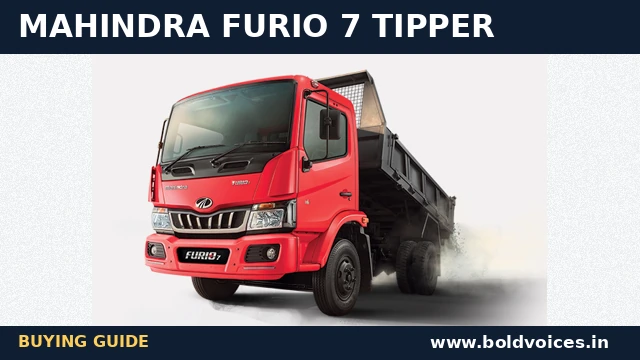
The Mahindra Furio 7 Tipper is a compact diesel truck for jobs that need bulk material delivered and tipped at the destination. It shares the Furio 7 HD Cargo’s rated gross weight and 3.5-litre engine, but its tipping body, axle ratings and job cycle make it a different purchase. Before you compare prices, find out how much material the finished vehicle can legally carry, where it can unload and how many paid trips it can complete in a shift.
Start with the fully built version if the standard body fits your work. Ask for a cab-and-chassis quote if you need a different body and can get the completed weight, approval paperwork and warranty responsibilities in writing. For palletised loads or hand-unloaded deliveries, compare the HD Cargo before paying for tipping equipment.
Furio 7 Tipper price in India
Mahindra’s model overview and specification pages were checked on 23 November 2026. They give the configuration and equipment but do not show a dated price for a new Furio 7 Tipper. The price of the Furio 7 Cargo is a separate model reference. Ask an authorised truck dealer for a written quote for the tipper, with the registration city, offer validity and expected delivery date.
Compare the price of the cab and chassis with the price of a complete truck including the body and hydraulics. Put freight, insurance, registration, financing, body work and any optional equipment on separate lines. For a custom build, ask which supplier invoices the body, when the truck will be ready for work and whether the quote includes weighing and body paperwork. A cheaper initial quote is only meaningful after both trucks are priced in ready-to-work form.
Official specifications for the Furio 7 Tipper AC
| Item | Mahindra specification |
|---|---|
| Engine | 3.5-litre four-cylinder mDi Tech diesel, BS VI OBD2 |
| Load mode | 91.5 kW and 375 Nm |
| Empty mode | 79.5 kW and 325 Nm |
| Transmission | MNT 40 cable-shift manual, five forward gears and reverse |
| Gross vehicle weight | 6,950 kg |
| Front and rear axle ratings | 2,300 kg front and 4,650 kg rear |
| Wheelbase and turning-circle diameter | 2,770 mm and 10.8 m |
| Listed ground clearance | 209 mm |
| Fuel and AdBlue tanks | 75 litres diesel and 13 litres AdBlue |
| Fully built dimensions | 5,320 × 2,090 × 2,394 mm overall |
| Body dimensions | 3,375 × 1,870 × 450 mm |
The load and empty mode figures are engine ratings, not evidence of fuel savings on your route. Ask the dealer to demonstrate both modes and the relevant controls. The specification lists rib-pattern front tyres and lug-pattern rear tyres. Match the fitted tyre size, rating and spare to the written build specification before delivery.

Fully built tipper or cab and chassis?
| Build | Who should compare it | What to get in writing |
|---|---|---|
| Fully built tipper | Operators whose material and loading equipment match the listed body | Finished weight, usable body dimensions, operating instructions and cover for the body and hydraulic equipment |
| Cab and chassis (CBC) | Operators with a specific body requirement | Body design, final weight, warranty split, build time and any documents needed for the completed vehicle |
The dimensions of the listed tipper body imply roughly 2.84 cubic metres if treated as a simple rectangular box. That calculation is a geometric reference. The usable capacity can differ with body shape, internal hardware and the supplier’s stated measurement method. Mahindra’s online specification shows an inconsistent unit beside the capacity figure, so get the actual capacity and its units confirmed on the body builder’s drawing.
Check the body against what actually goes in it. Volume tends to matter first for bulky, lighter material. With wet sand or crushed stone, weight can become the limiting factor well before a body looks full. Ask your loader to weigh a representative consignment and compare that with what you normally invoice per trip. If your contract uses cubic metres, get an agreed method for reconciling a volume-based invoice with a weight-based load check.
Calculate usable payload before you sign
Gross vehicle weight includes the truck, its body and fitted equipment, fuel, crew and cargo. For a worked example, a finished truck weighing 3,900 kg ready for work has 3,050 kg of gross weight headroom at 6,950 kg. If that hypothetical truck already puts 2,250 kg on the rear axle, only 2,400 kg of additional rear-axle load is available. How a real consignment consumes those allowances depends on where the weight sits. Use the registered limits and measured axle weights for the actual build.
Have the dealer or body supplier arrange a weighbridge reading for the completed vehicle. If practical, compare empty and representative loaded readings, keeping the load within the limits. A different floor, body liner or hydraulic installation can change the vehicle’s baseline weight. Comparing a bare chassis with a complete tipper will overstate what the buyer can carry.
Test the full loading and unloading cycle
Bring the regular driver and walk through the first and last stop of a normal shift. Check gate width, the turn into the loading area, the route out of the site and whether there is a suitable unloading area with enough overhead clearance. Have the dealer demonstrate the body and tailgate at an authorised site using the manufacturer’s instructions. The brochure’s turning circle and gradeability figures do not establish safe tipping conditions.
Ask the driver to repeat a low-speed manoeuvre using their usual seating position and mirrors. Compare cab comfort, clutch effort, visibility, entry steps and the reach of controls. Observe the time spent waiting to load, positioning at the delivery point and returning empty. If a congested gate makes each cycle ten minutes longer, that may have more impact on a day’s earning capacity than a small difference in advertised fuel economy.
Running costs, warranty and downtime
Track diesel on the full cycle, including empty returns, idling and site work. For illustration, 2,400 km a month at 7 km/l and ₹90 per litre costs about ₹30,857 in diesel. At 6 km/l on the same distance, the illustrative cost becomes ₹36,000. Neither figure is a mileage claim. Add AdBlue, tyres, scheduled service, hydraulic maintenance, finance, insurance and replacement capacity during downtime.
For a job quoted per delivery, divide the month’s relevant operating costs by completed paid trips. For a job sold by weight, divide those costs by tonnes actually delivered. A truck doing 100 paid trips with ₹90,000 of monthly operating costs in this example averages ₹900 per trip before profit. If site delays cut output to 80 trips and costs stay the same, the average rises to ₹1,125. Compare estimates using your real route volume and seasonality.
Mahindra’s overview advertises a three-year, unlimited-kilometre transferable warranty, with terms applicable. Ask the dealer to identify what it covers, including any supplier exclusions for the body and hydraulics, and what maintenance records are needed. Ask where a fault can be repaired on your routes, how quickly parts are normally available and how the telematics service is supplied and renewed.
What else should you compare?
Compare Furio 7 HD Cargo for jobs that principally involve bagged goods, pallets or loading and unloading by hand or forklift. Put Loadking Optimo Tipper on the shortlist if access is the constraint, then confirm that its specific rated configuration meets the route requirements. If payload is the problem, compare a higher weight class on legal carrying capacity, turning space and cost per delivered tonne. A bigger body on the same gross weight rating is a different proposition from a higher rated truck.
Booking and delivery checklist
- Identify the exact build. Record VIN or written allocation, model code, body type, deck dimensions and what the price includes.
- Verify weights. Get ready-to-work and axle figures for the completed truck. Ask where the load is meant to sit.
- Check cab and body separately. Inspect tyres, lights, mirrors, cab AC and the body’s condition. Have the dealer demonstrate the tipping controls and identify the operator’s manual.
- Put the warranty split in writing. Collect the vehicle, body and hydraulics paperwork and the service contacts.
- Confirm the route. Measure the narrowest gate and confirm a suitable place to load and unload before committing.
Verdict
Buy the fully built Furio 7 Tipper if the standard body fits the material, the finished axle weights leave enough room for your loads and the vehicle can complete the route consistently. Choose CBC when a custom body solves a real operating problem and the finished weight and support are documented. If bulk tipping is occasional, compare the HD Cargo and the cost of arranging a tipper only when it is needed.
Price and image disclaimer: Mahindra pages were checked on 23 November 2026. Dealer prices, availability, body dimensions and included equipment can vary. Mileage, cost and payload examples are illustrative. Confirm the registered limits, body details and warranty for the delivered build. Images are AI-generated editorial illustrations.
Official sources
- Mahindra Furio 7 Tipper overview and warranty reference
- Mahindra Furio 7 Tipper AC technical specifications
- Mahindra light commercial vehicle range
#Mahindra #Furio7Tipper #MahindraTrucks #TipperTruck #TruckBuyingGuide #CommercialVehicles #LightCommercialVehicle #FleetManagement #ConstructionTransport #IndianTrucks


