
Curated by the Financial Desk of Boldvoices
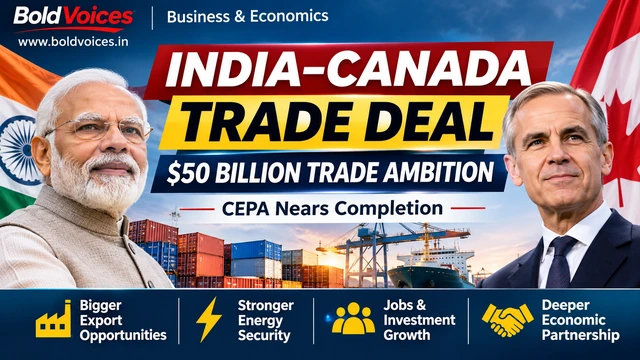
India and Canada are moving closer to a Comprehensive Economic Partnership Agreement (CEPA), with negotiations targeted for completion by the end of 2026. The sixth round ended in New Delhi on November 20. The proposed agreement is not yet signed or in force.
India–Canada trade: The economic picture
| FY 2025–26 merchandise trade | US$ billion |
|---|---|
| Indian exports | 4.67 |
| Indian imports | 3.28 |
| Total | 7.95 |
| India’s surplus | 1.39 |
Trade comparison (US$ billion; each block approximately $0.5 billion)
Exports: █████████ 4.67
Imports: ███████ 3.28
The $50 billion ambition
The two countries are targeting approximately US$50 billion (C$70 billion) in bilateral trade by 2030. This ambition encompasses a broader trade relationship and should not be compared directly with merchandise-only figures. It is a policy target, not a forecast or guaranteed outcome.
Which industries could benefit?
| Industry | Potential opportunity |
|---|---|
| Pharmaceuticals | Healthcare market access |
| Textiles and footwear | Improved export competitiveness |
| IT and software | Digital services expansion |
| Engineering goods | Industrial customers |
| Clean energy and AI | Research and investment partnerships |
| Infrastructure | Long-term capital |
Energy security and supply chains
Canadian resources could complement India’s industrial needs. LNG, uranium for civilian nuclear power, potash for agriculture and critical minerals for batteries are important potential areas of cooperation. Diversification could lower reliance on individual suppliers, although transport costs, commercial contracts and regulatory approvals will determine actual benefits.
Jobs and skilled professionals
Expanded business ties could create demand for engineers, software specialists, logistics professionals and manufacturing workers. However, CEPA does not automatically provide Canadian work permits, permanent residency or unrestricted employment rights. Skilled mobility provisions must be assessed once the final agreement is available.
Challenges and opportunities for small businesses
Tariff concessions alone cannot guarantee export success. Businesses must account for certification, shipping, currency risk, payment terms and rules of origin. Agriculture, intellectual property and sensitive domestic industries require careful negotiation. Small exporters can prepare by evaluating Canadian demand, product standards and distribution partners before making new commitments.
Negotiation timeline
| March 2026 | Negotiations relaunched |
| 11–20 November | Sixth round completed |
| End of 2026 | Negotiation completion target |
| 2030 | Bilateral trade ambition |
Economic outlook
The proposed partnership could strengthen India’s links to Canadian capital, technology and natural resources while enabling greater access for Indian goods and services. Its ultimate value will depend on the final terms, implementation and measurable benefits for consumers, workers and businesses in both countries.
#IndiaCanadaTrade #IndianEconomy #CEPA #GlobalEconomy #InternationalTrade #IndianExports #BusinessNews #EconomicGrowth #MakeInIndia #BoldVoices


