Update — 31 October 2026, 4:40 AM IST: On 29 October, the Supreme Court said the RBI’s proposed KYC Amendment Directions, 2026 should require financial institutions to compensate victims of digital-arrest and cyber-fraud cases at least for the amount lost where an investigation finds that the institution failed in its due-diligence obligations. The Bench said it would first examine the proposed framework. It also called for safeguards such as temporarily holding unusual transactions that depart from a customer’s established pattern, automated suspicious-activity reporting and physical verification where necessary. The Court noted that the proposed RBI directions were expected to be notified by 30 November and operationalised by 31 December 2026. These are directions sought for the proposed framework—not a blanket guarantee that every fraud victim is automatically reimbursed, and not yet a substitute for the existing bank-dispute and cybercrime reporting process.
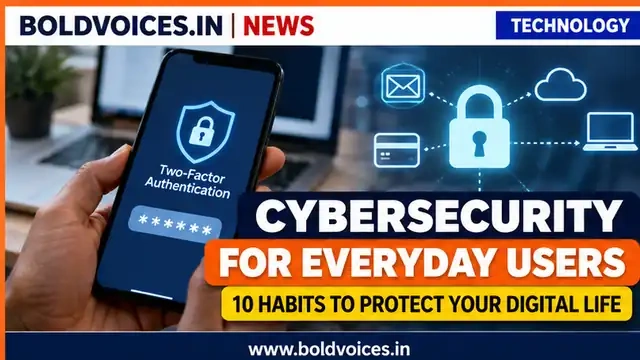
Most online security problems do not begin with a dramatic computer attack. They often start with a reused password, a convincing message, an unsafe app, a fake job offer or a rushed decision. A few everyday habits can make personal accounts, phones and financial information much harder to compromise.
Cybersecurity is not only a concern for large companies. Students, parents, senior citizens, small-business owners and ordinary smartphone users all have digital identities worth protecting. This practical guide explains the steps that matter most.
1. Use a different strong password for every important account
A password reused across email, shopping, social media and banking accounts creates a chain reaction risk. If one service is breached, attackers may try the same credentials elsewhere. Use long, unique passwords or passphrases, and consider a reputable password manager. Protect the password manager itself with a strong master password and multi-factor authentication.
2. Turn on multi-factor authentication
Multi-factor authentication adds another verification step beyond a password. Prefer passkeys or authenticator-based methods where supported; use other available second factors when necessary. Never approve an unexpected login prompt or share an OTP with someone who contacts you.
3. Recognise phishing and impersonation
Scam messages often create urgency: an account will be blocked, a parcel is held, a job offer expires or a payment must be made immediately. Check the sender and website address independently. Do not open unexpected attachments or sign in through a link sent by an unknown person. Contact the organisation using a number or website you already know is genuine.
4. Keep your phone, computer and apps updated
Software updates often repair security weaknesses. Enable automatic updates where practical for operating systems, browsers and applications. Remove apps you no longer use, review permissions and install software only from trusted official sources. Avoid modified apps and files shared by strangers.
5. Protect your UPI and banking activity
Never share a UPI PIN, ATM PIN, password or OTP.
You do not need to enter a UPI PIN to receive money.
Check the beneficiary name and amount before authorising a payment.
Do not approve unknown collect requests or screen-sharing instructions.
Use your bank’s official app and verified customer-care channels.
6. Secure social media and messaging accounts
Review privacy settings, recovery email addresses, linked phone numbers and active sessions. Restrict who can see personal details and avoid publishing travel plans, identity documents or sensitive family information publicly. If a friend sends an unusual money request, verify it through a separate call before acting.
7. Be alert to AI-generated scams and deepfakes
Artificial intelligence can make fake messages, voices, images and videos more convincing. A familiar voice or realistic video is not sufficient proof of identity. For urgent requests involving money, confidential information or account access, verify through a second trusted channel and use a family or workplace check phrase if appropriate.
8. Back up important files
Keep more than one copy of important photos, documents and work files. At least one backup should be separate from the device in everyday use. Check occasionally that files can actually be restored. A backup is useful only if it is available when needed.
9. What to do if you suspect fraud
Contact your bank or payment provider immediately through its verified channel if money or account access may be at risk. Change compromised passwords from a trusted device, sign out unknown sessions, preserve messages and transaction references, and report the incident to the appropriate authorities. In India, suspected cyber financial fraud can be reported through the national cybercrime helpline 1930 and the official cybercrime reporting portal. Act quickly; do not pay anyone who promises to recover money for an advance fee.
10. A simple monthly digital-safety check
Update your devices and applications.
Review important account recovery options and multi-factor authentication.
Remove unknown apps and unnecessary permissions.
Check bank statements and recent account activity.
Confirm that your backups work.
Discuss common scams with children and older family members.
The bottom line
Good cybersecurity is built through consistent habits, not one expensive product. Unique passwords, multi-factor authentication, software updates, careful payment checks and independent verification can reduce many everyday risks. When something feels urgent or unusually generous, pause and verify before you click, share or pay.
This article is for general awareness and does not replace advice from your bank, device provider or cybersecurity authorities. Follow current official advisories for incident-specific instructions.
Like what you read? Help BoldVoices.in keep independent journalism going.
Manage Consent
To provide the best experiences, we use technologies like cookies to store and/or access device information. Consenting to these technologies will allow us to process data such as browsing behavior or unique IDs on this site. Not consenting or withdrawing consent, may adversely affect certain features and functions.
Functional
Always active
The technical storage or access is strictly necessary for the legitimate purpose of enabling the use of a specific service explicitly requested by the subscriber or user, or for the sole purpose of carrying out the transmission of a communication over an electronic communications network.
Preferences
The technical storage or access is necessary for the legitimate purpose of storing preferences that are not requested by the subscriber or user.
Statistics
The technical storage or access that is used exclusively for statistical purposes.The technical storage or access that is used exclusively for anonymous statistical purposes. Without a subpoena, voluntary compliance on the part of your Internet Service Provider, or additional records from a third party, information stored or retrieved for this purpose alone cannot usually be used to identify you.
Marketing
The technical storage or access is required to create user profiles to send advertising, or to track the user on a website or across several websites for similar marketing purposes.