
31 October 2026 | International News
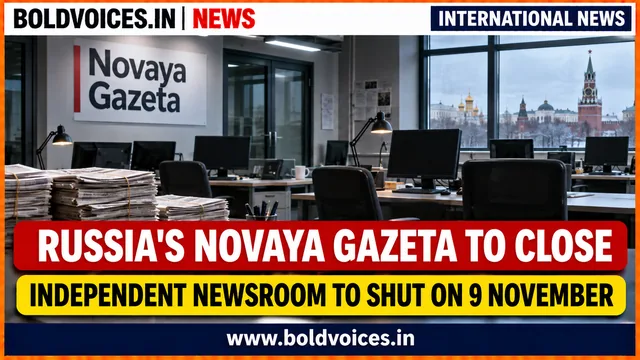
One of Russia’s most prominent independent newspapers, Novaya Gazeta, has announced that it will end its remaining operations on 9 November 2026, bringing an extraordinary chapter in Russian journalism towards its conclusion.
The newspaper says sustained pressure from Russian authorities and security services has left its newsroom without the resources, legal protections and premises required to continue publishing.
Founded in 1993, Novaya Gazeta became widely recognised for investigative reporting on corruption, human rights abuses, political accountability and the conduct of Russian military operations. Its closure would represent a significant setback for independent journalism inside Russia.
A newspaper born during a period of openness
Novaya Gazeta was established after the collapse of the Soviet Union, with financial support from former Soviet leader Mikhail Gorbachev, who used part of his Nobel Peace Prize money to support the publication.
The newspaper developed a reputation for challenging powerful institutions through detailed investigations and reporting that frequently placed its journalists in difficult and dangerous situations. Its coverage included allegations of corruption, abuses in Chechnya, police misconduct and political developments under successive Russian administrations.
Former editor-in-chief Dmitry Muratov became one of its most internationally recognised figures. He shared the 2021 Nobel Peace Prize for efforts to safeguard freedom of expression. For many years, the publication symbolised the possibility of critical journalism operating within Russia’s political system.
Why is Novaya Gazeta closing?
The newspaper has described its closure as the result of a sustained campaign that progressively dismantled its ability to operate. It says authorities and security services have taken actions that include revoking its media registration and print licence, blocking its website, disrupting publication, designating the publication and members of its editorial team as foreign agents, restricting reader donations and searching newsroom premises and journalists’ homes.
The newsroom has also faced serious financial difficulties after losing access to reader donations and other resources. In its farewell announcement, the publication said it would switch off its servers and leave its office on 9 November.
Russian authorities had not publicly provided a detailed response to the newspaper’s latest closure announcement at the time of reporting.
The impact of Russia’s war in Ukraine
The situation deteriorated sharply after Russia launched its full-scale invasion of Ukraine in February 2022. New censorship rules restricted reporting on the conflict, with severe penalties for material authorities considered to discredit the Russian military or spread false information.
Novaya Gazeta said the restrictions made it impossible to report freely on some of the most important events affecting Russian society. The newspaper suspended its print edition in Russia in March 2022. Many journalists subsequently left the country, while the remaining editorial team continued operating under increasingly difficult conditions.
The publication’s decision to stop printing did not end its work immediately. It continued producing online material and other publications, but its legal and financial position continued to weaken.
Oleg Roldugin case adds to newsroom pressure
Another major development involved managing editor Oleg Roldugin, who was arrested in April 2026 and charged in connection with alleged unlawful access to computerised information and the handling of personal data. He remains under house arrest while awaiting trial.
The newspaper has maintained that the proceedings against its journalists form part of the wider pressure facing the organisation. Editor-in-chief Sergei Sokolov’s home was also searched during an investigation connected to the case. These developments intensified concerns within the newsroom about the risks facing journalists who continued to work in Russia.
The legal allegations against individual journalists remain matters for the courts; they should not be treated as established findings of guilt.
The legacy of Anna Politkovskaya
The history of Novaya Gazeta is closely connected with the work and sacrifice of its journalists. One of its best-known investigative reporters, Anna Politkovskaya, was murdered in Moscow on 7 October 2006. She had reported extensively on the war in Chechnya and allegations of human rights abuses.
Six of the newspaper’s journalists and staff members have been murdered over the years. Politkovskaya’s work became internationally recognised as an example of the risks faced by reporters investigating powerful political and security institutions.
Her memory remains central to the newspaper’s identity. The newsroom also housed a memorial museum dedicated to her, which is expected to close along with the Moscow office.
Will Novaya Gazeta Europe continue?
The closure announcement concerns the Moscow-based Novaya Gazeta operation. A separate publication, Novaya Gazeta Europe, was established in Latvia by journalists who left Russia after the invasion of Ukraine. It operates independently of the Moscow newsroom and has continued its reporting from outside the country.
Russian authorities have designated the European publication an undesirable organisation, restricting its lawful operation inside Russia. Its continued existence means that some journalists associated with the original newspaper will remain active, although the circumstances and legal environment are very different from those faced by a newsroom operating inside Russia.
What the closure means for press freedom
The disappearance of Novaya Gazeta from Russia’s domestic media landscape would further narrow the space available for independent reporting. Independent journalism plays an important role in holding institutions accountable, investigating allegations of wrongdoing and giving citizens access to information beyond official statements.
When newsrooms lose their legal status, funding, premises and ability to publish, the consequences extend beyond individual journalists. Readers also lose an important source of scrutiny and alternative perspectives. The development is likely to intensify international debate over media freedom, censorship and the protection of journalists.
A major chapter in Russian journalism approaches its end
For more than three decades, Novaya Gazeta sought to investigate subjects that frequently brought it into conflict with powerful institutions. Its announcement that it will close on 9 November marks a defining moment for independent journalism in Russia.
The newspaper’s physical newsroom may soon fall silent, but its investigations, its journalists’ work and the risks they faced will remain part of the country’s modern media history. The wider question is whether independent reporting can find sustainable ways to survive in an environment where legal restrictions, financial pressure and threats to journalists continue to shape the media landscape.
Date: 31 October 2026
Curated by the team of boldvoices
Hashtags: #NovayaGazeta #Russia #PressFreedom #IndependentJournalism #DmitryMuratov #AnnaPolitkovskaya #MediaFreedom #Journalism #FreedomOfExpression #InternationalNews


