
Curated by Vishaljeet Singh, Lisbon, Portugal
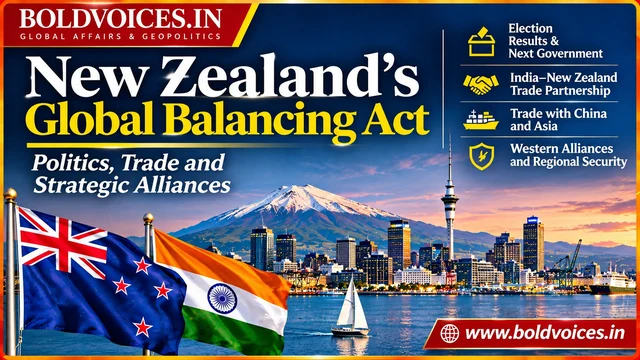
New Zealand’s foreign policy balances Asian commerce, Western security partnerships and an independent diplomatic tradition. Its relationship with India offers another avenue for diversifying trade.
A political turning point
The official count for the 7 November 2026 election gives National 40 seats, Labour 36, Greens 17, ACT 13, New Zealand First 12, Opportunity Party seven and Te Pāti Māori five. National, ACT and New Zealand First together hold 65 of 130 seats, one short of an outright majority. The outcome of government formation remains a separate question from the election count.
Trade with China and Asia
China is an important market for New Zealand’s agricultural and other exports. Diversifying export destinations can reduce exposure to economic shocks without requiring Wellington to abandon existing commercial relationships.
India–New Zealand Free Trade Agreement
The agreement entered into force on 20 October 2026. New Zealand’s Ministry of Foreign Affairs and Trade reports annual bilateral trade of NZ$3.99 billion and exports to India of NZ$2.22 billion in the year ended June 2026. Initially 57% of existing New Zealand exports to India qualify for duty-free access, rising to 82% under full implementation. A further 13% will benefit from tariff reductions. Product-specific rules and quotas apply.
Western security partnerships
New Zealand participates in Five Eyes intelligence cooperation with Australia, Canada, Britain and the United States. Its nuclear-free policy remains an important feature of its independent approach to international security.
Pacific engagement
Climate resilience, infrastructure, disaster preparedness and maritime cooperation are important priorities for Wellington and Pacific island countries. Effective partnerships must reflect the sovereignty and development needs of Pacific communities.
Opportunities for India
Closer trade ties could encourage cooperation in digital services, agricultural research, education, clean technology and manufacturing. Realising those opportunities depends on commercial conditions and applicable regulations.
The bigger geopolitical picture
New Zealand illustrates how smaller economies can maintain longstanding alliances while developing new economic relationships. Its policy direction will depend on domestic political choices and the implementation of international commitments.
#NewZealand #NewZealandPolitics #Geopolitics #IndiaNewZealand #FreeTradeAgreement #IndoPacific #GlobalTrade #InternationalPolitics #FiveEyes #BoldVoices


