
Curated by the Team of Boldvoices · 23 November 2026
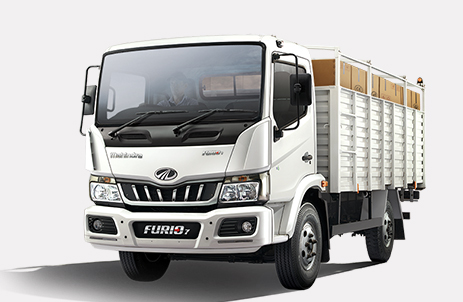
The Mahindra Furio 7 comes in two cargo versions that look similar on paper. Both have a 6,950 kg gross vehicle weight rating, but the four-tyre Cargo and six-tyre HD Cargo use different engines, axle ratings and body configurations. Choose based on the loads you regularly invoice for and the tightest delivery point on your route.
Start with the short-wheelbase Cargo if you deliver to shops and warehouses with narrow approaches. Price the long-wheelbase Cargo if the truck runs out of floor space before it reaches its weight limit. Put the HD Cargo on the shortlist if dense loads and steep depot approaches are a regular part of the job.
Furio 7 price in India
| Version | Price range displayed by Mahindra | How to use it |
|---|---|---|
| Furio 7 Cargo, four tyres | ₹15.11–16.15 lakh | Mahindra identifies this as a 2022 price reference. Use it as historical context. |
| Furio 7 HD Cargo, six tyres | ₹15.54–16.32 lakh | Mahindra’s product page displays this range without a price-effective date. Request a fresh quote. |
The official pages were checked on 23 November 2026. Ask two authorised dealers to quote the same wheelbase, cargo body and registration city. Get the base vehicle, body fabrication if applicable, insurance, registration and optional equipment listed separately. A cheaper cab-and-chassis quote may cost more once you add the body your work requires.
Cargo vs HD Cargo specifications
| Item | Furio 7 Cargo 4-tyre AC | Furio 7 HD Cargo AC |
|---|---|---|
| Engine | 2.5-litre four-cylinder diesel | 3.5-litre four-cylinder diesel |
| Power | 60.5 kW | 91.5 kW in load mode, 79.5 kW in empty mode |
| Torque | 220 Nm | 375 Nm in load mode, 325 Nm in empty mode |
| Gearbox | Five forward gears plus reverse | Five forward gears plus reverse |
| Gross vehicle weight rating | 6,950 kg | 6,950 kg |
| Wheelbases | 2,750 mm and 3,320 mm | 2,770 mm and 3,320 mm |
| Turning-circle diameter, short / long | 10.80 m / 12.76 m | 10.80 m / 12.74 m |
| Diesel tank | 60 litres | 75 litres |
| AdBlue tank | 13 litres | 13 litres |
| Listed ground clearance | 229 mm | 209 mm |
The HD’s higher torque is a reason to test it loaded if your truck routinely starts on a ramp or carries dense cargo. It has the same gross weight rating as the regular Cargo, so check the finished vehicle’s weight and permissible axle loads before estimating how much freight it can carry.

Which cargo body should you choose?
| Configuration | Mahindra’s listed body dimensions | Where to start |
|---|---|---|
| Cargo short HSD | 3,200 × 2,005 × 1,025 mm | Shop deliveries where a tighter turn is valuable |
| Cargo long HSD | 4,267 × 2,005 × 1,025 mm | Longer consignments or deliveries that fill the floor first |
| HD Cargo short DSD | 3,200 × 2,005 × 502 mm | Jobs where side access and loading height matter |
| HD Cargo long HSD | 4,267 × 2,005 × 1,380 mm | Bulkier consignments where taller sides suit the load |
| Cab and chassis, or CBC | Finished dimensions depend on the body selected | Buyers who need a purpose-built box, rack or other body |
HSD is the high-side deck, and DSD is the drop-side deck. Measure the actual usable deck between the posts and check the gate opening before ordering. If you load with a forklift, have the body supplier show how far the forks can reach and where the access points sit. If you load by hand, try the deck height and latches with the people who handle freight at your busiest stop.
How to estimate usable payload
Start with the finished truck’s actual ready-to-work weight. Account for the fitted body and accessories, fuel, crew and equipment. As an illustration, a truck ready to depart at 3,600 kg before cargo has 3,350 kg of gross weight headroom at a 6,950 kg rating. That example does not establish the Furio 7’s payload. The front or rear axle limit can reduce what you can load, depending on where the weight sits.
Ask for the finished weight and axle-by-axle figures before signing for a customised body. This matters with dense loads such as bagged goods or tiles, especially if the load is placed toward the rear. A partition, tail lift, reinforced floor or covered body can also change the available weight and space.
Short or long wheelbase?
The short versions have a 10.8 m published turning-circle diameter. The long versions are around 12.75 m. On the test drive, have your driver reverse into the narrowest regular drop-off and check rear overhang while turning out. Measure the gate width and height against the finished truck, including any cover or overhead fittings.
A longer body earns its keep when it carries a recurring load that otherwise takes two trips. Check that customers can receive the combined load and that the longer truck can still reach every stop. If a single narrow delivery point regularly forces unloading at the roadside or arranging another vehicle, include that time and cost in the comparison.
Fuel, uptime and cost per trip
Run the demo on a route that resembles your working day. Include a loaded run, the empty return, idling, and any depot ramp. Compare both versions using the same AC setting and similar load. A short unloaded dealership drive tells you more about cab comfort and controls than about operating costs.
For an illustrative fuel budget, a truck travelling 3,000 km per month at 8 km/l uses 375 litres. At ₹90 per litre, that is ₹33,750 per month. At 7 km/l on the same route, the comparable cost is about ₹38,571. The difference is roughly ₹4,821 a month. Replace those example inputs with your own loaded and empty-run figures. Add AdBlue, tyres, tolls, insurance, servicing, finance and the cost of a missed shift.
Ask the dealer where the truck can be serviced along your regular routes and which parts the workshop keeps in stock. If a quote includes an uptime or turnaround commitment, get its start date, coverage, exclusions and claim process in writing. Also confirm who supports the finished body if the body supplier and chassis dealer are different businesses.
Before you book or take delivery
- Fix the configuration in writing. Confirm the engine, wheelbase, tyre count, body type, usable deck dimensions, and promised delivery date.
- Verify the finished truck’s weight. Ask for the ready-to-work weight and permissible gross and axle loads for the exact build.
- Try your own cargo. Bring a representative pallet, crate or sample load. Check deck access, latches, tie-downs and room to manoeuvre at a typical stop.
- Compare equivalent quotes. Include bodywork, registration, insurance, finance, maintenance and tyres. Check what the vehicle and body warranties each cover.
- Inspect the actual vehicle. Match the VIN and invoice. Check the cab AC, mirrors, lamps, tyres, spare and tools, body locks and any fitted accessories.
Verdict
Choose the short Cargo if your work is mostly multi-stop distribution and access is the constraint. Move to the long Cargo if a measured consignment regularly needs the extra floor length. Test the HD Cargo on a representative loaded run if low-speed pulling power is the main reason you’re spending more. Buy the build that completes your regular route at the lowest cost per paid delivery.
Price and image disclaimer: Mahindra’s official listings were checked on 23 November 2026. Published prices include a historical or undated reference and may differ from current dealer quotes. Final equipment, body dimensions, operating weight and availability depend on the configuration. The images are AI-generated editorial illustrations.
Official sources
- Mahindra Furio 7 Cargo — model and price FAQ
- Mahindra Furio 7 Cargo — technical specifications
- Mahindra Furio 7 HD Cargo — model and price FAQ
- Mahindra Furio 7 HD Cargo — technical specifications
#Mahindra #Furio7 #Furio7HD #TruckBuyingGuide #CommercialVehicles #CargoTruck #LightCommercialVehicle #FleetManagement #TruckPricesIndia #IndianTrucks


