7 November 2026 | Curated by Gurdeep Singh, Amritsar, Punjab
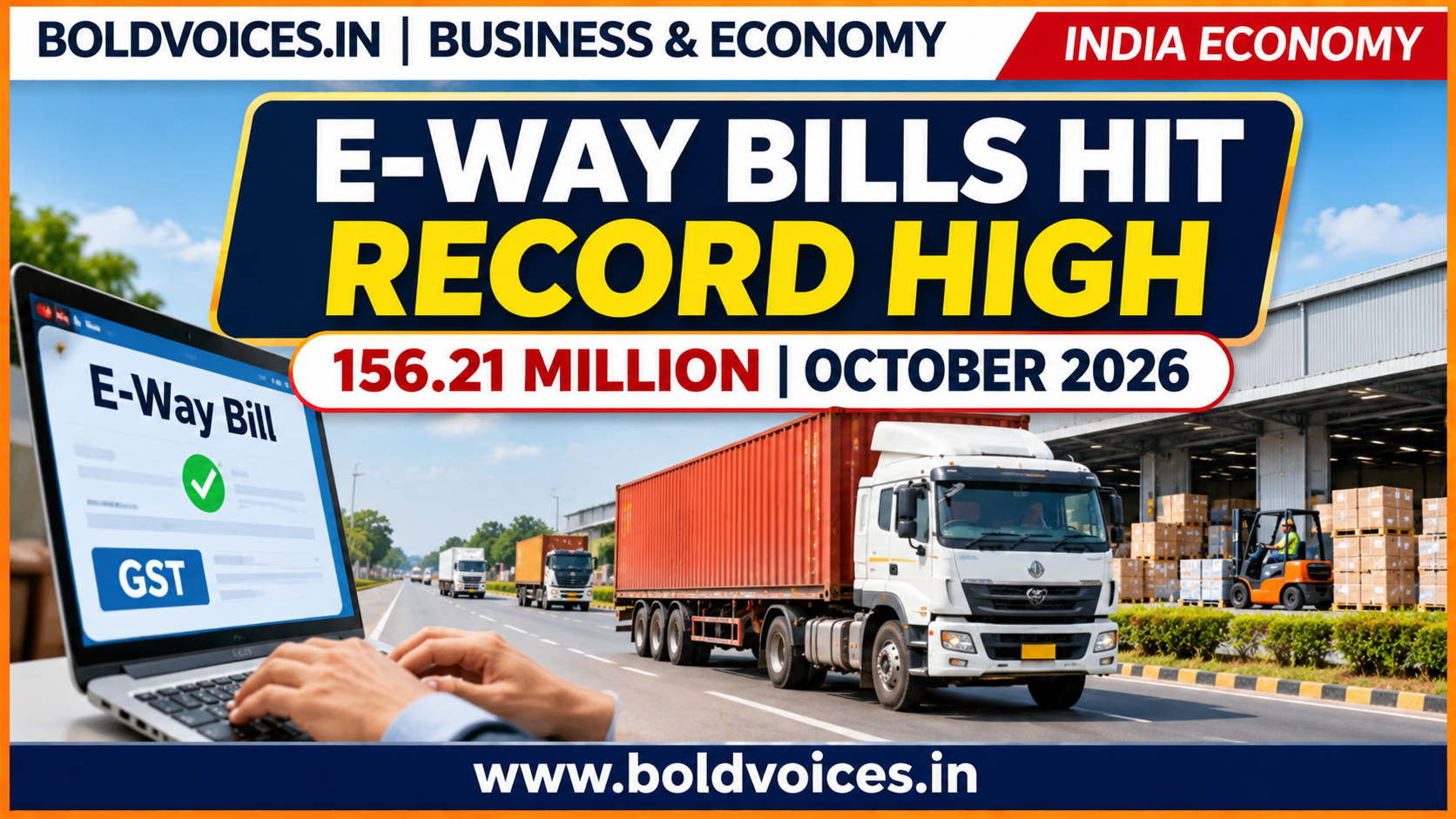
India’s goods transportation activity recorded a significant milestone in October 2026, with e-way bill generation reaching 156.21 million, according to data from the Goods and Services Tax Network (GSTN). The figure was 23.14% higher than October last year and 10.37% above September’s previous record.
The increase offers an important snapshot of movement across India’s supply chains. It may reflect stronger festive-season demand, increased movement of goods and wider use of the GST compliance system. However, e-way bill volumes should be read as one indicator of activity—not as a direct measure of GDP or sales growth.
October e-way bill generation rises 23.14% in a year
India generated 156.21 million e-way bills in October 2026, compared with 126.86 million in October 2025. The year-on-year increase was approximately 23.14%.
The October total was also around 10.37% higher than September 2026, when generation stood at 141.53 million. September had itself set a monthly record, making October’s further rise notable.
What is an e-way bill?
An e-way bill is an electronic document required under India’s GST framework for the movement of goods valued above ₹50,000, subject to specified exceptions. It records details such as the goods, consignor, consignee and transporter.
Businesses and transporters use the system to document eligible consignments moving between locations. It supports tax compliance while providing a digital record that can accompany the movement of goods.
Why did October record such a high number?
Several factors may have contributed to the increase:
Festive-season demand: Businesses often move additional stock ahead of major festivals, with activity spanning consumer goods, electronics, clothing, packaged foods and household products.
Supply-chain movement: More consignments moving between manufacturers, warehouses, wholesalers, distributors and retailers can lift e-way bill volumes.
Digital compliance: Greater familiarity with the GST system and improved documentation can increase the number of movements recorded through the platform.
Sequential momentum: The rise over September suggests activity remained elevated, although seasonal patterns and the timing of purchases should be considered.
What could the record mean for businesses?
Higher documented goods movement can support demand for freight operators, warehouses and distribution networks. Manufacturers and wholesalers may be moving more consignments through their supply chains, while retailers may be replenishing inventory after or during the festive shopping period.
For smaller businesses, increased movement also makes accurate documentation important. Errors in invoice details, vehicle information or e-way bill validity can lead to delays and compliance problems. Digital systems can simplify paperwork, but businesses still need reliable billing and logistics processes.
Does this mean India’s economy grew by 23%?
No. The 23.14% rise refers to the number of e-way bills generated, not the rate of economic growth. An e-way bill count does not directly measure the value of goods sold, industrial output, household consumption or GDP. Consignments can differ significantly in value, and changes in compliance practices can also affect the count.
A fuller assessment requires several indicators together, including GST collections, industrial production, manufacturing activity, freight movement, retail demand and business surveys.
GSTN’s planned 14-digit e-way bill number from January 2027
Another development for businesses is the planned expansion of e-way bill numbers from 12 digits to 14 digits from 1 January 2027. The change is intended to provide additional numbering capacity as transaction volumes increase. It is a format change; it does not, by itself, alter the existing e-way bill value threshold.
Businesses that generate e-way bills through billing, enterprise resource planning (ERP) or logistics software should check with their software providers that their systems will handle the revised number format before the transition.
What should be watched next?
November’s e-way bill data will help show whether October’s elevated level continued beyond the peak festive period. GST revenue collections can provide another perspective on taxable activity, while freight, manufacturing and inventory indicators can help establish whether the increase is broad-based.
The bigger picture
October’s 156.21 million e-way bills mark a significant milestone for India’s digital GST infrastructure and goods transportation network. The increase over both October 2025 and September 2026 points to substantial activity in the documented movement of goods.
The key question is whether this momentum continues after the festive season. If higher e-way bill volumes are accompanied by stronger production, freight demand, tax collections and consumer spending, the record could form part of a broader picture of economic strength. For now, it is an encouraging supply-chain signal that deserves attention and careful interpretation.
Like what you read? Help BoldVoices.in keep independent journalism going.
Manage Consent
To provide the best experiences, we use technologies like cookies to store and/or access device information. Consenting to these technologies will allow us to process data such as browsing behavior or unique IDs on this site. Not consenting or withdrawing consent, may adversely affect certain features and functions.
Functional
Always active
The technical storage or access is strictly necessary for the legitimate purpose of enabling the use of a specific service explicitly requested by the subscriber or user, or for the sole purpose of carrying out the transmission of a communication over an electronic communications network.
Preferences
The technical storage or access is necessary for the legitimate purpose of storing preferences that are not requested by the subscriber or user.
Statistics
The technical storage or access that is used exclusively for statistical purposes.The technical storage or access that is used exclusively for anonymous statistical purposes. Without a subpoena, voluntary compliance on the part of your Internet Service Provider, or additional records from a third party, information stored or retrieved for this purpose alone cannot usually be used to identify you.
Marketing
The technical storage or access is required to create user profiles to send advertising, or to track the user on a website or across several websites for similar marketing purposes.