29 October 2026
Curated by the team of boldvoices
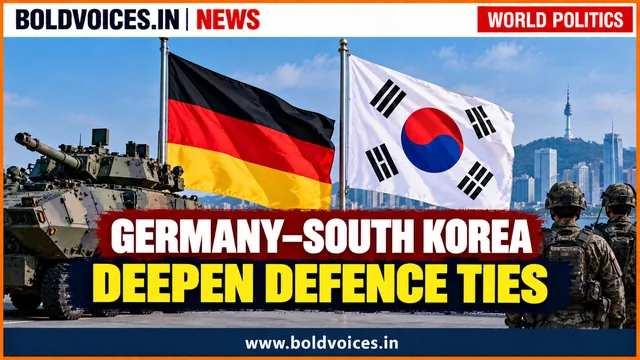
Germany and South Korea have agreed to deepen defence and security cooperation, reflecting growing concern that military developments in Europe and Asia are becoming increasingly interconnected. The agreement was announced during a Seoul summit between German Chancellor Friedrich Merz and South Korean President Lee Jae-myung on 29 October.
The partnership highlights how Russia’s war against Ukraine and North Korea’s military support for Moscow are influencing security planning far beyond Europe.
A closer defence partnership
The two countries plan to conclude an agreement to protect classified military information and explore longer-term defence cooperation, including joint ventures and development projects.
Protecting classified information can make it easier for governments to exchange sensitive assessments and coordinate work on defence technology. Joint projects may also create opportunities for industrial cooperation, although the practical scope and timetable will depend on negotiations and formal agreements.
Why Russia and North Korea are central to the discussion
South Korean officials and Western governments are concerned about the growing military relationship between Moscow and Pyongyang. South Korea’s intelligence agency has said North Korea sent more than 10,000 troops to fight alongside Russian forces from 2024, as well as supplying weapons. Western governments fear that North Korea could receive advanced military technology in return.
Any transfer of sensitive technology could have consequences for security on the Korean Peninsula and for the wider balance of military capabilities in East Asia. The extent of any such transfer remains an important issue for intelligence assessments and diplomatic engagement.
Why Europe and Asia are linking their security strategies
The summit reflects a wider reassessment among governments that previously treated European and Indo-Pacific security as largely separate challenges. Military cooperation across regions, technology transfers and defence supply chains can create risks that extend beyond the immediate battlefield.
For Germany, closer engagement with South Korea offers a way to strengthen ties with an advanced Asian economy and defence partner. For Seoul, deeper links with a major European power can broaden diplomatic options and support cooperation in technology and defence production.
The partnership also has an economic dimension. Joint ventures and development programmes could bring industrial benefits, but any concrete outcomes will depend on the projects selected, funding, export controls and the terms agreed by both governments.
What happens next?
The immediate milestones will be progress on the classified-information agreement and the identification of practical defence projects. Details about timelines, budgets and the technologies covered will help determine how substantial the partnership becomes.
The summit does not, by itself, establish a mutual-defence treaty or guarantee that either country will participate in the other’s conflicts. Its significance lies in the planned expansion of cooperation and the shared assessment that developments in Europe and Asia increasingly affect each other.
Curated by the team of BoldVoices.in
#Germany #SouthKorea #NorthKorea #Russia #DefenceCooperation #Geopolitics #WorldNews #BoldVoices
For the economic side of the same summit, read our report on Germany and South Korea’s trade and high-tech partnership.


