
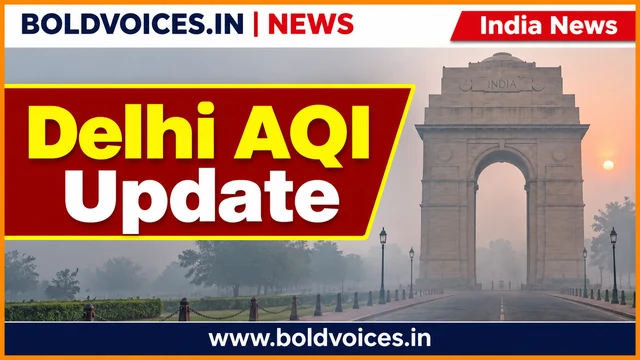
Delhi’s air remained in the “Very Poor” category on Sunday morning, with the Commission for Air Quality Management (CAQM) displaying a city AQI of 359 at 2:00 AM IST on 15 November 2026, based on CPCB data. The citywide figure should not be confused with readings at individual monitoring stations, some of which were already in the “Severe” category later in the morning.
How polluted is Delhi today?
At 6:00 AM IST, the Air Quality Early Warning System showed AQI 415 at ITO, 426 at IIT Delhi, 407 at NSIT Dwarka and 404 at Commonwealth Sports Complex. Other stations were in the Very Poor range, including Anand Vihar at 365, Chandni Chowk at 386 and Mundka at 380. Local pollution varies significantly by neighbourhood and hour.
What does AQI 359 mean?
Under India’s national AQI scale, 301–400 is classified as Very Poor and 401–500 as Severe. Prolonged exposure to Very Poor air can cause respiratory illness, while Severe air can affect even healthy people and seriously affect those with existing conditions. Fine particulate matter (PM2.5) was the principal pollutant at many monitoring locations.
What restrictions are in place?
CAQM’s official dashboard lists GRAP Stage III as active, effective from 6 November. Its public advisory calls for controlling dust-generating construction activity, suppressing road dust, preferring public transport and following applicable school and workplace directions. Restrictions depend on the latest official orders; residents and businesses should consult CAQM announcements rather than assume every activity is prohibited.
Precautions for residents
Limit unnecessary outdoor exertion, particularly for children, older adults and people with heart or lung conditions. An appropriately fitted N95 mask can help reduce exposure to particles outdoors. Reduce indoor smoke, close windows when outdoor pollution is high and use a properly maintained air purifier where available. Seek medical attention for worsening breathing problems, chest discomfort or other concerning symptoms.
What happens next?
AQI changes throughout the day with weather, emissions and local conditions. Residents should check current CPCB/CAQM monitoring information before planning outdoor activities. The citywide AQI of 359 cited here is specifically the 2:00 AM reading; it is not a claim about the AQI at every location or later in the day.
Curated by KS Randhawa, New Delhi
#DelhiAQI #DelhiPollution #AirQuality #DelhiNCR #GRAP #PublicHealth


