
Curated by the Team of BoldVoices
November 26, 2026
Have you ever walked into a room and forgotten why you went there? Struggled to remember a familiar word, lost concentration during a conversation or felt mentally exhausted even before starting your work?
Imagine getting enough sleep but still waking up with a confused mind, struggling to make simple decisions or taking considerably longer to complete routine tasks.
These experiences may be described as brain fog.
In an increasingly demanding world of digital distractions, professional pressures, irregular sleeping patterns and unhealthy lifestyles, understanding brain fog has become particularly important. However, it is not always caused by lifestyle choices. Sometimes, it can be a warning sign of an underlying medical condition that requires professional attention.
1. What is brain fog?
Brain fog is a general term used to describe a collection of symptoms that affect memory, concentration, mental clarity and cognitive performance.
It is not an officially recognised standalone medical diagnosis. Instead, it describes how a person feels when their brain is not functioning as efficiently as usual.
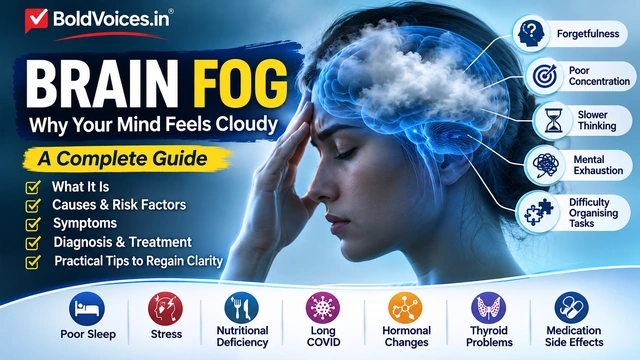
People experiencing brain fog often describe it as:
- Feeling mentally disconnected.
- Difficulty organising thoughts.
- Forgetting familiar words or names.
- Reduced concentration.
- Slower information processing.
- Mental exhaustion.
- Difficulty making decisions.
- Feeling confused or unusually distracted.
- Struggling to complete everyday tasks.
Brain fog can affect students, working professionals, homemakers, elderly individuals and people recovering from illnesses.
Its duration varies with the cause and with the individual.
2. What happens inside the brain during brain fog?
The human brain continuously performs several functions, including processing information, controlling emotions, storing memories and coordinating physical activities.
Brain fog may interfere with four important cognitive functions [1, 2].

Attention
Difficulty staying focused.
Memory
Difficulty retaining or recalling information.
Processing speed
Taking longer to understand information.
Executive function
Difficulty planning and organising activities.
Researchers are investigating several potential biological mechanisms behind brain fog, including inflammation, hormonal changes, disrupted sleep, metabolic abnormalities and altered nervous system functioning.
However, there is no single biological mechanism responsible for every case.
3. What causes brain fog?
Brain fog can develop due to a combination of lifestyle, psychological, nutritional and medical factors.
| Possible cause | Potential impact |
|---|---|
| Sleep deprivation | Reduced alertness and memory |
| Chronic stress | Mental exhaustion |
| Nutritional deficiencies | Impaired cognitive functioning |
| Dehydration | Severe dehydration can contribute to confusion |
| Depression | Slower thinking |
| Anxiety | Difficulty concentrating |
| Hormonal changes | Memory and attention difficulties |
| Thyroid disorders | Reduced mental and physical energy |
| Diabetes | Blood sugar-related cognitive difficulties |
| Long COVID | Persistent cognitive symptoms |
| Medication side effects | Drowsiness or mental confusion |
| Sleep apnoea | Poor sleep quality and daytime fatigue |
| Autoimmune disorders | Cognitive difficulties |
| Alcohol and substance misuse | Disrupted brain function |
Sleep deprivation and irregular sleeping habits
Sleep is essential for memory consolidation, emotional regulation and mental recovery.
Insufficient or fragmented sleep, including when shift work disrupts sleep, can affect cognitive performance.
Most adults need at least seven hours of sleep per night. Recommended amounts vary by age, and sleep quality also matters [3].
Chronic stress and professional burnout
Constant deadlines, financial worries, family responsibilities and workplace pressure can consume considerable mental energy.
Prolonged stress may interfere with attention, memory and sleep, making even ordinary tasks feel overwhelming.
Burnout can also contribute to emotional exhaustion and reduced professional performance.
Nutritional deficiencies
The brain depends on an adequate supply of energy and essential nutrients.
Vitamin B12 deficiency can cause cognitive and other neurological symptoms, even without anaemia. Iron or folate deficiency can contribute to anaemia and fatigue [4, 5, 22, 23].
Restrictive diets, inadequate food intake and certain absorption disorders can increase the risk of deficiencies.
Digital overload and excessive multitasking
Constantly switching between social media, emails, notifications and work applications places additional demands on attention.
Although smartphone use is not an established standalone medical cause of brain fog, excessive digital stimulation can contribute indirectly through disrupted sleep, distraction and mental fatigue.
Blood sugar fluctuations
The brain requires a stable energy supply.
Low blood sugar can produce confusion, weakness, sweating and difficulty concentrating. Blood glucose problems warrant a review with a healthcare professional [6].
People taking insulin or certain diabetes medications should be particularly aware of hypoglycaemia.
Thyroid disorders
An underactive thyroid may cause fatigue, slowed thinking, constipation, sensitivity to cold and weight changes [24].
Brain fog associated with thyroid dysfunction may improve when the underlying condition is properly treated.
Hormonal changes
Changes occurring during pregnancy, after childbirth, perimenopause and menopause can influence concentration and memory.
Sleep disturbances, emotional stress and hormonal fluctuations may collectively contribute [1, 21].
Medication side effects
Certain medicines can affect alertness, memory and concentration, including some sedating antihistamines, sleeping medicines, anti-anxiety medications, opioid painkillers and medicines with anticholinergic effects.
Patients should never discontinue prescribed medication without consulting their healthcare professional.
Other possible contributors include chronic pain, kidney or liver disorders, head injuries, autoimmune conditions and cancer treatment.
4. Brain fog after COVID-19
Brain fog received increased medical attention following the COVID-19 pandemic.
Some individuals experience ongoing neurological and cognitive symptoms long after recovering from their initial coronavirus infection.
The CDC lists difficulty thinking or concentrating among commonly reported Long COVID symptoms [7, 8].
Associated symptoms can include persistent tiredness, headaches, sleep disturbances, changes in memory, dizziness and reduced tolerance for everyday activities [7, 18, 19].
Researchers continue to investigate possible mechanisms, including immune dysfunction, inflammation and abnormalities involving blood vessels and the nervous system.
Importantly, persistent symptoms can exist even when routine medical tests appear normal.
Some patients also experience post-exertional malaise (PEM), in which physical or mental activity aggravates their symptoms. Symptoms can worsen hours or a day or two after activity. Discuss pacing and an individual activity plan with a clinician if this pattern occurs [8].
5. Brain fog among different age groups
Students and teenagers
Examination pressure, irregular sleep, excessive screen exposure, nutritional deficiencies and emotional difficulties may affect academic performance.
Working professionals
Persistent workload, long working hours, financial pressures and inadequate recovery time can contribute to cognitive fatigue.
Women
Pregnancy, postpartum recovery, iron deficiency, perimenopause and menopause may influence cognitive functioning.
Senior citizens
Medication interactions, chronic illnesses, sleep disorders, nutritional deficiencies and age-related cognitive changes require careful consideration.
Persistent cognitive difficulties warrant assessment, especially if everyday functioning changes [14, 20].
6. Brain fog, dementia, ADHD and depression: Are they the same?
Although these conditions may share certain symptoms, they are not interchangeable.
| Condition | Main characteristics |
|---|---|
| Brain fog | A collection of cognitive symptoms with various possible causes |
| Dementia | Cognitive decline that interferes with independent daily living |
| ADHD | A neurodevelopmental condition involving persistent inattention and/or hyperactivity and impulsivity [26] |
| Depression | A mood disorder that can affect thinking, motivation and memory |
| Anxiety | Excessive fear or worry that may interfere with concentration |
| Delirium | An acute disturbance of attention and awareness requiring urgent evaluation |
| Mild cognitive impairment | Noticeable cognitive decline without significant loss of everyday independence |
| Burnout | Occupational exhaustion associated with unmanaged workplace stress [16] |
Brain fog does not automatically mean that a person is developing dementia or Alzheimer’s disease.
Nevertheless, progressive memory deterioration, personality changes or increasing difficulty performing familiar tasks require medical assessment.
7. Can brain fog cause permanent brain damage?
Brain fog itself is a description of symptoms rather than proof of brain injury.
Whether cognitive difficulties are temporary or persistent depends largely on the underlying condition.
Symptoms associated with inadequate sleep or temporary stress may improve when these problems are resolved. Those associated with chronic neurological disorders, untreated nutritional deficiencies or other serious medical conditions may require long-term treatment.
The important step is identifying the cause rather than assuming that every episode is harmless.
8. How brain fog affects everyday life
Brain fog can interfere with nearly every aspect of daily functioning.
Professional life: Reduced productivity, missed deadlines, mistakes and difficulty communicating.
Education: Problems understanding new concepts, retaining information and completing examinations.
Relationships: Forgetting commitments, becoming frustrated or struggling to participate in conversations.
Financial decisions: Difficulty understanding complex documents, managing bills and evaluating financial risks.
Personal safety: Reduced alertness during driving, cooking or operating machinery.
Emotional well-being: Reduced confidence, frustration, social withdrawal and increased anxiety.
People experiencing significant impairment should avoid safety-critical activities until their symptoms have been assessed.
9. How is brain fog diagnosed?
There is no universal blood test or brain scan that confirms brain fog.
Doctors generally investigate the underlying reason for cognitive difficulties through medical history, physical examination and appropriate diagnostic tests.
The history, examination and symptom pattern guide the choice of tests [14]. A healthcare professional may consider:
| Investigation | Purpose |
|---|---|
| Complete Blood Count (CBC) | Investigate anaemia and other blood abnormalities |
| Vitamin B12 and folate | Identify nutritional deficiencies |
| Ferritin and iron studies | Assess iron status |
| Thyroid function tests | Investigate thyroid dysfunction |
| Blood glucose and HbA1c | Assess blood sugar regulation |
| Kidney and liver function tests | Investigate metabolic conditions |
| Electrolyte tests | Identify metabolic imbalances |
| Sleep study | Investigate suspected sleep apnoea [25] |
| Cognitive assessment | Evaluate memory and thinking abilities |
| Mental health assessment | Identify depression, anxiety or related conditions |
| MRI or CT scan | Investigate suspected structural or neurological abnormalities |
Not every patient requires all these investigations. Brain imaging, extensive vitamin panels and other specialised tests should be guided by clinical findings.
A general physician or internal medicine specialist is usually a suitable first point of contact. A referral to a neurologist, psychiatrist, endocrinologist or sleep specialist may follow when necessary.
10. Brain fog treatment: How can mental clarity be restored?
Treatment depends on the underlying cause. There is no universally effective brain fog medicine.

Improve sleep quality
Maintain consistent sleeping and waking times. Limit late-night caffeine, avoid unnecessary screen exposure before bedtime and seek treatment for persistent insomnia or suspected sleep apnoea.
Follow a balanced diet
Eat a varied diet containing vegetables, fruits, whole grains, adequate protein and healthy fats.
Correct nutritional deficiencies under medical supervision rather than relying on unregulated supplements.
Stay physically active
For adults able to exercise safely, at least 150 minutes of moderate-intensity activity per week is a general public health guideline [9].
Walking, cycling, swimming and yoga can support physical and mental well-being.
People experiencing post-exertional malaise should use an individually appropriate plan and avoid increasing activity through symptom flare-ups [8].
Manage stress
Meditation, breathing exercises, spending time with family, maintaining social connections and taking meaningful breaks may help reduce psychological stress.
Professional counselling or other evidence-based mental health treatment may be appropriate when symptoms persist.
Reduce cognitive overload
Perform one important task at a time. Use calendars, reminders, written instructions and structured routines.
Schedule demanding activities during periods when mental energy is highest, and allow adequate breaks between tasks.
Treat underlying medical conditions
Appropriate treatment for anaemia, thyroid disorders, diabetes, depression, sleep disorders or other diagnosed conditions may improve cognitive functioning.
11. Best foods for supporting brain health
No single food can cure brain fog. However, a balanced diet supports healthy nervous system functioning.
| Food | Nutritional benefit |
|---|---|
| Walnuts and almonds | Healthy fats and vitamin E |
| Eggs | Choline and vitamin B12 |
| Spinach and leafy vegetables | Folate and other micronutrients |
| Fatty fish | Omega-3 fatty acids |
| Flaxseeds and chia seeds | Plant-based omega-3 fats |
| Berries and seasonal fruits | Antioxidants and fibre |
| Dal, chickpeas and beans | Protein, iron and fibre |
| Whole grains and oats | Dietary fibre and energy |
| Milk and curd | Protein and vitamin B12 |
| Water | Supports normal hydration |
Individuals following a strictly plant-based diet should pay particular attention to obtaining adequate vitamin B12 through fortified foods or medically appropriate supplementation.
Excessive alcohol, highly restrictive diets and an overdependence on energy drinks should be avoided.
12. Do brain fog supplements actually work?
Some products are marketed as memory boosters or brain-health supplements.
Commonly promoted ingredients include vitamin B12, vitamin D, magnesium, omega-3 fatty acids, ginkgo biloba, ashwagandha and Brahmi.
However, scientific evidence supporting these products as universal treatments for brain fog remains insufficient.
Treating a confirmed deficiency is different from taking supplements without a medical indication.
Herbal products can interact with medicines or cause side effects [10].
Natural does not automatically mean safe, and expensive does not automatically mean effective.
13. A practical daily routine to support mental clarity
Morning
Wake up at a consistent time, drink water, get some daylight, undertake suitable physical activity and eat a balanced breakfast.
Daytime
Work in manageable intervals, minimise unnecessary notifications, take regular breaks, eat balanced meals and stay hydrated.
Evening
Spend time with family, reduce work-related stress, enjoy relaxing activities and avoid late caffeine consumption.
Night
Reduce digital stimulation, maintain a comfortable sleeping environment and allow sufficient time for sleep.
Consistency is more important than adopting an excessively complicated wellness routine.
Can brain fog be prevented?
Prevention depends on the cause. Consistent sleep and breaks can reduce some avoidable contributors. Getting help for a sleep disorder or reviewing a medicine that causes drowsiness with a clinician may also help. Cognitive symptoms can still occur despite healthy routines [1, 3, 25].
14. Brain fog self-assessment checklist
The following checklist can help people recognise patterns and prepare for a medical consultation. It is not a clinically validated diagnostic test.
Mental clarity checklist
Use this checklist to note the symptoms you experience. Record when they started, how often they occur and how they affect everyday tasks. Bring your notes to your appointment.
- I frequently forget recent information or conversations.
- I struggle to concentrate on ordinary tasks.
- I find it difficult to recall familiar words.
- I feel mentally exhausted during the day.
- My thinking feels slower than usual.
- I have difficulty organising or completing tasks.
- I experience unrefreshing or disrupted sleep.
- My cognitive difficulties affect my work or studies.
- My symptoms are persistent or becoming worse.
- My family or colleagues have noticed changes.
There is no diagnostic score or threshold. Even one persistent, worsening or disruptive symptom may warrant medical attention.
15. How long does brain fog last?
There is no fixed recovery period.
| Underlying situation | Possible duration |
|---|---|
| Temporary sleep deprivation | May improve with sufficient recovery sleep |
| Short-term stress | Varies with the stressor, sleep and recovery |
| Nutritional deficiency | Depends on the deficiency, its cause and treatment response [5] |
| Hormonal changes | Variable |
| Medication-related symptoms | Depends on the medication and treatment plan |
| Long COVID | Symptoms can persist for months or longer, and may fluctuate [7, 8] |
| Chronic medical conditions | May persist until adequately managed |
These are broad possibilities, not guaranteed recovery timelines.
16. When should you consult a doctor?
Consult a healthcare professional if brain fog persists, progressively worsens, interferes with work or everyday activities, or is accompanied by unexplained physical symptoms.
People with a history of neurological disorders, diabetes, thyroid problems or recent head injury may require particularly careful evaluation.
Emergency warning signs
Seek immediate medical attention
Sudden confusion by itself needs immediate medical assessment. Call emergency services for sudden confusion or signs of stroke, even if symptoms clear quickly [11, 12]. Other emergency signs include:
- Sudden facial drooping.
- Weakness or numbness on one side of the body.
- Sudden difficulty speaking or understanding speech.
- An unusually severe, sudden headache.
- Sudden loss of vision or balance.
- Seizures or loss of consciousness.
- Acute confusion accompanied by fever or a recent head injury.
In India, call 112 immediately for these emergency signs. If stroke is suspected, note when symptoms began and use emergency transport [12, 13].
These symptoms may indicate a stroke or another serious medical emergency. Immediate treatment can be lifesaving.
17. Common myths about brain fog
| Myth | Reality |
|---|---|
| Brain fog only affects older people. | It can occur at any age. |
| Brain fog means low intelligence. | Cognitive symptoms are not a measure of intelligence. |
| Brain fog always leads to dementia. | Many causes are unrelated to dementia. |
| Coffee can cure brain fog. | Caffeine may temporarily increase alertness but cannot treat every cause. |
| All brain fog is psychological. | Medical, neurological and metabolic causes also exist. |
| A normal brain scan rules out brain fog. | Cognitive symptoms can exist without visible structural abnormalities. |
| Supplements can permanently cure brain fog. | No supplement has been established as a universal cure. |
| Brain fog is laziness. | Cognitive difficulties can be genuine and disabling. |
18. Frequently asked questions
Is brain fog a mental illness?
Brain fog describes cognitive symptoms that can occur with physical illness, mental health conditions or problems such as inadequate sleep.
Can anxiety cause brain fog?
Anxiety can make it hard to concentrate and can disturb sleep. A healthcare professional can help assess anxiety and other possible contributors.
Can excessive mobile phone use cause brain fog?
Phone use can interrupt attention and late-night use can disrupt sleep. Persistent symptoms deserve assessment even if distraction makes them worse.
Can vitamin B12 deficiency cause brain fog?
Yes. Vitamin B12 deficiency can cause cognitive and other neurological symptoms [4, 5].
Can brain fog affect eyesight?
Vision changes need their own assessment. Sudden vision loss or other sudden stroke symptoms require emergency help [12].
Can brain fog cause headaches?
Headaches and cognitive symptoms can occur together, for example with Long COVID. A sudden, unusually severe headache requires emergency assessment [7, 12].
Can children experience brain fog?
Yes. Children and teenagers can experience difficulty with focus, memory and thinking speed. Ask a healthcare professional about symptoms that persist or interfere with school or daily life [2].
Is brain fog contagious?
The cognitive symptoms themselves cannot spread between people. Some infections can be followed by cognitive symptoms [7, 8].
Does meditation help brain fog?
Meditation may help some people manage stress. If symptoms persist, seek assessment for the underlying cause [15].
Can brain fog be completely cured?
Symptoms can improve when a contributing cause is addressed. How much and how quickly varies with the cause and the person.
Is there a specific medicine for brain fog?
There is no universal medicine for brain fog. Treatment targets the underlying cause or specific symptoms [1, 8].
Can brain fog occur without physical tiredness?
Yes. Problems with concentration, memory or word-finding can be the main symptoms someone notices.
19. The future of brain fog research
Researchers are investigating how immune changes, sleep disturbances, hormonal changes and other factors may relate to cognitive symptoms. Findings from one condition may apply only to that condition [2, 8].
- Long COVID and neurological recovery.
- Inflammation and cognitive functioning.
- The gut–brain relationship as an area of investigation.
- Hormonal changes and cognitive health.
- Better ways to measure cognitive difficulties.
- Chronic fatigue and nervous system changes.
- Personalised cognitive rehabilitation and follow-up.
Brain fog has no universal diagnostic criteria, biomarker or treatment. Research may help clinicians identify causes and choose more targeted care.
Conclusion
Brain fog can affect education, work, relationships and independence. Regular sleep, enough food and water, suitable activity and practical supports like reminders can help with daily functioning. If symptoms persist, worsen or interrupt daily life, arrange a medical assessment. Seek emergency help for sudden confusion or signs of stroke.
Medical disclaimer: This article is for educational purposes and does not replace professional medical advice, diagnosis or treatment.
#BrainFog #MentalClarity #BrainHealth #MentalHealth #LongCOVID #HealthyLifestyle #CognitiveHealth #MemoryLoss #StressManagement #HealthAwareness #Neuroscience #BoldVoices
Sources and medical references
- Cleveland Clinic — Brain fog symptoms, causes and treatment
- University College London Hospitals — Understanding and managing brain fog in young people
- CDC — Sleep duration and quality
- NIH Office of Dietary Supplements — Vitamin B12
- NICE — Vitamin B12 deficiency in over 16s
- CDC — Low blood sugar
- CDC — Long COVID signs and symptoms
- CDC — Long COVID clinical guidance, including post-exertional malaise
- CDC — Physical activity guidelines for adults
- NCCIH — Herb–drug interactions
- NHS — Sudden confusion
- CDC — Stroke signs and symptoms
- India Ministry of Home Affairs — Emergency Response Support System (112)
- Alzheimer’s Association — Primary care guideline for evaluating suspected cognitive impairment
- NCCIH — Meditation and mindfulness
- WHO — Burn-out as an occupational phenomenon
- Cleveland Clinic — Strategies for managing brain fog
- NHS — Long COVID
- University College London Hospitals — Cognition and brain fog after COVID
- National Institute on Aging — Understanding memory loss
- Cleveland Clinic — Menopause and memory changes
- NHS — B12 or folate deficiency anaemia
- NHS — Iron deficiency anaemia
- NHS — Underactive thyroid
- NHS — Sleep apnoea
- NIMH — Attention-deficit/hyperactivity disorder


