
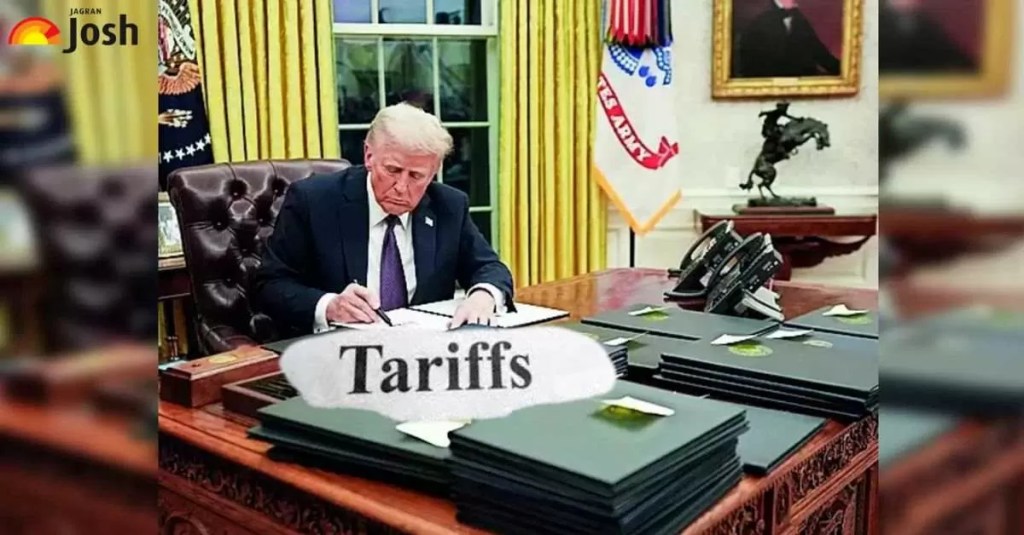
President Donald Trump’s administration has introduced a new tariff strategy aimed at addressing trade imbalances between the United States and its trading partners. This approach employs a specific formula to determine the tariff rates imposed on various countries.
The Tariff Calculation Formula
The formula calculates tariffs based on the trade deficit the U.S. has with a particular country. Specifically, it divides the U.S.’s trade deficit with that country by the total value of imports from the same nation. The resulting figure is then halved to determine the tariff rate, with a minimum threshold set at 10%. This means that even countries with minimal trade deficits face at least a 10% tariff.
Application of the Formula to Various Countries
Applying this formula has led to varying tariff rates for different countries. For instance, China faces a 34% tariff, while Vietnam is subjected to a 46% tariff. These rates reflect the significant trade deficits the U.S. holds with these nations. Conversely, countries with smaller trade imbalances are assigned the baseline 10% tariff.
Criticisms from Economists and Trade Experts
Economists and trade experts have raised concerns about this tariff calculation method. They argue that it oversimplifies complex trade relationships and fails to account for the multifaceted factors influencing trade balances, such as differences in production costs, consumer preferences, and the role of services in international trade. Critics also highlight that the formula does not consider the potential for retaliatory measures from affected countries, which could escalate into broader trade conflicts.
Potential Global Economic Implications
The implementation of this tariff strategy has significant implications for the global economy. Higher tariffs can lead to increased costs for consumers and businesses, disrupt global supply chains, and strain diplomatic relations. There is also the risk of triggering retaliatory tariffs from other nations, potentially leading to a cycle of escalating trade barriers that could hamper international trade and economic growth.
Conclusion
While the Trump administration’s tariff formula aims to address trade imbalances, it has sparked considerable debate regarding its effectiveness and potential consequences. The approach’s simplicity in calculation is juxtaposed with the complex realities of global trade, leading to concerns about its impact on both the U.S. and the international economic landscape.










 BoldVoices.in
Leave a comment