
India–Bangladesh Relations in 2025 — Cooperation, Competition, and Changing Equations
Written by Team of Boldvoices, Dated: 04 November 2025
1. A Relationship Rooted in History
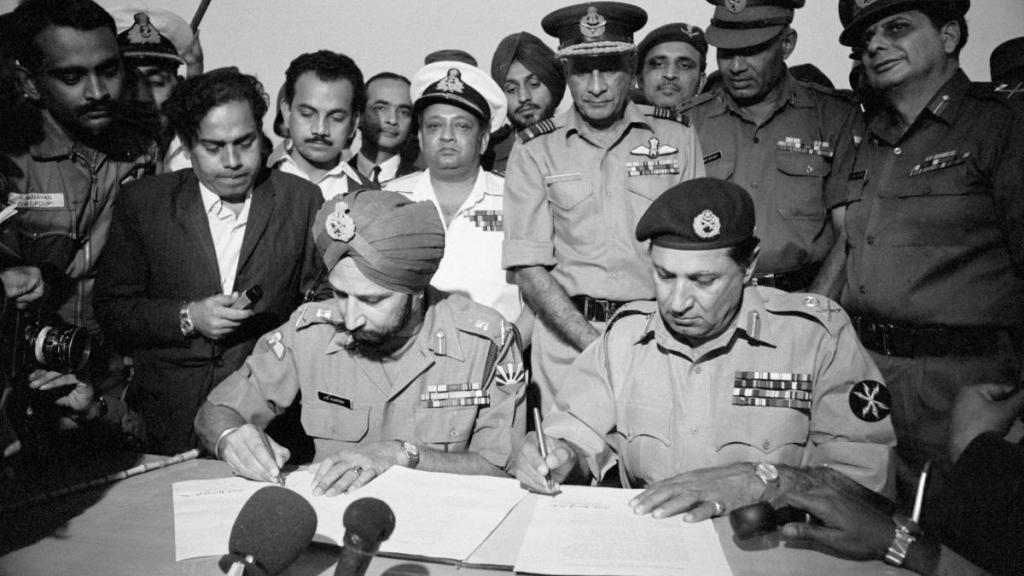
India and Bangladesh share a relationship that goes beyond politics — it is built on history, culture, language, and the spirit of liberation. Since 1971, when India played a key role in Bangladesh’s independence, the two nations have enjoyed a friendship based on shared heritage and mutual respect. Over the decades, their partnership has grown through trade, cultural exchanges, and regional connectivity.
2. Economic Partnership and Connectivity
Economically, Bangladesh is India’s biggest trading partner in South Asia. The two nations have strengthened cooperation in power, infrastructure, and logistics.
- Trade: In 2023–24, bilateral trade stood around US $16 billion, with India exporting essential goods like cotton, machinery, and petroleum, while importing garments, fish, and jute from Bangladesh.
- Energy: India supplies over 1,100 MW of electricity to Bangladesh, and the two countries operate the “India–Bangladesh Friendship Pipeline,” which carries diesel directly from Siliguri in India to Parbatipur in Bangladesh.
- Connectivity: Several new rail and road projects — such as the Akhaura–Agartala rail link and the Khulna–Mongla line — have improved connectivity between India’s Northeast and Bangladesh’s ports.
These developments highlight how both sides continue to rely on one another for economic growth and regional integration.
3. The Emerging Strain in 2025
Despite historical warmth, the relationship has entered a challenging phase in 2025. Several factors — political change in Dhaka, new trade restrictions from India, and shifting global alliances — have added layers of complexity to the partnership.
a) Trade Restrictions and Economic Tensions
India recently limited imports of several Bangladeshi goods through land ports, affecting nearly 40% of total exports to India. This move was officially attributed to concerns over dumping and product standards, but many analysts see it as part of India’s effort to protect local manufacturers.
In response, Bangladesh has voiced concern that these restrictions could hurt small traders and weaken the long-standing trade balance between the two nations.
b) Visa and People-to-People Issues
The sudden tightening of India’s medical visa policy for Bangladeshi citizens in early 2025 created public frustration in Dhaka. This gap was quickly filled by China, which began offering easier medical and business visas, strengthening its influence in Bangladesh.
c) Shifting Political Landscape in Dhaka
Bangladesh’s new government, which took office in late 2024, has emphasized a more “balanced” foreign policy. Dhaka’s statement that ties with India are undergoing a “readjustment phase” reflects a subtle shift away from the deep political alignment that existed during previous administrations.
d) China’s Expanding Role
Bangladesh has welcomed Chinese investments in infrastructure, ports, and healthcare, a development that raises strategic concerns in New Delhi. India remains cautious but has avoided direct criticism, preferring diplomatic engagement to maintain stability.
4. Strategic and Security Dimensions
India’s security concerns revolve around cross-border movement, smuggling, and the activities of extremist groups operating near the border. The 4,000 km + shared boundary — the fifth-longest land border in the world — demands constant coordination between security forces.
At the same time, connectivity through Bangladesh remains crucial for India’s Northeast. Any diplomatic chill can disrupt the logistics and trade routes that connect the region with the rest of India and Southeast Asia.
India continues to prioritize stability in Bangladesh as essential for regional security. Despite policy differences, both countries have cooperated in counter-terrorism and intelligence-sharing initiatives.
5. Water, Migration, and Border Challenges
Two long-standing issues — water sharing and migration — remain politically sensitive.
- The Teesta River water-sharing agreement is still pending due to state-level objections in India, creating discontent in Bangladesh’s northern districts.
- Illegal migration and border fencing continue to generate friction, though joint patrols have reduced violence along major crossing points.
These issues are less about hostility and more about governance and coordination — but they often become symbols of trust or distrust in bilateral discourse.
6. Balancing Cooperation with Autonomy
India views Bangladesh as a vital partner in its “Neighbourhood First” and “Act East” policies. However, as Bangladesh seeks greater strategic autonomy, Dhaka is also engaging more actively with China, Japan, and ASEAN nations.
For India, this calls for a recalibration — respecting Bangladesh’s independent foreign policy while reinforcing the benefits of a stable and friendly relationship. Development partnerships, cultural diplomacy, and people-to-people programs remain effective tools to preserve goodwill.
Bangladesh, on the other hand, recognizes India as an indispensable partner for trade, transit, and energy. It continues to value India’s support in times of crisis and development but is equally determined to diversify its international relations.
7. Traditional Perspective: Values and Vision
From a traditional lens, India and Bangladesh’s relationship has always symbolized shared destiny. Their civilizational bond, rooted in language, music, and human connection, is stronger than temporary political shifts.
In moments of strain, both sides must recall that real strength lies not in dominance, but in partnership — not in suspicion, but in trust. The people of both nations share blood, soil, and emotion; this cannot be undone by temporary policy disagreements.
8. The Road Ahead
The future of India–Bangladesh relations depends on how both nations navigate this current adjustment phase. Key priorities ahead include:
- Restoring trade balance through fairer policies and smoother border logistics.
- Finalizing the Teesta agreement to ensure equitable water distribution.
- Reviving medical and education visa programs to rebuild people-to-people ties.
- Enhancing cooperation in defense, climate, and digital innovation.
- Managing China’s growing presence in Bangladesh through positive engagement rather than confrontation.
9. Conclusion
As of late 2025, India and Bangladesh stand at a crossroads — bonded by history, yet adapting to new geopolitical realities. Their partnership remains strong but requires mutual understanding and pragmatic diplomacy.
India must blend its traditional neighborhood vision with modern strategic thinking. Bangladesh must balance its pursuit of autonomy with the wisdom of proximity.
If both nations handle this period with maturity, the relationship will not only recover but grow deeper — evolving from dependence to interdependence. The story of India and Bangladesh, after all, has always been one of shared struggles, shared successes, and shared futures.









 BoldVoices.in
Leave a comment