
By KSR, Editor at Boldvoices.in New Delhi Date: June 3, 2025
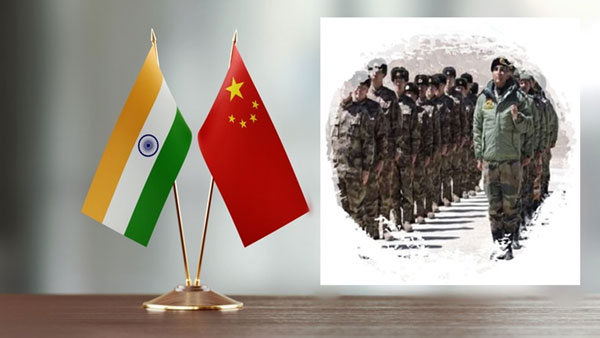
Introduction: A Quiet Storm on the Roof of the World
High above the sea, where the Himalayas scrape the sky and rivers are born in silence, a different current flows — one of mistrust, caution, and military alertness. India and China, ancient civilizations turned modern powers, remain entangled in a border dispute that echoes like a distant drumbeat in their diplomatic corridors. Though guns have fallen silent, the chill in the air lingers — not just from the altitude, but from a geopolitical frost. This is the era of Cold Peace — not war, not warmth — a fragile arrangement cloaked in restraint and strategy.
The Genesis of Discord
The India-China border dispute, particularly in eastern Ladakh and Arunachal Pradesh, is not just a quarrel over rocks and ridges. It is a legacy of history’s unresolved pages. The Line of Actual Control (LAC), an undefined and disputed boundary line, remains the core of contention. While India regards Aksai Chin as its own, China holds it and has built infrastructure to cement its hold. Similarly, China’s sweeping claim over Arunachal Pradesh — calling it ‘South Tibet’ — is an affront to India’s sovereignty.
The standoff intensified sharply in May 2020 when troops clashed in the Galwan Valley, leading to the first fatalities in decades. Since then, disengagement has been slow and partial. The mountains, once mute witnesses, now echo with the hum of drones, patrol boots, and surveillance radars.
Strategic Calculations: India’s Steadfast Posture
From the prism of Indian foreign policy, the standoff represents more than a border skirmish — it is a test of resolve, sovereignty, and national character.
India has responded with:
- Infrastructure Mirroring: Roads, bridges, and forward bases have been rapidly developed on the Indian side, countering years of Chinese advantage.
- Diplomatic Balancing: While committed to dialogue through Working Mechanisms and Corps Commander-level talks, India has also signaled red lines — sovereignty is non-negotiable.
- Strategic Realignments: India’s deeper engagements with the QUAD (U.S., Japan, Australia), enhanced ties with Southeast Asian nations, and growing military interoperability reflect a conscious tilt to balance China’s assertiveness.
India’s foreign policy thus embraces strategic autonomy — a stance that avoids alignment yet asserts national interest. It is neither submissive nor impulsive; it is patient, principled, and prepared.
China’s Calculus: Assertive yet Ambiguous
China’s posture is steeped in ambiguity and calculated pressure. Through salami-slicing tactics — incremental encroachments without triggering war — Beijing seeks to alter the status quo. For China, the Himalayan border is not just about territory, but about keeping India hemmed in, distracted, and diplomatically hesitant.
However, India’s firm response at Galwan sent a clear message: 1962 will not repeat. And this new India, shaped by resilience and realism, refuses to be coerced.
The Cold Peace: Between Engagement and Estrangement
Despite multiple rounds of dialogue, the border remains tense. Troops stand eyeball to eyeball, disengagement is patchy, and trust deficit deep. Yet, trade between the two countries has paradoxically surged, driven by mutual economic necessity.
This dichotomy — military caution alongside commercial interdependence — defines the Cold Peace. Unlike the Cold War of old superpowers, India and China are not ideological rivals but civilizational neighbours with overlapping aspirations and unavoidable frictions.
India’s Way Forward: A Path Rooted in Resolve
From a foreign policy standpoint, India’s approach remains nuanced and layered:
- Deterrence without Provocation: Strengthening border defenses and readiness, without seeking escalation.
- Dialogue with Dignity: Continuing diplomatic channels, but only on equal footing.
- Diversification of Alliances: Deepening ties with like-minded democracies, without becoming beholden to any bloc.
- Public Awareness and Political Unity: Ensuring that the nation, irrespective of internal divisions, speaks in one voice on sovereignty and security.
India understands that peace cannot be begged for — it must be built on preparedness, partnership, and a principled stand.
Conclusion: Standing Tall, Standing Firm
The snow-covered peaks of Ladakh and Arunachal have become quiet sentinels of this uneasy calm. In their shadows, two great nations navigate their ambitions. But for India, the road ahead is clear — national sovereignty is sacred, and while peace is preferred, strength is its prerequisite.
The Cold Peace may persist, but it is peace nonetheless — held not by handshakes alone, but by India’s unwavering stance, its silent soldiers, and its dignified diplomacy.
By KSR, Editor at Boldvoices.in, New Delhi









 BoldVoices.in
Leave a comment