
Date: May 15, 2025 Editorial by: Gurdeep Singh, Senior Editor at BoldVoices
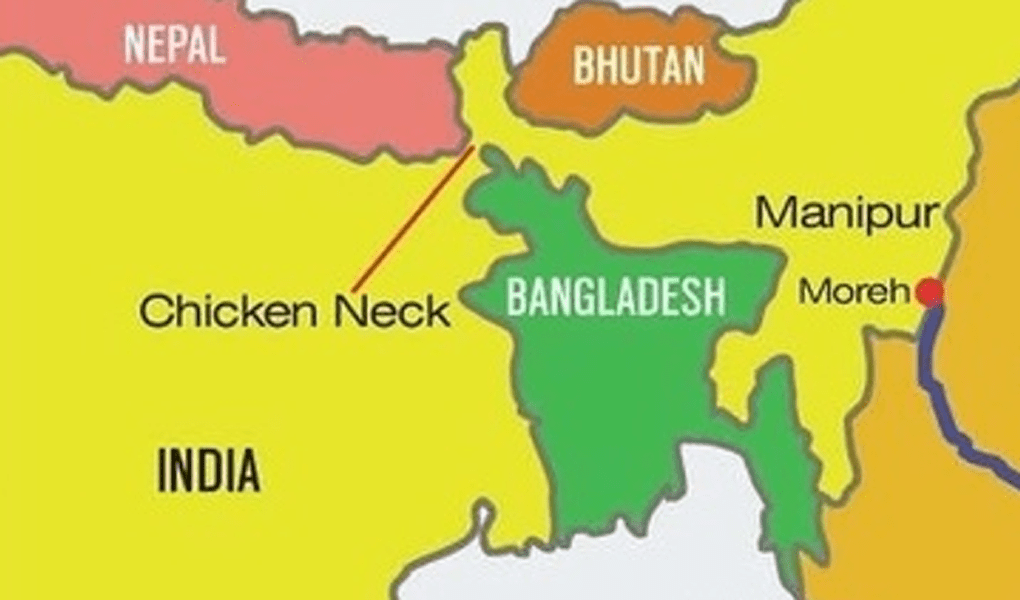
What is the Chicken Neck Corridor?
The Chicken Neck Corridor, also known as the Siliguri Corridor, is a narrow stretch of land located in the northern part of West Bengal. It connects India’s main territory to its northeastern states, including Arunachal Pradesh, Assam, Mizoram, and Manipur.
This corridor is only about 22 kilometers wide and serves as the passage for railway lines, roads, pipelines, and military supplies. It’s termed “Chicken Neck” because, on the map, it resembles a slender neck—making it one of India’s most vulnerable points.
Why is it So Vital for India’s Security?
1. Lifeline for the Military
If an adversary (like China or Pakistan) were to block this corridor, India’s connection to its northeastern states could be entirely severed. The Indian Army relies on this route for transporting weapons, logistics, food, and medicines.
2. China’s “Doklam Strategy”
In 2017, Indian and Chinese forces faced off in Doklam, a strategic area near the tri-junction of India, China, and Bhutan, located just a few kilometers from the Chicken Neck. If China were to gain control over this region, it could easily disrupt India’s connectivity to the northeast.
3. Collusion Between Pakistan and China
The growing proximity between Pakistan and China poses a threat to India. If both nations were to collaborate on a strategy, the Chicken Neck could be their primary target.
Benefits of Widening the Corridor
1. Enhanced Security
A wider corridor would facilitate easier movement and deployment of troops. Relying on a single route is risky; multiple pathways would provide alternatives during emergencies.
2. Easier to Deter Enemies
A broader area would grant our forces more space, resources, and preparation time. It would also simplify the installation of bunkers, radars, and missile systems along the borders.
What Are the Challenges?
1. Environmental Concerns
The region comprises forests and hills. Increased construction could impact the environment adversely.
2. Opposition from Local Communities
In some areas, issues related to land acquisition or displacement might arise.
3. Need for Political Will
It’s not enough to merely draft plans; implementing them on the ground, completing them on time, and maintaining coordination with the military are crucial.
The Chicken Neck and Bangladesh: What’s the Connection?
India’s Chicken Neck Corridor, or the Siliguri Corridor, is situated in northern West Bengal, close to the borders of Bangladesh, Nepal, and Bhutan. It connects India’s northeastern states to the rest of the country but is a narrow and sensitive route.
Bangladesh, once a part of India before 1971, lies adjacent to this area. If India could secure transit through Bangladeshi territory, it would not only reduce the distance but also alleviate pressure on the Chicken Neck.
Advantages of Routes Through Bangladesh
1. Alternative Pathways
If Bangladesh permits transportation through its territory, India wouldn’t have to rely solely on the Chicken Neck. This could serve as a significant strategic support during crises involving China or other threats.
2. Reduced Distance and Time
Currently, traveling from Kolkata to Assam requires a long journey through Siliguri. A route through Bangladesh could cut the distance by approximately 40%.
3. Faster Military and Logistics Supply
Transit through Bangladesh would expedite the movement of trucks, trains, and other supply mediums, bolstering military preparedness.
4. Boost to Trade and Development in the Northeast
Opening routes through Bangladesh would benefit not only the military but also invigorate trade, tourism, and employment in the northeastern regions.
Is Bangladesh Ready?
In recent years, India and Bangladesh have maintained good relations. Several agreements have been signed, such as:
- Construction of friendship bridges and roads
- Rail corridor (Akhaura-Tripura railway line)
- India-Bangladesh Transit Agreement
These developments raise hopes that Bangladesh will grant India transit rights through its territory, fostering peace and partnership.
Caution is Necessary from a Security Standpoint
- There’s a risk of terrorist activities and infiltration along the Bangladesh border.
- Countries like China and Pakistan might view this proximity unfavorably and could attempt to involve Bangladesh in anti-India alliances.
Conclusion:
The Chicken Neck Corridor is not just a geographical passage but a strategic lifeline for India. Widening it and exploring alternative routes through Bangladesh are imperative steps to ensure national security, foster regional development, and maintain connectivity with the northeastern states.
For the original article in Hindi, please visit: BoldVoices.in










 BoldVoices.in
Leave a comment