
Editorial by Gurdeep Singh, Senior Editor
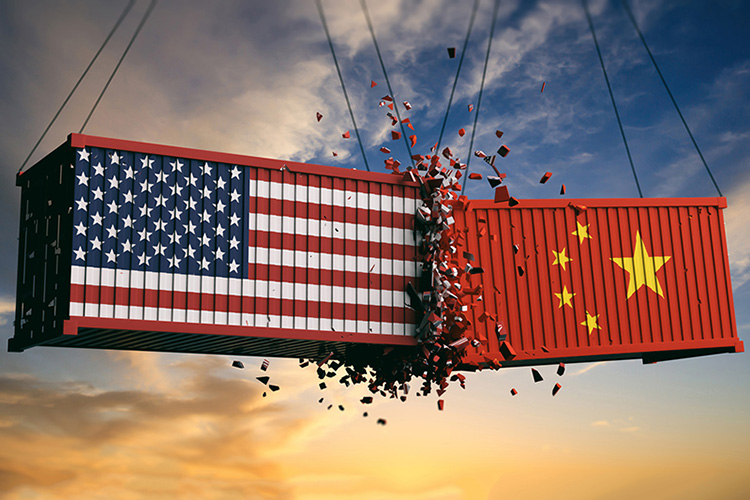
The power struggle between the United States and China has become the most decisive geopolitical competition of the 21st century. Through multi-dimensional strategies, the U.S. has begun to contain China’s influence on economic, technological, military, and diplomatic fronts. Recently, heavy tariffs imposed by the U.S. on Chinese goods and strategic alliances with partner nations have further escalated this confrontation.
1. Economic Warfare: Tariffs and Global Trade Pressure
▶ Recent Developments:
- In March 2025, the U.S. imposed up to 145% tariffs on imported Chinese goods.
- Specifically, sensitive items like fentanyl faced an additional 20% duty, dealing a major blow to China’s pharmaceutical exports.
- In retaliation, China imposed up to 125% tariffs on American goods, though the relative stability of the U.S. economy mitigated the impact.
▶ Effects:
- Chinese exporters are struggling to compete in the American market.
- U.S. companies are shifting manufacturing to countries like India, Vietnam, and Mexico.
- China is becoming increasingly isolated in the World Trade Organization (WTO).
2. Technological Containment: The Chip War and Digital Restrictions
▶ U.S. Measures:
- The U.S. has banned exports of advanced chips (for AI, high-performance computing, and military applications) to China.
- Companies like Huawei, ZTE, and TikTok have faced sanctions under data security concerns.
- The U.S. has also pressured allies to avoid Chinese technology.
▶ Outcomes:
- China has yet to successfully produce chips below the 7nm threshold, hindering its AI and defense sectors.
- U.S. and Taiwanese firms (like TSMC, Intel) maintain global technological leadership.
3. Military Containment: QUAD, AUKUS, and the Indo-Pacific Strategy
▶ Strategic Alliances:
- QUAD (U.S., India, Japan, Australia): Joint naval exercises and shared security policies aimed at balancing China’s influence in the Indo-Pacific.
- AUKUS (U.S., UK, Australia): Initiative to provide Australia with nuclear submarine technology, affecting China’s maritime strategy.
▶ Taiwan and the South China Sea:
- The U.S. continues to provide military and diplomatic support to Taiwan.
- U.S. Navy Freedom of Navigation Operations (FONOPs) in the South China Sea openly challenge China’s territorial claims.
4. Diplomatic Pressure and Global Alliances
▶ Human Rights Issues:
- The U.S. has highlighted human rights abuses against Uighur Muslims in Xinjiang, the suppression of Hong Kong’s autonomy, and repression in Tibet at international platforms.
- Sanctions, travel bans, and asset freezes have been imposed on select Chinese officials.
▶ Global Coalitions:
- The U.S. has collaborated with the European Union, NATO, and G7 nations to formulate joint strategies against China.
- Strengthened ties with democratic nations like India offer alternative leadership to China’s model.
5. Information Warfare and Media Narratives
- Western media continues to criticize China’s authoritarian model while promoting the democratic values of the U.S.
- Chinese state media has been restricted across the U.S. and Europe.
- Algorithmic changes have been implemented on social platforms to limit Chinese influence.
Conclusion:
The U.S. has adopted a comprehensive, multi-layered strategy to curb China’s global rise. From tariff wars and technological embargoes to military containment and diplomatic alliances, America has been largely successful in “beating” China on the world stage. However, this competition is far from over and is expected to intensify in the coming years.









 BoldVoices.in
Leave a comment