
The European Union’s Carbon Border Adjustment Mechanism (CBAM), set to commence its transitional phase in October 2023, has raised significant concerns for India. This mechanism aims to levy taxes on imports based on their carbon emissions, initially targeting sectors such as steel, aluminum, cement, fertilizers, electricity, and hydrogen. The definitive period begins on January 1, 2026, when importers will be required to make annual declarations, purchase CBAM certificates equivalent to the embedded emissions in their imports, and surrender them. The CBAM’s stated goal is to prevent carbon leakage by ensuring that imported goods are subject to the same carbon costs as products produced within the EU.
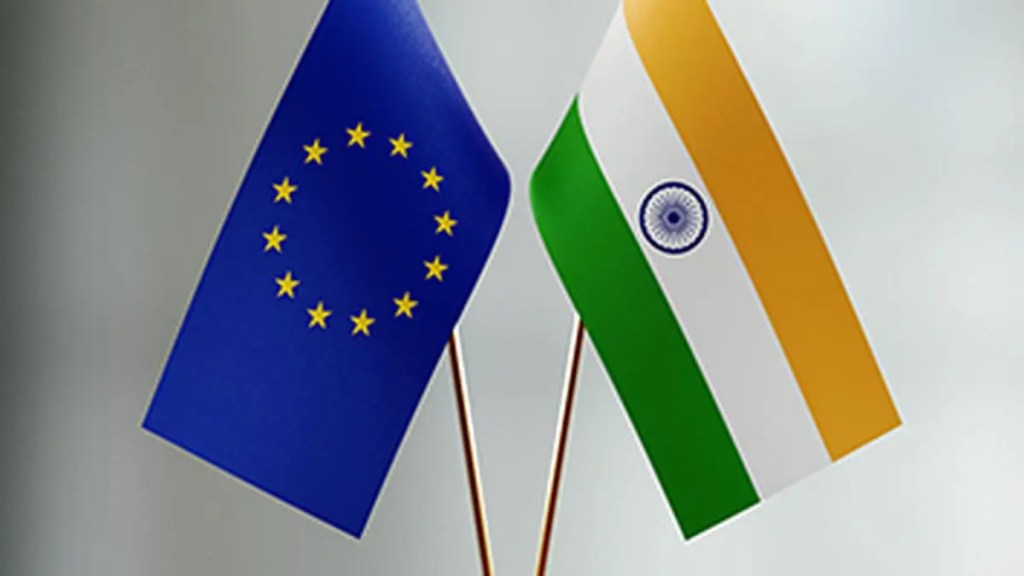
India has voiced strong opposition to this unilateral measure, viewing it as a trade barrier that could disproportionately impact developing nations. Finance Minister Nirmala Sitharaman has criticized the CBAM, describing it as “unilateral” and “arbitrary,” and expressing concerns about its potential to harm Indian industries. She emphasized that such measures are pretenses to convert the EU’s own “dirty” steel into green at another’s cost.
The CBAM is expected to significantly affect India’s exports, particularly in the iron, steel, and aluminum sectors. The Global Trade Research Initiative estimates that the tax could translate into a 20-35% tariff on these exports, which currently attract minimal duties. Given that approximately 27% of India’s exports in these sectors, valued at $8.2 billion, are destined for the EU, the financial implications are substantial.
In response, India is exploring several strategies to mitigate the impact of the CBAM. One approach under consideration is the implementation of a domestic carbon tax on exports to the EU, with the collected funds being utilized to support the green energy transition within India. Commerce and Industry Minister Piyush Goyal has indicated that such a tax could help neutralize the CBAM’s effects and promote sustainable practices domestically.
Furthermore, India is engaging in diplomatic efforts to address these concerns. Discussions with the EU are underway to seek recognition of India’s existing carbon taxes and decarbonization initiatives, aiming to achieve equivalence with the EU’s Emissions Trading System. India is also advocating for adherence to the principles of common but differentiated responsibilities, as outlined in the Paris Agreement, to ensure that the CBAM does not unfairly penalize developing countries.
Additionally, India is collaborating with other developing nations and international forums to collectively oppose the CBAM. By forming alliances with countries similarly affected, India aims to present a unified front against what is perceived as a discriminatory trade measure. This collective approach seeks to highlight the CBAM’s potential to hinder the economic development of emerging economies and to push for more equitable climate action policies.
In parallel, Indian industries are being encouraged to proactively adapt to these impending changes. Investing in cleaner technologies, improving energy efficiency, and reducing carbon footprints are essential steps for exporters to remain competitive in the EU market. Industry bodies are urged to collaborate with energy auditors and sustainability experts to facilitate this transition.
In conclusion, the EU’s CBAM presents a multifaceted challenge for India, encompassing economic, environmental, and diplomatic dimensions. Through a combination of domestic policy adjustments, international diplomacy, and industry adaptation, India seeks to navigate this complex landscape and safeguard its economic interests while contributing to global climate objectives.








 BoldVoices.in
Leave a comment