
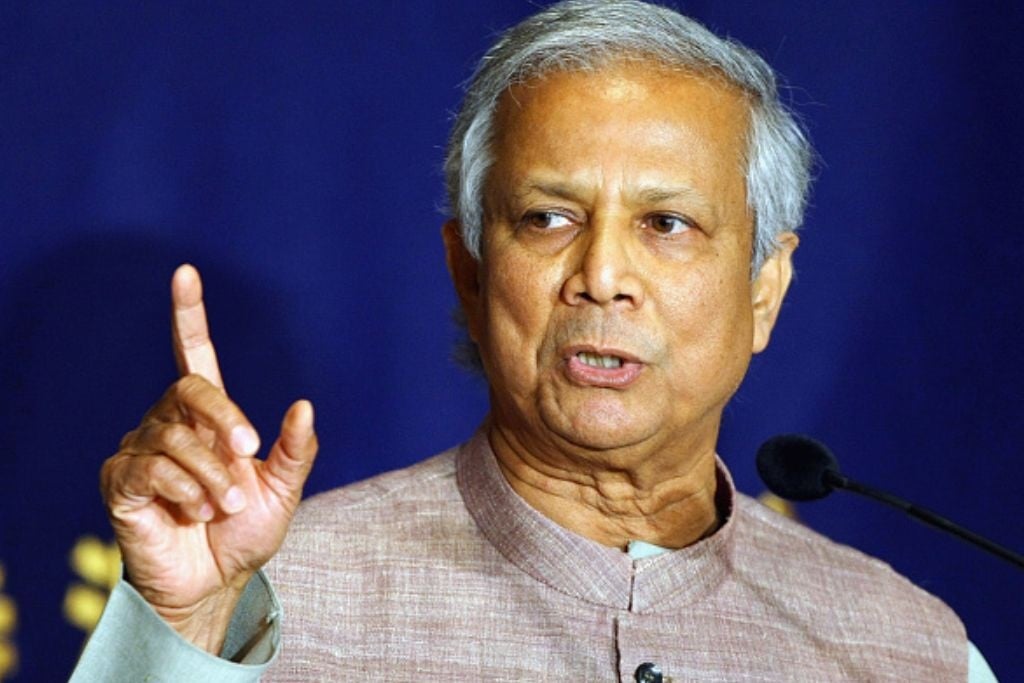
The recent remarks by Muhammad Yunus, the chief advisor of Bangladesh’s interim government, during his visit to China have introduced new tensions into India-Bangladesh relations. Yunus characterized India’s northeastern states as “landlocked” and referred to Bangladesh as their “only guardian of the ocean,” inviting Chinese investment in the Teesta River Comprehensive Management and Restoration Project (TRCMRP). This invitation could potentially grant China a strategic presence near India’s sensitive “chicken’s neck” corridor, which connects the Northeast to the rest of the country.
Historically, China’s involvement in India’s Northeast has been a source of concern. The 1962 war saw Chinese forces advancing into Assam, and there have been instances of China supporting insurgencies in Nagaland and Assam. Additionally, China’s ongoing territorial claims in Arunachal Pradesh further complicate the regional dynamics. Yunus’s suggestion that India’s Northeast could serve as an “extension of the Chinese economy” reflects a lack of awareness regarding the area’s complex history and demographic sensitivities.
Moreover, Yunus’s assertion of Bangladesh as the “guardian of the ocean” overlooks the strategic significance of the Bay of Bengal to India. India envisions the Bay of Bengal Initiative for Multi-Sectoral Technical and Economic Cooperation (BIMSTEC) as a pivotal regional economic zone. Given that Dhaka hosts the BIMSTEC headquarters, its overtures to Beijing, especially in seeking economic support, may be perceived as undermining regional cooperation efforts.
In light of these developments, it is imperative for Bangladesh to exercise caution in its foreign engagements, ensuring that its actions do not inadvertently strain relations with neighboring countries or destabilize regional harmony.










 BoldVoices.in
Leave a comment