
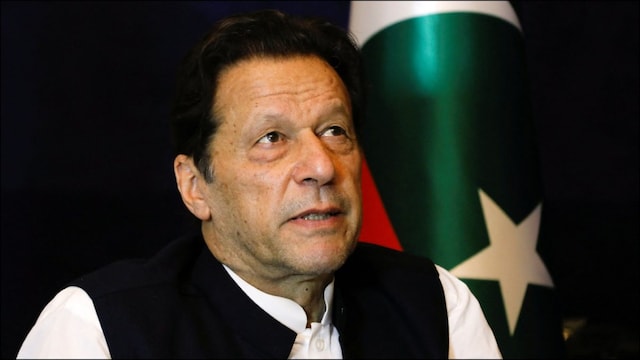
Former Prime Minister of Pakistan, Imran Khan, has garnered international attention with his recent nomination for the Nobel Peace Prize. This recognition stems from his ongoing efforts to champion human rights and democracy, both within Pakistan and on a global scale.
Background
Imran Khan, who served as the Prime Minister from August 2018 until April 2022, has had a dynamic career as a politician, cricketer, and philanthropist. His rise to prominence began in the sporting world, where he captained the Pakistan national cricket team to its first and only Cricket World Cup victory in 1992. Following his retirement from cricket, Khan turned to politics, founding the Pakistan Tehreek-e-Insaf (PTI) party in 1996.
Khan’s political journey has been characterized by his commitment to various progressive causes, including the promotion of welfare programs aimed at reducing poverty, improving education, and ensuring healthcare access for all citizens.
Human Rights and Democracy Efforts
Khan’s nomination for the Nobel Peace Prize is largely attributed to his advocacy for human rights and democratic principles. Throughout his premiership, he focused on several key issues:
Human Rights Advocacy
Imran Khan has consistently spoken out against human rights violations, advocating for the rights of various marginalized groups in Pakistan. His administration made efforts to address issues such as gender inequality, child labor, and the rights of religious minorities. His government’s initiatives included the establishment of the “Ehsaas Program,” which aims to provide financial assistance to the underprivileged and promote women’s empowerment.
Democratic Governance
Khan’s commitment to democracy was evident during his time in office, where he advocated for transparency and accountability in governance. He emphasized the importance of free speech and independent media, believing that these elements are crucial for a functioning democracy. Khan’s leadership style aimed to engage citizens in the political process, encouraging civic participation and dialogue.
Regional Peace Efforts
In addition to domestic policies, Khan has also worked towards fostering peace in the region. His diplomatic efforts included attempts to improve relations with neighboring countries, particularly India, and advocating for peaceful resolutions to conflicts. He has called for dialogue and understanding as essential tools for achieving lasting peace in South Asia.
Members of the Pakistan World Alliance (PWA) – an advocacy group founded last December – who also belong to the Norwegian political party Partiet Sentrum, announced the nomination of Khan, 72.
“We are pleased to announce on behalf of Partiet Sentrum that in alliance with somebody with the right to nominate, have nominated Imran Khan, the former prime minister of Pakistan, to the Nobel Peace Prize for his work with human rights and democracy in Pakistan,” Partiet Sentrum said on X on Sunday.
Support and Reactions
The nomination of Imran Khan for the Nobel Peace Prize has been met with mixed reactions. Supporters laud his efforts to promote human rights and democracy as deserving of international recognition. They argue that awarding him the Nobel Peace Prize would not only honor his work but also shine a light on the ongoing struggles for human rights in Pakistan and beyond.
Critics, however, caution against viewing Khan’s government through a purely positive lens, citing challenges such as political polarization and accusations of suppression of dissent. Nonetheless, the nomination itself has sparked important conversations on the state of democracy and human rights in Pakistan.
Conclusion
As the Nobel Committee deliberates on nominees, Imran Khan’s nomination serves as an impetus for further dialogue around the essential values of human rights and democracy. It highlights the global community’s recognition of the importance of these issues in fostering peace and stability. Regardless of the outcome, Khan’s nomination is a testament to his influence and the impact of his efforts on the world stage. The coming months will be pivotal in determining whether Khan’s contributions are acknowledged through the prestigious Nobel Peace Prize.








 BoldVoices.in
Leave a comment