
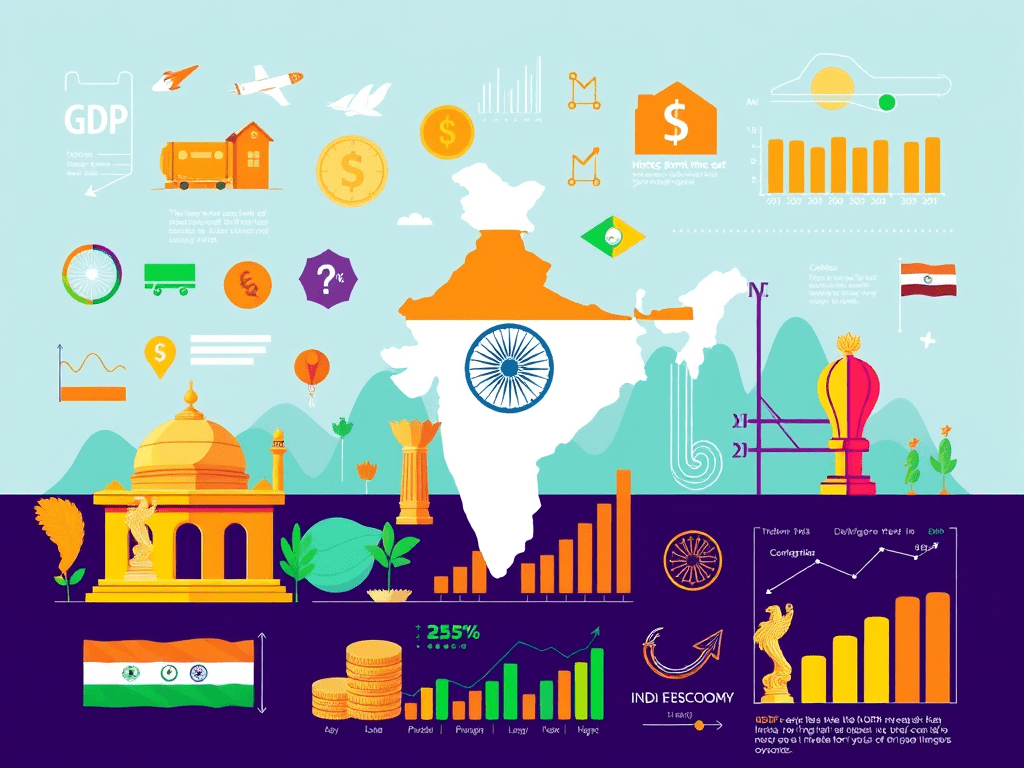
India’s economy is on a robust growth trajectory, with projections indicating an impressive growth rate of 6.5% in the fiscal year 2025-2026 (FY26). Various factors contribute to this optimistic outlook, and understanding them is essential for analyzing the country’s economic landscape.

Current Economic Landscape
As of 2023, India is one of the fastest-growing major economies in the world. The recovery from the global pandemic, along with various governmental reforms and investments, has played a significant role in sustaining economic growth. As India further integrates into the global economy, it has become a preferred destination for foreign direct investment (FDI).
Key Factors Driving Growth
1. Increased Domestic Demand
The resurgence of consumer confidence post-pandemic has led to a rise in domestic consumption. As disposable incomes increase and urbanization continues, demand for goods and services is projected to rise. This growth in consumer spending will significantly contribute to the overall GDP growth.
2. Government Policies and Reforms
The Indian government has implemented numerous structural reforms aimed at improving the business environment. Initiatives like ‘Make in India’ and ‘Digital India’ have attracted global investors and enhanced the manufacturing sector. Ongoing structural reforms in taxation and labor laws also support the economy’s expansion.
3. Infrastructure Development
Investments in infrastructure are critical for India’s economic growth. The government has announced significant spending on roads, railways, ports, and airports, which not only creates jobs but also facilitates trade and investment. Infrastructure development enhances productivity and is vital for long-term sustainable growth.
4. Foreign Direct Investment
India has been drawing substantial foreign direct investment, making it one of the top destinations globally. The government’s efforts to simplify procedures, reduce corporate taxes, and promote ease of doing business have created an attractive environment for international investors, further boosting economic growth.
5. Technological Advancements
The rapid expansion in sectors like information technology, e-commerce, and fintech is a significant contributor to India’s economic growth. Start-ups and innovation ecosystems are flourishing, leading to increased productivity and job creation across various sectors.
Sectoral Contributions
While the overall GDP growth rate is projected at 6.5%, different sectors will contribute uniquely to this growth:
- Agriculture: Expected to see moderate growth due to favorable monsoon patterns and government support.
- Manufacturing: Growth is projected to be robust as the government focuses on boosting this sector through initiatives and investments.
- Services: The service sector, particularly IT and Business Process Management (BPM), will continue to thrive, propelling economic growth.
Challenges Ahead
Despite a positive outlook, India’s economy faces certain challenges that could impede growth:
- Inflation Concerns: Rising inflation can erode purchasing power and consumer confidence.
- Global Economic Instability: Fluctuations in the global market and geopolitical tensions could impact trade and investment.
- Unemployment: While job creation is a focus, ensuring enough jobs for the growing workforce remains a challenge.
Conclusion
India’s projected economic growth of 6.5% for FY26 reflects a resilient economy bolstered by domestic demand, governmental reforms, and infrastructure development. While challenges remain, the efforts to foster a conducive business environment and promote growth across sectors are likely to sustain this growth momentum. As India continues on this path, the focus will be on maintaining balance and ensuring inclusive growth to benefit all segments of society.
This projection not only positions India as a rising global power but also offers vast opportunities for businesses and investors alike, contributing to a stronger economic future.










 BoldVoices.in
Leave a comment