
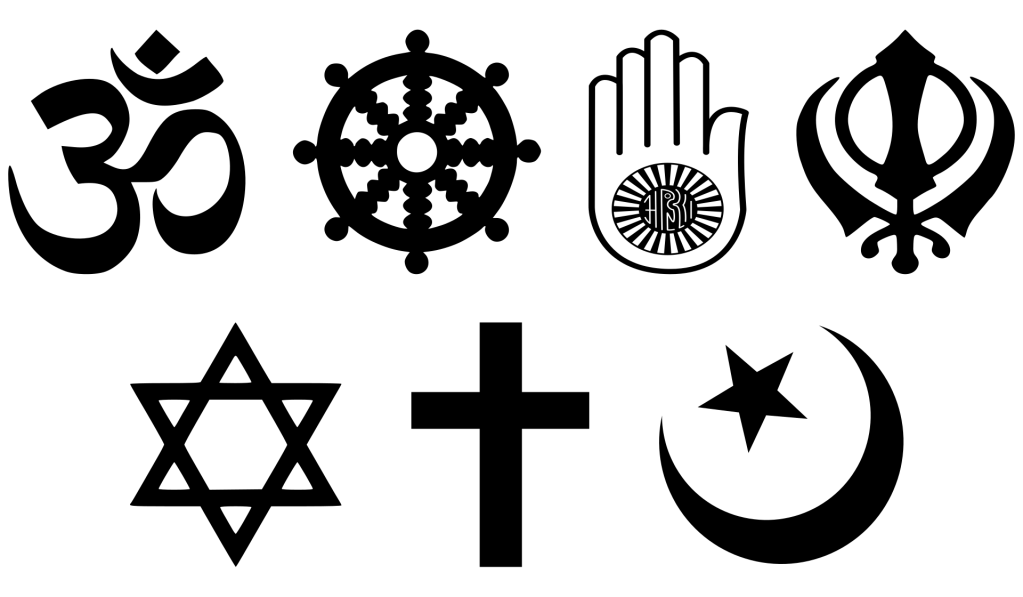
Hinduism, one of the world’s oldest religions, offers a rich tapestry of beliefs, practices, and philosophies that have influenced billions of lives over thousands of years. As one of the major world religions, it stands alongside Christianity, Islam, Buddhism, and many others, each with its unique characteristics. This article delves into the similarities and differences between Hinduism and other religions, highlighting how these traditions intersect and diverge.
Overview of Hinduism
Hinduism is characterized by a diversity of beliefs and practices, encapsulated by concepts such as Dharma (duty/ethical behavior), Samsara (cycle of rebirth), Karma (action and its consequences), and Moksha (spiritual liberation). Unlike many other religions, Hinduism has no single founder, central religious authority, or universally accepted scripture. Instead, it’s a collection of various regional beliefs, rituals, and philosophies, often including deities like Vishnu, Shiva, and Devi.
Core Beliefs in Hinduism
- The Concept of God:
- Hinduism embraces a range of beliefs regarding the divine, including monotheism, polytheism, and pantheism.
- God can be seen as a single entity (Brahman) as well as through various deities (goddesses and gods) representing different aspects of the divine.
- Reincarnation and Karma:
- Hindus believe in the cycle of life, death, and rebirth (Samsara), which is influenced by one’s actions (Karma).
- Good actions lead to favorable rebirths, while bad actions can cause suffering in future lives.
- Dharma:
- Dharma refers to the moral law combined with spiritual discipline that guides one’s life.
- Each individual has their own dharma based on their caste, age, gender, and occupation.
- Moksha:
- The ultimate goal in Hinduism is Moksha, the liberation from the cycle of Samsara.
- This is achieved through knowledge, meditation, and devotion.
Similarities with Other Religions
1. Belief in a Higher Power
Both Hinduism and other world religions, such as Christianity and Islam, emphasize the existence of a higher power. While Christianity and Islam assert a single, omnipotent God, Hinduism presents a more complex view. The understanding of the divine, whether as a singular entity or in multiple forms, reflects a broader belief in spiritual forces that govern the universe.
2. Moral and Ethical Codes
Most religions, including Buddhism and Judaism, promote ethical behavior. Hinduism’s concept of Dharma closely parallels these moral teachings. For instance, the Ten Commandments in Christianity and the teachings of the Buddha on right conduct resonate with the moral underpinnings found within Hindu texts like the Manusmriti.
3. Rituals and Worship Practices
Religious rituals and places of worship are central features in all major religions. In Hinduism, rituals (puja) vary widely, encompassing offerings, prayers, and festivals that resonate with communal and cultural aspects, similar to shared practices in Christianity (Mass, Eucharist) and Islam (Salat, the five daily prayers).
4. Afterlife Beliefs
Concepts of the afterlife are present in many religions. While Hinduism offers a detailed framework of rebirth and Karma, Christianity, Islam, and even Buddhism elaborate on rewards and punishments that follow death, reflecting humanity’s universal quest to understand existence beyond this life.
Differences with Other Religions
1. Inclusivity and Pluralism
Hinduism is unique in its acceptance of multiple paths to the divine, often celebrating diversity rather than enforcing strict dogmas. While Christianity and Islam have clear doctrinal teachings and often exclusive views on salvation, Hinduism acknowledges a variety of beliefs and practices, allowing for personal interpretation of spirituality.
2. Caste System and Social Structure
The caste system is a distinct feature of Hindu society, shaping social interactions, occupations, and community life. Unlike the egalitarian principles found in many world religions, such as Buddhism and Christianity, which advocate for equality, the caste system can lead to social stratification that is criticized both within and outside Hindu communities.
3. Scriptural Authority
While most religions have a set of scriptures that are held as authoritative (like the Bible in Christianity or the Quran in Islam), Hinduism comprises a vast array of texts, including Vedas, Upanishads, Puranas, and more. The absence of a single authoritative text reflects the religion’s fluid nature.
4. Philosophical Approach to Existence
Hinduism encompasses a wide range of philosophical schools (like Advaita and Dvaita) that explore the nature of existence, reality, and consciousness. This breadth often contrasts with the more doctrinal approaches seen in other religions, focusing on established beliefs and teachings.
Conclusion
Hinduism, with its complex beliefs and practices, shares similarities with other major world religions regarding the concept of a higher power, the importance of ethics, and the significance of rituals. However, it is distinguished by its pluralism, unique social structure, and varied philosophies. Understanding these similarities and differences enriches our appreciation of the diverse ways human beings seek meaning, connect with the divine, and navigate the world around them.
By exploring these dimensions of Hinduism and its interactions with other faiths, we gain valuable insights into the complexities of human spirituality and the cultural expressions that emerge from this profound quest.








 BoldVoices.in
Leave a comment