
The caste system, a complex social hierarchy that has shaped Hindu society for centuries, is deeply intertwined with the religion’s history, scriptures, and cultural practices. Traditionally consisting of four primary categories—Brahmins, Kshatriyas, Vaishyas, and Shudras—this system has been the subject of extensive examination and reinterpretation in contemporary society. This article delves into the historical context of the caste system, its implications, and the modern interpretations that challenge traditional norms and advocate for social equality.
Historical Context
Origins in Hindu Texts
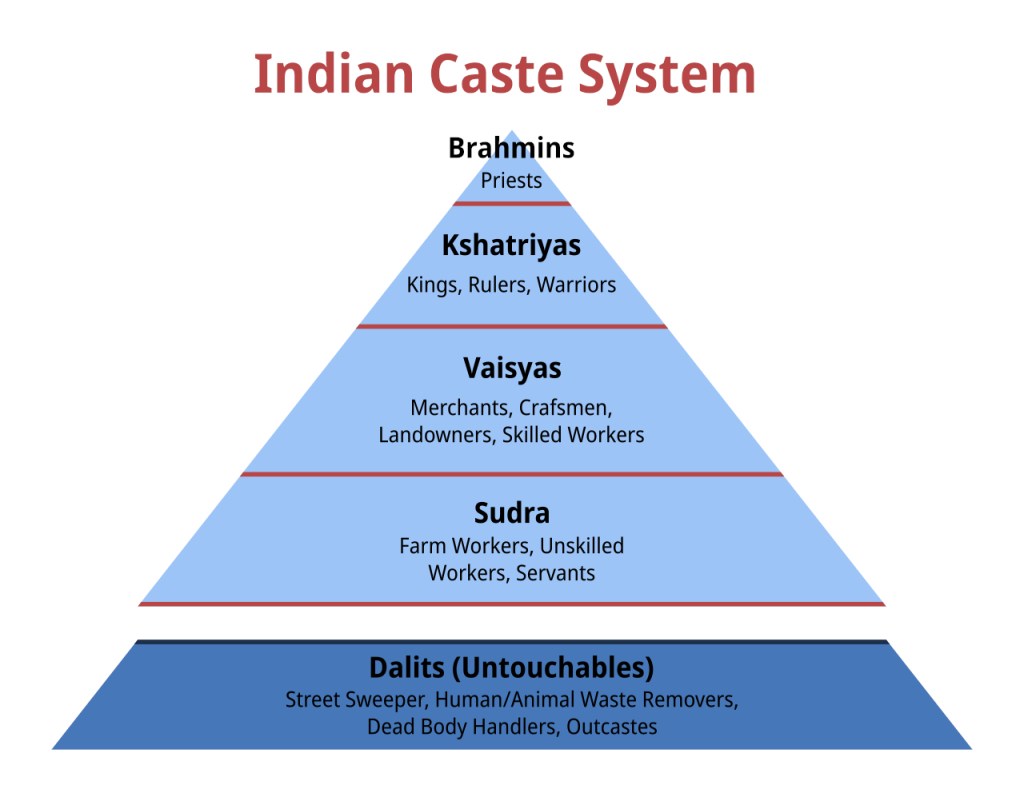
The roots of the caste system can be traced back to ancient Hindu texts, particularly the Vedas, where varna (meaning color or type), was initially used to describe the roles within society. The Rigveda, one of the oldest sacred texts, mentions a purusha (cosmic man) whose sacrifice supposedly gave birth to the four varnas, suggesting a divine origin.
- Brahmins: Priests and scholars responsible for religious rituals and knowledge transmission.
- Kshatriyas: Warriors and rulers tasked with protection and governance.
- Vaishyas: Merchants and farmers engaged in trade and agriculture.
- Shudras: Laborers and service providers who supported the other three varnas.
Over time, these classifications became rigid, with social mobility becoming increasingly difficult, leading to a hierarchical structure based on birth rather than merit.
Colonial Influence and Reform Movements
During British colonial rule in India, the caste system faced scrutiny and critique. The British administration utilized caste distinctions for administrative convenience, reinforcing divisions. This led to reform movements in the 19th and 20th centuries, with figures like Raja Ram Mohan Roy, Iswar Chandra Vidyasagar, and B.R. Ambedkar advocating for the rights of the oppressed classes, particularly the Dalits (formerly referred to as “untouchables”).
Ambedkar, himself born into a Dalit family, was a vocal critic of the caste system. He emphasized the need for education and social rights, advocating for a complete overhaul of the traditional caste structure. His efforts culminated in the framing of the Indian Constitution in 1950, which outlawed untouchability and recognized the rights of all citizens.
Contemporary Views on the Caste System
In today’s India and among the global Hindu community, interpretations of caste have evolved significantly. These modern views seek to reconcile traditional beliefs with contemporary values of social justice and equality.
1. Social Justice Movements
Modern interpretations strongly emphasize social justice and the need to dismantle caste-based discrimination. Various movements advocate for the rights of marginalized communities, seeking to challenge centuries of oppression. The empowerment of Dalit communities has been at the forefront of these efforts, with organizations and leaders working tirelessly to create awareness and promote equality.
2. Legal and Political Framework
The Indian Constitution provides a robust framework for the protection of individual rights. Article 17 abolishes “untouchability,” and the government implements affirmative action policies to uplift scheduled castes and tribes by reserving seats in educational institutions and government jobs. These measures aim to mitigate historical injustices and promote inclusivity.
3. Cultural Re-evaluation
In contemporary society, there is a growing movement among many Hindus to reevaluate their perspectives on caste. The increasing acceptance of inter-caste marriages and relationships represents a significant shift in cultural attitudes. Many young people are now challenging traditional norms, advocating for a society where merit and capability supersede caste affiliation.
Grassroots organizations and community groups focus on creating awareness about caste-based discrimination, pushing for social cohesion and intercaste harmony. Artists, writers, and filmmakers also play a vital role in narrating stories that challenge caste norms and promote inclusivity.
4. Global Perspectives
As Hindu communities spread across the globe, particularly in countries such as the United States, Canada, and the United Kingdom, interpretations of the caste system have become even more complex. In these contexts, caste is often viewed through the lens of social justice and multiculturalism.
Hindu diaspora communities face the challenge of reconciling their cultural heritage with the values of the societies they inhabit. Many in the diaspora are actively involved in anti-caste discrimination initiatives, advocating for the rights of those marginalized by caste hierarchies.
This global engagement prompts a rethinking of caste, urging Hindus to focus more on shared humanity and equality, regardless of traditional boundaries.
Criticism and Challenges
Despite the progress made in challenging the caste system, several obstacles remain. There continue to be accusations of discrimination and social exclusion based on caste in various parts of India and abroad. Reports detailing violence against Dalits and marginalized communities underscore the persistence of deep-seated prejudices.
Moreover, while affirmative action policies have facilitated progress for some, critiques point to the risk of complacency among the privileged classes which can hinder the broader goals of equality and social reform.
Views of Dr. Babasaheb Ambedkar on the Caste System
Dr. B.R. Ambedkar, a prominent social reformer, jurist, and the principal architect of the Indian Constitution, held profound views on the caste system that shaped his advocacy for social justice and equality.
1. Critique of Caste Hierarchy
Ambedkar was a fierce critic of the caste system, which he saw as a fundamental barrier to social progress. He argued that the caste structure was not just a social arrangement but a system of oppression that perpetuated inequality. In his writings, he emphasized that castes are characterized by restrictions and discrimination, which undermines the principles of liberty, equality, and fraternity.
2. Call for Social Reform
Believing that caste was incompatible with democracy, Ambedkar advocated for extensive social reform. He argued for the necessity of abolishing caste distinctions and promoting social mobility. His vision was a society where individuals were judged based on their abilities and contributions rather than their caste background.
3. Education and Empowerment
Ambedkar emphasized the importance of education as a powerful tool for liberation. He believed that education would empower the marginalized communities, particularly the Dalits, enabling them to demand their rights and challenge oppressive systems. He often said, “Cultivation of mind should be the ultimate aim of human existence,” highlighting education’s role in achieving social justice.
4. Ambedkar’s Vision for a New Society
Ambedkar envisioned a society where social equality was paramount. His drafting of the Indian Constitution included provisions aimed at protecting the rights of marginalized communities, such as the abolition of untouchability and affirmative action policies. He was determined to build a framework that not only recognized but actively promoted social justice.
5. Advocacy for Separate Electoral Rights
Ambedkar supported separate electoral rights for Dalits, believing that this would give them political representation and a voice in the governance process. His advocacy for the separate electorate was a controversial stance that was ultimately incorporated into a broader concession during negotiations with the British government.
6. Legacy and Continued Relevance
Ambedkar’s thoughts on the caste system continue to resonate today, influencing modern social movements and discussions around caste-based discrimination. His legacy inspires advocacy for social justice, reminding individuals of the ongoing struggle against casteism and the importance of striving for an inclusive society.
Dr. Babasaheb Ambedkar’s insights into the caste system underscore the necessity of addressing the historical injustices associated with it and continue to inspire movements dedicated to equality and human rights.
Views of Mahatma Gandhi on the Caste System
Mahatma Gandhi, a preeminent leader in India’s struggle for independence and a pivotal figure in the promotion of social reforms, held a nuanced stance on the caste system. His views significantly influenced the conversation around caste and social justice during the early 20th century.
1. Belief in Varna System
Gandhi distinguished between the ancient varna system and the rigid caste system that emerged over time. He believed that the varna system, which categorizes people based on their duties and responsibilities, could coexist with societal progress if interpreted in a benign way. He posited that everyone should contribute to society according to their abilities and that one’s work should not determine social standing.
2. Critique of Untouchability
Gandhi was an ardent critic of untouchability, which he viewed as a social evil that contradicted the principles of Hinduism. He coined the term “Harijan,” meaning “children of God,” to refer to those marginalized by the caste system. He emphasized the need to uplift and integrate Dalits into society, asserting their rights to dignity, respect, and equality.
3. Social Reform and Education
Gandhi believed that education was crucial for the empowerment of all social classes, particularly the “Harijans.” He advocated for educational opportunities that would enable marginalized communities to rise socially and economically. In his vision, education was a means to eliminate caste-based discrimination and promote self-reliance.
4. Emphasis on Equality and Non-Violence
Gandhi’s philosophy of non-violence (ahimsa) extended to his views on caste. He believed in treating everyone with respect regardless of their caste affiliation. He actively participated in campaigns to eradicate untouchability and emphasized equality across all social divisions as a fundamental aspect of a just society.
5. Criticism of Political Representation Based on Caste
While advocating for the rights of the marginalized, Gandhi also opposed separate electorates for Dalits. He feared that such measures would reinforce divisions rather than promote unity. Instead, he pushed for joint electorates where everyone, irrespective of caste, would vote together, fostering a sense of common identity.
6. Legacy and Impact
Gandhi’s stance on the caste system significantly impacted both the framework of Indian society and the discourse on social justice. His efforts in advocating for the rights of marginalized communities laid the groundwork for future reforms and inspired leaders, including B.R. Ambedkar, despite their differing views on caste. The ongoing struggles for equality continue to be influenced by the principles he championed.
Conclusion
Mahatma Gandhi’s views on the caste system reflect a complex interplay of his spiritual beliefs and social activism. His commitment to eradicating untouchability and promoting equality marked a pivotal chapter in the history of India’s social reform movements. Gandhi’s legacy serves as a reminder of the ongoing journey towards social justice and the continuous efforts required to dismantle caste-related discrimination.
Conclusion
The interpretations of the caste system within Hinduism are evolving as society adapts to changes in values and beliefs. The interplay between tradition and modernity reflects a dynamic process of reassessment that seeks to uphold social justice and equality.
Modern dialogues around caste, fueled by reform movements and legal frameworks, challenge outdated social norms and promote inclusivity. As India and the global Hindu community move forward, the quest for social harmony and the elimination of caste-based discrimination will remain central themes in the ongoing narrative of Hindu identity and social structure.
The reinterpretation of the caste system highlights not only the challenges of the past but also the possibilities for a more equitable future, governed by principles of freedom, equality, and unity.
*Article Generated with AI







 BoldVoices.in
Leave a comment