
Definition
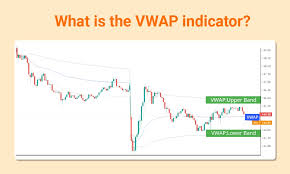
VWAP, or Volume Weighted Average Price, is a trading indicator that calculates the average price of a security, weighted by the volume of trades at each price level. It is commonly used by traders to measure the average price a stock has traded at throughout the day, based on both price and volume.
Calculation
The VWAP is computed using the following formula:
[
\text{VWAP} = \frac{\sum (\text{Price} \times \text{Volume})}{\sum \text{Volume}}
]
Where:
- Price refers to the trade price of the security.
- Volume refers to the number of shares traded at that price.
Steps to Calculate VWAP:
- For each period (e.g., minute, hour, etc.), calculate the typical price:
[
\text{Typical Price} = \frac{(\text{High} + \text{Low} + \text{Close})}{3}
] - Compute the cumulative total of the typical price multiplied by volume (Cumulative TP × Volume).
- Compute the cumulative total of volume.
- Divide the cumulative total of the typical price times volume by the cumulative total of volume to obtain the VWAP.
Interpretation
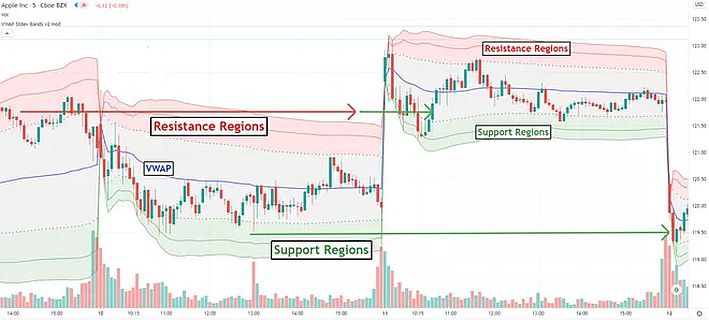
- Price above VWAP: Indicates bullish sentiment or that the asset is being traded at a higher price relative to its average.
- Price below VWAP: Indicates bearish sentiment or that the asset is being traded at a lower price relative to its average.
- Crossing VWAP: Traders may look for potential trading signals when the price crosses the VWAP line:
- Bullish signal when the price crosses above.
- Bearish signal when it crosses below.
Usage in Trading
- Trend Confirmation: Traders often use VWAP in conjunction with other indicators to confirm market trends.
- Entry and Exit Points: VWAP can act as support or resistance levels, providing potential entry or exit points.
- Order Placement: Many institutional traders use VWAP to execute trades without impacting the market too heavily, aiming to buy below VWAP and sell above it.
Limitations
- Time Frame Dependency: VWAP resets at the beginning of each trading day, which means it does not provide historical data for multi-day trends.
- Delayed Signal: VWAP is a lagging indicator and may not predict sudden price movements.
Conclusion
The VWAP is a vital tool for traders seeking to understand price trends and volume dynamics. Its weighted average provides a more nuanced view of price activity and helps traders make more informed decisions.










 BoldVoices.in
Leave a comment