
Introduction
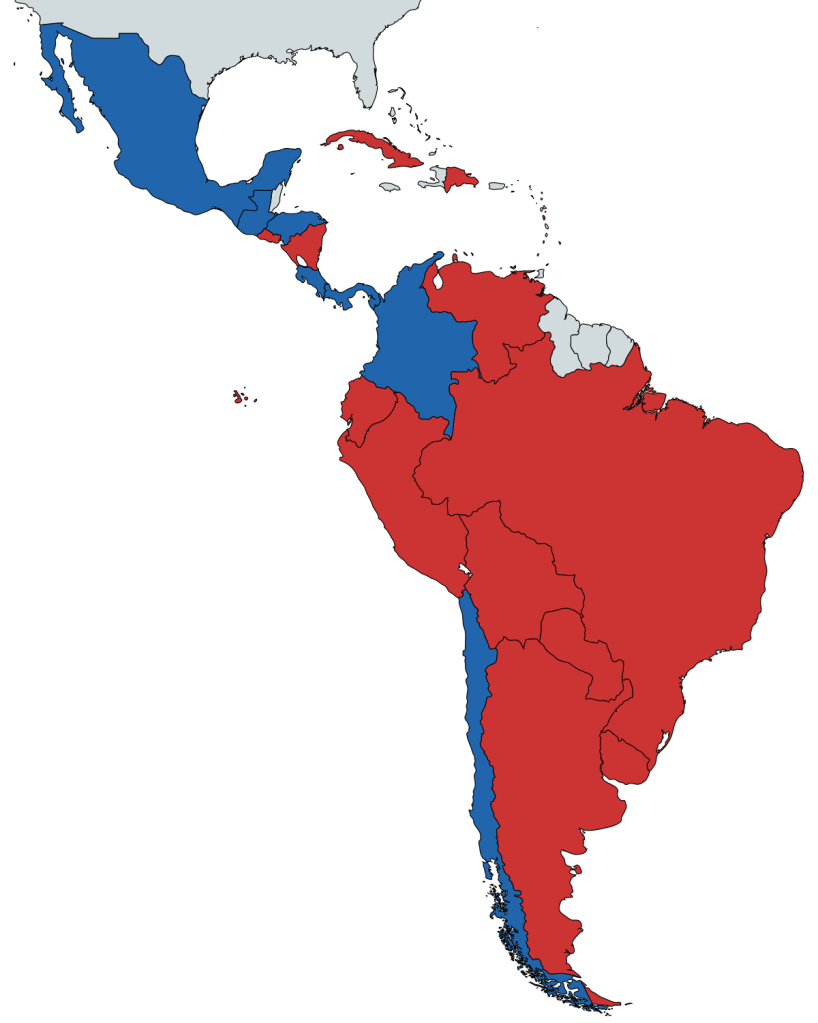
The term “Pink Tide” historically refers to the wave of left-leaning governments that swept across Latin America in the early 2000s. Recently, this phenomenon is experiencing a resurgence, often labeled as “Pink Tide 2.0,” characterized by policies that challenge U.S. influence in the region. This article examines the new wave of governance in Latin America, particularly focusing on Mexico, Brazil, and Argentina, as they form an anti-U.S. bloc, recognize Palestine, and join BRICS+.


The Political Landscape: A New Left
Mexico
With the leadership of President Andrés Manuel López Obrador (AMLO), Mexico has embraced a leftist agenda rooted in nationalism and social welfare. AMLO’s government has focused on reducing poverty through various social programs and has been critical of neoliberal economic policies. His approach towards the U.S. has been complex, balancing cooperation on issues such as immigration and trade, while simultaneously asserting Mexico’s sovereignty.
Brazil
In Brazil, the election of President Luiz Inácio Lula da Silva marked a significant return to leftist governance. Lula’s administration aims to address socio-economic inequalities and revive Brazil’s role in international politics. He has sought to realign Brazil’s foreign policy away from the U.S. and has been vocal in supporting multipolarity—increasing cooperation with countries in the Global South, especially through organizations like BRICS+.
Argentina
Argentina, under President Javier Milei and his predecessors who leaned left, has also showcased a decisive shift in its foreign policy. The Kirchnerism legacy contributed to a more independent foreign policy that occasionally defies U.S. directives. Argentina’s recent decision to recognize Palestine underscores its commitment to taking stances that align with its view of international justice and anti-imperialism.
Anti-U.S. Bloc Formation
The political unity among Mexico, Brazil, and Argentina reflects a broader anti-U.S. sentiment that has been gaining momentum in Latin America. These nations have experienced similar socio-economic challenges and share a vision of diversifying their diplomatic relationships beyond the influence of the United States.
Recognition of Palestine
The decision to formally recognize Palestine by these countries is emblematic of their collective aim to assert their positions on the international stage. This recognition signifies a solidarity with Palestine, aligning with their internal political ideologies that emphasize social justice and anti-imperialism. It also serves as a practical illustration of distancing themselves from U.S. geopolitical interests, which often support Israel.
Joining BRICS+
BRICS—comprising Brazil, Russia, India, China, and South Africa—has evolved into BRICS+, expanding its membership to include other countries interested in counterbalancing Western dominance in global economics and politics. The inclusion of Latin American nations like Brazil, alongside new members from other regions, reflects increased cooperation among developing nations.
Economic Implications
Joining BRICS+ may present significant economic opportunities for Mexico, Brazil, and Argentina. By participating in this coalition, these countries can access alternative development funding, enhance trade partnerships, and foster regional integration. This economic realignment serves not only to support domestic agendas but also to fortify their international standing against U.S. economic hegemony.
Challenges Ahead
Despite the promising alliance and shared ideologies, challenges remain. The political landscape in Latin America is often fragmented, and internal dissent can disrupt cohesion among these countries. Furthermore, external pressures, such as U.S. sanctions and interventions, could impede their ambitions for a united front. As these countries navigate these challenges, their resolve to enhance regional autonomy will be tested.
Conclusion
Latin America’s “Pink Tide 2.0” signals a significant shift towards anti-U.S. governance in countries like Mexico, Brazil, and Argentina. Their recognition of Palestine and participation in BRICS+ reflect a broader commitment to social justice and multipolarity. As this bloc continues to evolve, it holds the potential to reshape the political dynamics of Latin America, presenting new opportunities and challenges for the region’s future.









 BoldVoices.in
Leave a comment