
Introduction to Mutual Funds
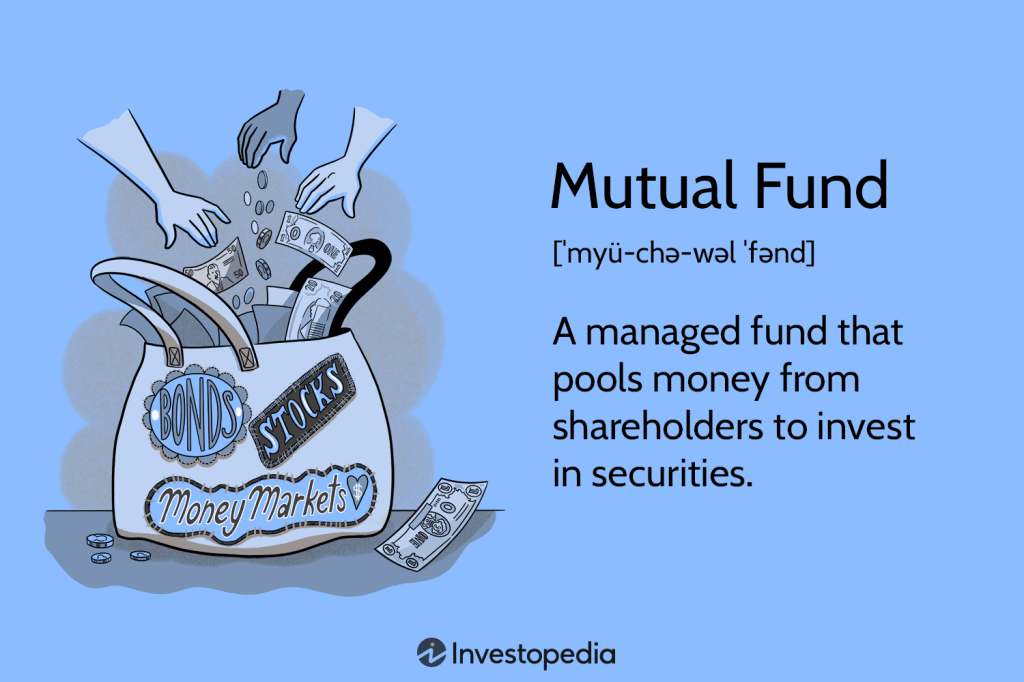
Mutual funds are investment vehicles that pool money from multiple investors to purchase a diversified portfolio of stocks, bonds, or other securities. They are managed by professional portfolio managers, who aim to maximize returns while minimizing risks for their investors. This article serves as an in-depth exploration of mutual funds, addressing their types, benefits, risks, and how to invest in them.

How Mutual Funds Work
When you invest in a mutual fund, you purchase shares of the fund, which in turn represents a portion of the fund’s holdings. Your investment is combined with those of other investors, allowing the fund manager to invest in a broader range of assets than an individual investor typically could. The performance of a mutual fund is determined by the performance of the assets it holds.
Net Asset Value (NAV)
The price per share of a mutual fund is known as its Net Asset Value (NAV), which is calculated at the end of each trading day. The NAV is derived by taking the total value of the fund’s assets, subtracting its liabilities, and dividing that figure by the total number of shares outstanding.
Types of Mutual Funds
Mutual funds can be classified based on the type of assets they invest in, their investment objectives, and their structure. Here are the most common types:
1. Equity Funds
These funds invest primarily in stocks. They are further categorized into:
- Large-cap Funds: Invest in companies with a large market capitalization.
- Mid-cap Funds: Invest in medium-sized companies.
- Small-cap Funds: Invest in smaller companies with high growth potential.
2. Debt Funds
Debt funds invest in fixed-income securities like bonds, treasury bills, and corporate debt. These are generally less risky than equity funds and provide stable returns. Common categories include:
- Short-term Debt Funds: Invest in securities maturing in less than three years.
- Long-term Debt Funds: Invest in securities with longer maturities.
3. Hybrid Funds
Hybrid funds invest in a mix of equities and fixed-income securities, balancing both growth and stability. They can be categorized as:
- Balanced Funds: Maintain a 60:40 ratio of stocks to bonds.
- Dynamic Asset Allocation Funds: Adjust the ratio of equity to debt based on market conditions.
4. Index Funds
Index funds aim to replicate the performance of a specific market index, such as the S&P 500. They usually have lower management fees compared to actively managed funds, as they require less frequent trading.
5. Specialized Funds
These funds focus on specific sectors, regions, or themes, such as real estate funds or international funds. They come with higher risk due to their concentrated investment focus.
Benefits of Investing in Mutual Funds
- Diversification: By pooling money with other investors, mutual funds provide access to a diversified portfolio, reducing the risk associated with individual securities.
- Professional Management: Professional fund managers have expertise and experience, actively managing the fund’s investments to meet defined objectives.
- Liquidity: Shares of mutual funds can be bought or sold on any business day, providing liquidity to investors compared to other investment options.
- Ease of Investment: Many mutual funds have low minimum investment requirements, making them accessible for a wide range of investors.
- Regulatory Oversight: Mutual funds are regulated by government agencies, ensuring transparency and protecting investors’ interests.
Risks Associated with Mutual Funds
Despite their advantages, investing in mutual funds carries some risks:
- Market Risk: The value of mutual funds may fluctuate based on market conditions, potentially leading to losses.
- Credit Risk: Particularly relevant for debt funds, there is a risk that issuers may default on their obligations.
- Manager Risk: The performance of a mutual fund heavily relies on the skills and decisions of the fund manager.
- Expense Ratios: Fees associated with mutual funds can impact overall returns. It’s crucial to analyze the expense ratios before investing.
How to Invest in Mutual Funds
1. Identify Investment Goals
Determining your investment objectives is crucial. Are you looking for growth, income, or a combination of both? Your goals will guide your choice of mutual funds.
2. Research
Examine various mutual funds based on past performance, fees, and management. Resources such as Morningstar or fund fact sheets can provide valuable insights.
3. Choose a Fund
Select a fund that aligns with your financial goals, risk tolerance, and investment horizon.
4. Directly or Through Intermediaries
You can buy mutual funds directly from the fund house or through intermediaries like brokers and financial advisors. Many funds offer online platforms for easy transactions.
5. Monitor Your Investment
After investing, regularly review your portfolio to ensure it aligns with your financial goals and to make adjustments if needed.
Conclusion
Mutual funds are a powerful investment option, providing investors with professional management, diversification, and ease of access. Understanding the various types of funds, their associated risks, and how to invest can empower you to make informed decisions and potentially enhance your financial future. Always consider consulting a financial advisor to create a well-rounded investment strategy that aligns with your individual objectives.
Whether you’re a new or experienced investor, mutual funds can serve as a valuable component of your investment portfolio, helping you achieve your financial goals over time.
Hashtags for Mutual Funds
Here are some relevant hashtags you can use to promote content related to mutual funds:
- #MutualFunds #Investing #Finance
- #Investment
- #WealthManagement
- #InvestmentStrategy
- #FinancialAdvisor
- #FinancialLiteracy
- #PersonalFinance
- #Stocks
- #Bonds
- #EquityFunds
- #DebtFunds
- #HybridFunds
- #IndexFunds
- #Diversification
- #PortfolioManagement
- #InvestmentGoals
- #PassiveInvesting
- #WealthBuilding
Feel free to mix and match these hashtags based on your audience and the specific focus of your content!










 BoldVoices.in
Leave a comment