

Introduction
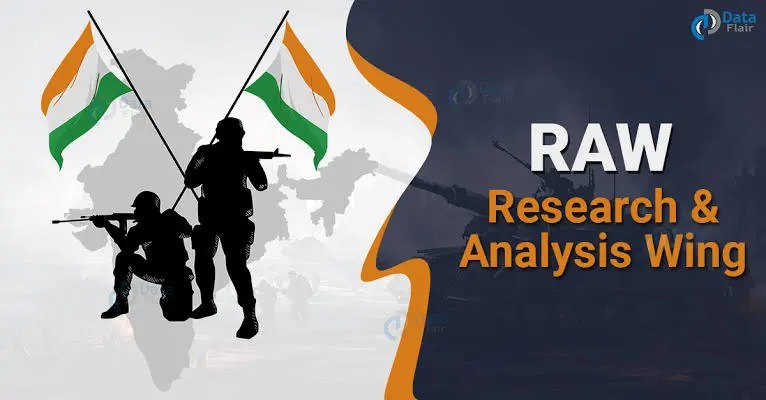
The Research and Analysis Wing (RAW) is the foreign intelligence agency of the Government of India, primarily responsible for collecting external intelligence, conducting counter-intelligence activities, and engaging in special operations. Established in the backdrop of the 1962 Sino-Indian War, RAW plays a crucial role in shaping India’s foreign policy and maintaining national security. This article explores the formation, organizational structure, functions, challenges, and impact of RAW.

Formation and Historical Context
RAW was formed in 1968, following the realization that India needed a dedicated agency to handle the growing complexities of international relations and security threats. The evolution of RAW can be traced back to the inadequacies in Indian intelligence operations, which were laid bare by the shortcomings during the 1962 war with China. Subsequently, intelligence failures led to calls for a more robust system that could proactively address external threats.
Organizational Structure
RAW operates under the Cabinet Secretariat of India, and its head is designated as the Secretary (Research and Analysis). The agency is organized into various branches, each specializing in different aspects of intelligence and analysis:
- Operations Division: Responsible for covert operations and special tasks.
- Analytical Division: Focuses on the analysis of gathered intelligence to inform decision-makers.
- Technical Division: Engages in technical intelligence collection and development of sophisticated tools.
- Field Operations: Includes various field offices both domestically and internationally, tasked with collecting on-ground intelligence.
Functions of RAW
RAW is mandated with several critical functions, including but not limited to:
1. Intelligence Gathering
The primary function of RAW is to gather intelligence from foreign nations. This involves collecting information related to political, economic, and military developments that could impact India’s security landscape.
2. Analysis and Assessment
Post intelligence collection, the data must be analyzed to derive actionable insights. RAW analysts assess the credibility of information and evaluate its implications on national interests.
3. Covert Operations
In addition to gathering and analyzing intelligence, RAW often engages in covert operations. These can range from espionage activities to psychological operations aimed at influencing foreign populations or governments.
4. Counter-Intelligence
RAW also plays a vital role in countering espionage activities directed against India. This includes identifying and neutralizing threats posed by foreign intelligence agencies.
5. Liaison with Other Intelligence Agencies
RAW operates in conjunction with a variety of domestic and international intelligence agencies, ensuring that India’s intelligence infrastructure is robust and interconnected. This cooperation improves information sharing, especially concerning cross-border threats.
Challenges Faced by RAW
Despite its critical role in safeguarding national interests, RAW faces a myriad of challenges:
1. Technological Advancements
With rapid advancements in technology, keeping up with modern espionage techniques and countermeasures poses a significant challenge for RAW. The agency must continuously modernize its tools and tactics.
2. Political Interference
As with many government agencies, RAW is sometimes subjected to political pressures. Maintaining operational independence while navigating the political landscape is a delicate balance that the agency must maintain.
3. Resource Allocation
Being a specialized agency, RAW often competes for resources with other intelligence and law enforcement agencies. Adequate funding and manpower are crucial for the agency to function effectively.
4. Evolving Geopolitical Landscape
The geopolitical landscape is continuously changing, necessitating that RAW adapts its strategies and focuses regularly. This can lead to challenges in predicting and responding to new threats.
Impact of RAW
The impact of RAW on India’s national security and foreign policy cannot be overstated. The agency has been pivotal in several landmark operations and intelligence successes, such as:
- Surgical Strikes: Following terrorist attacks, RAW has been involved in planning and coordinating surgical strikes aimed at disrupting terrorist networks in neighboring countries.
- Espionage Successes: RAW’s information gathering has played a significant role in shaping India’s regional strategies, particularly regarding its adversaries.
- Counter-Terrorism Efforts: RAW has been integral in providing intelligence that aids in counter-terrorism operations domestically and abroad.
Notable Personalities from the Research and Analysis Wing (RAW)
The Research and Analysis Wing (RAW) has been shaped by the contributions of several influential figures throughout its history. Here’s a look at some notable personalities associated with RAW:
1. Rameshwar Nath Kao
R.N. Kao is regarded as the founding father of RAW. Appointed as the agency’s first chief in 1968, his visionary leadership laid the groundwork for RAW’s operational framework and mission, emphasizing the importance of intelligence in national security.
2. A.S. Dulat
A.S. Dulat served as the head of RAW from 1999 to 2000 and is known for his expertise in Kashmir affairs. He played a pivotal role in intelligence operations and has been an influential figure in shaping India’s policy towards Pakistan and Kashmir.
3. Amarjit Singh Dulat
Another prominent figure in RAW, Amarjit Singh Dulat, was instrumental in various intelligence operations during his tenure. He has been involved in assessing geopolitical landscapes and has contributed to India’s counter-terrorism strategies.
4. Vikram Sood
Vikram Sood, a former chief of RAW, is known for his insightful perspectives on intelligence and security issues. During his tenure, he emphasized the importance of modernization within the agency and has been active in discussing strategic intelligence matters post-retirement.
5. Rajinder Khanna
Rajinder Khanna served as the chief of RAW from 2014 to 2016. With a distinguished career in intelligence, he focused on enhancing operational capabilities and fostering better coordination between various intelligence agencies in India.
6. R.N. Mukherjee
Another significant figure, R.N. Mukherjee, was involved in India’s intelligence efforts during critical phases in the late 20th century. His contributions in various intelligence missions have been crucial in addressing external security challenges.
7. Anand Kumar
Anand Kumar, who served in RAW during key operations, has played a crucial role in shaping operational strategies that respond to cross-border terrorism and espionage activities directed against India.
These individuals reflect the diversity of leadership and expertise within RAW, each contributing to the agency’s mission of safeguarding India’s national security through intelligence and covert operations. Their legacies continue to influence the functioning and evolution of RAW in the contemporary geopolitical context.
Famous Missions of the Research and Analysis Wing (RAW)
The Research and Analysis Wing (RAW) has been involved in several high-profile missions that have significantly impacted India’s national security and foreign policy. Here are some of the most notable missions undertaken by RAW:
1. Operation Smiling Buddha (1974)
This mission marked India’s first successful nuclear test at Pokhran, conducted under the leadership of then-Prime Minister Indira Gandhi. While primarily a defense science project, it was supported by RAW’s intelligence inputs that ensured the secrecy and security of the operation, paving the way for India’s status as a nuclear power.
2. Operation Jhangar (1971)
During the Indo-Pak War of 1971, RAW played a crucial role by providing intelligence support for the Bangladesh Liberation War. The agency successfully infiltrated Pakistani military installations and gathered critical information that aided Indian forces in their operations, leading to the creation of Bangladesh.
3. Operation Khukri (1987)
This operation involved the rescue of Indian nationals held hostage by militants in the African nation of Sierra Leone. RAW coordinated with local authorities and utilized its intelligence networks to secure the safe release of the hostages, demonstrating its capability in complex overseas operations.
4. Operation Blue Star (1984)
Although controversial, RAW’s intelligence was essential during Operation Blue Star, which aimed to remove extremist elements from the Golden Temple in Amritsar, Punjab. RAW provided key information on the movements and positioning of militant leaders, helping Indian forces execute the operation.
5. The End of the LTTE (1991-2009)
RAW played a significant role in the intelligence operations against the Liberation Tigers of Tamil Eelam (LTTE) in Sri Lanka. Their strategic inputs and intelligence collection were vital in dismantling the LTTE’s capabilities, leading to its eventual defeat in 2009.
6. Operation Kuber (1999)
In the aftermath of the Kargil War, RAW was instrumental in gathering intelligence on Pakistani military movements and deployments, providing crucial information that helped Indian forces make tactical decisions and coordinate their responses effectively.
7. Counter-Terrorism Operations
RAW has been continually involved in various counter-terrorism operations, particularly in Kashmir and against groups responsible for cross-border terrorism. Its intelligence inputs have been crucial in planning operations such as surgical strikes against terrorist camps in Pakistan-administered Kashmir.
8. Covert Operations in Nepal
RAW has conducted various covert operations in Nepal to counter Chinese influence and ensure that the political dynamics in the neighboring country align with India’s interests. These operations often involve collaboration with local political factions to maintain strategic stability.
The missions of the Research and Analysis Wing showcase its crucial role in safeguarding India’s national interests through intelligence gathering, covert operations, and strategic interventions. As threats evolve, RAW’s adaptability and operational effectiveness remain vital components of India’s security apparatus.
Conclusion
The Research and Analysis Wing (RAW) is a cornerstone of India’s national security architecture. With its multifaceted role in intelligence gathering, analysis, and covert operations, RAW continues to adapt to the evolving threats faced by the nation. As geopolitical landscapes change and new challenges arise, the importance of a proactive and resilient intelligence agency like RAW remains undeniable. Future reforms and developments within the agency will be crucial in ensuring that India is prepared for the challenges of tomorrow.
By understanding the intricacies and functions of RAW, one gains insight into not only India’s security framework but also the broader dynamics of intelligence in international relations.
#RAW #Intelligence #NationalSecurity #India #CovertOperations #ForeignPolicy #Geopolitics #CounterTerrorism #IntelligenceAgency #SurgicalStrikes #IntelligenceGathering #IndianHistory #CivilSecurity #Defense #Espionage #ResearchAndAnalysisWing #SecurityChallenges #GlobalSecurity #IntelligenceCommunity #IndiaSecurity









 BoldVoices.in
Leave a comment