
Introduction
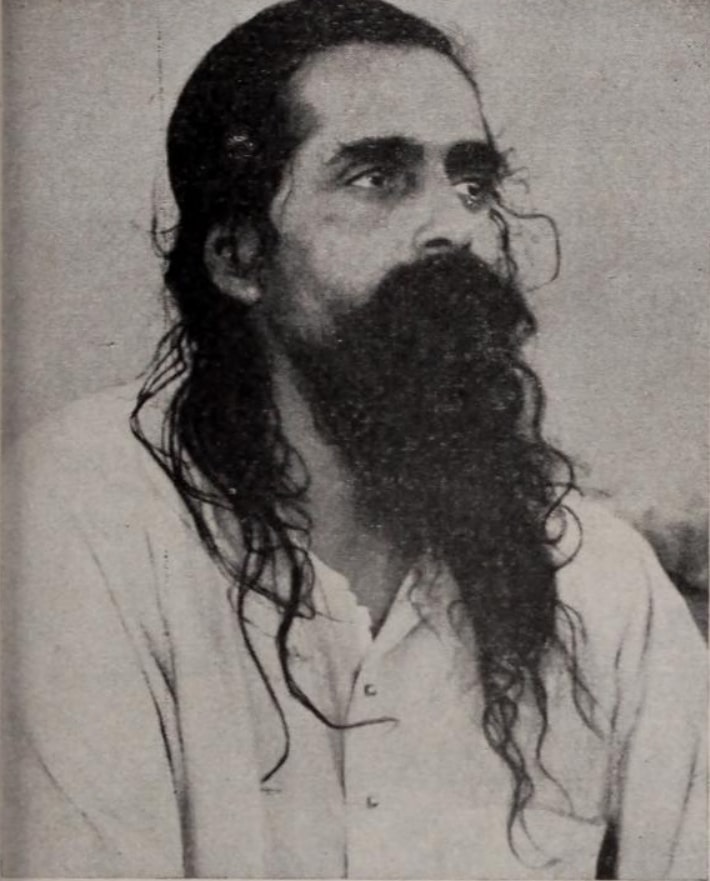
Madhav Sadashivrao Golwalkar, popularly known as Guruji, was a prominent figure in the Indian nationalist movement and the second Sarsanghchalak (Chief of the organization) of the Rashtriya Swayamsevak Sangh (RSS). Born on February 19, 1906, in a Brahmin family in Nagpur, Maharashtra, Golwalkar played a crucial role in shaping the ideology of Hindutva and the RSS’s vision for India. His life and work have been instrumental in the development of a Hindu nationalist consciousness in the country.
Early Life and Education
Golwalkar was raised in an environment steeped in Hindu culture and tradition. He completed his schooling in Nagpur and later pursued higher education at the University of Nagpur, where he earned a degree in science. He was deeply influenced by the nationalist sentiments that permeated India during his formative years, especially the freedom struggle against British colonial rule.
His engagement with social and political issues began during his college years, where he participated in various student movements. Golwalkar later went to the United States for advanced studies, where he gained a broader perspective on nationalism and organizational structure. His time abroad proved to be a significant turning point, shaping his views on leadership and the need for a cohesive national identity.
Involvement with RSS
Upon his return to India in the early 1930s, Golwalkar became involved with the RSS, which was founded by Dr. Keshav Baliram Hedgewar in 1925. He quickly rose through the ranks due to his organizational skills and commitment to the RSS’s goals. In 1940, he took over as the Sarsanghchalak after Hedgewar’s demise. Under his leadership, the RSS experienced tremendous growth, expanding its reach and influence across the nation.
Golwalkar’s vision for the RSS was grounded in the belief that India should be a nation primarily for Hindus, emphasizing the need for cultural and religious unity among Hindus. This ideology became a cornerstone of the RSS’s agenda, as it sought to create a cohesive society rooted in Hindu values.
Hindutva: Ideological Framework
Golwalkar is perhaps best known for his book “We, or Our Nationhood Defined,” published in 1939. In this work, he articulated the concept of Hindutva, which translates to “Hindu-ness.” He proposed that true Indian identity is inherently tied to Hindu culture and values, arguing that the essence of India is intrinsically linked to its Hindu heritage.
In his writings, Golwalkar argued that the Indian nation should be defined by its Hindu majority and the cultural values associated with it. He rejected the notion of secularism as it was being applied, advocating instead for a nation where Hindu identity would shape political and social institutions. This idea became foundational for various Hindu nationalist groups and continues to influence political discussion in India today.
Contributions to the Nation
Golwalkar’s contributions to the RSS and the broader Hindu nationalist movement are multi-faceted. He played a pivotal role in organizing the RSS’s activities, creating a robust educational and training framework for its members. This focus on discipline and moral values helped instill a sense of purpose and responsibility among the swayamsevaks (RSS volunteers).
Under Golwalkar’s guidance, the RSS became actively involved in societal issues, addressing problems like communal harmony, education, and social welfare. The organization established schools, medical camps, and programs aimed at uplifting marginalized communities. His emphasis on national service and social responsibility resonated deeply, making the RSS a significant player in various social and political spheres.
Golwalkar also encouraged the establishment of several sister organizations, including the Vishva Hindu Parishad and the Bharatiya Janata Party (BJP). His vision for a unified Hindu society inspired many to take an active role in advocating for Hindu interests in India, significantly shaping the political landscape.
Controversies and Criticism
Despite his contributions, Golwalkar’s ideology has faced significant criticism. His interpretation of Hindutva has been challenged for its exclusionary nature, particularly towards religious minorities. Critics argue that his vision promotes a homogeneous society that sidelines the diverse cultural and religious fabric of India.
Golwalkar’s writings have been scrutinized for their perceived advocacy of a Hindu nation-state, leading some to label him as anti-secular. The controversies surrounding his legacy continue to fuel debates over nationalism, identity, and social cohesion in contemporary India.
Legacy
Madhav Sadashivrao Golwalkar’s impact on Indian society and politics is deeply felt, even decades after his death on June 5, 1973. His body of work, particularly in the realm of Hindutva ideology, has left a lasting imprint on the RSS and its affiliated organizations. The promotion of a strong and unified Hindu identity remains a cornerstone of Hindu nationalist politics in India.
His life story serves as a narrative of dedication, ideological innovation, and leadership in a tumultuous era of India’s history. Though Golwalkar’s perspectives remain contentious, his role as a transformative figure is widely acknowledged. His vision continues to inspire a large segment of the population engaged in discussions about India’s future.
Conclusion
Madhav Sadashivrao Golwalkar’s journey from a young man in Nagpur to a national leader exemplifies the power of ideology and leadership in shaping societal narratives. His work with the RSS and his contributions to the Hindutva movement have influenced generations, solidifying his place in the annals of Indian history.
While opinions about his legacy may vary, the discussions surrounding his thoughts and actions remain pertinent in contemporary India. They evoke critical reflections on the nature of Indian nationalism, the importance of cultural identity, and the challenge of creating a truly inclusive society amidst diversity. Golwalkar’s life story offers valuable insights into the dynamics of faith, politics, and national identity, making him a significant figure in understanding India’s socio-political landscape today.
Hashtags
#MadhavGolwalkar #Hindutva #RSS #IndianNationalism #NationalIdentity #CulturalUnity #HinduNationalism #Leadership #IndianHistory #SocialWelfare #ContemporaryIndia #PoliticalDiscussion #Legacy #Inclusion #UnityInDiversity #CulturalIdentity






 BoldVoices.in
Leave a comment