
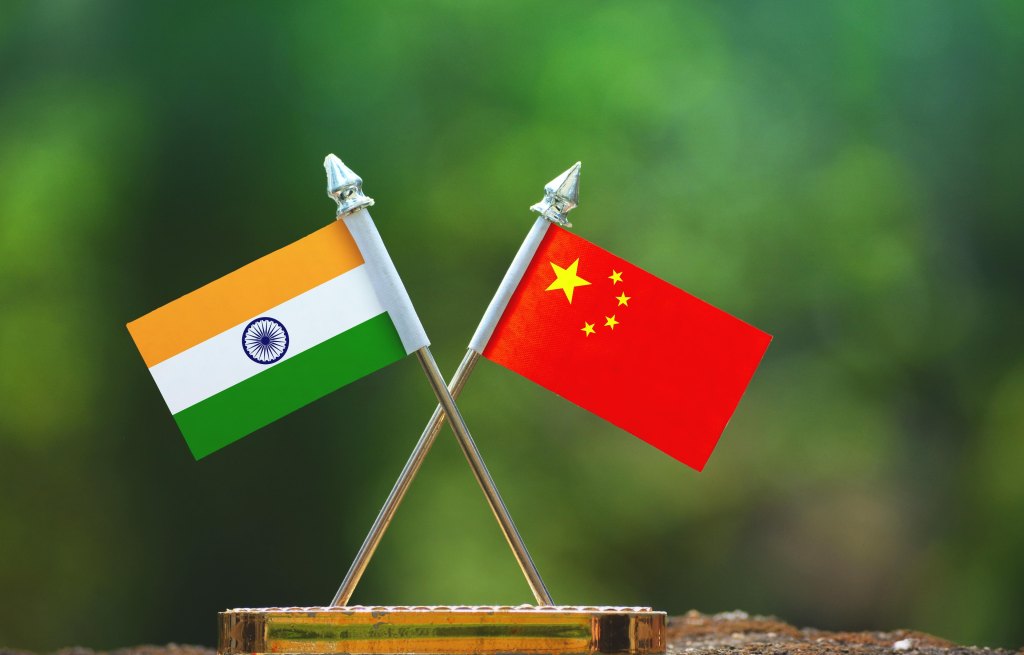
The relationship between India and China, two of the world’s oldest civilizations, has experienced significant transformations over the centuries. This intricate history encompasses trade, cultural exchanges, political dynamics, and conflicts. Understanding the evolution of this bilateral relationship requires a comprehensive exploration of its various phases.


Ancient Period
Trade and Cultural Exchange
India and China have had interactions dating back to ancient times. The first documented contact is believed to have occurred during the Han Dynasty (206 BCE – 220 CE) of China when the Silk Road opened trade routes between the two civilizations. Indian merchants traded textiles, spices, and precious stones, while the Chinese offered silk, tea, and porcelain.
Buddhism, which originated in India, spread to China through the Silk Road around the 1st century CE, leading to the establishment of significant cultural and spiritual ties. The translation of Buddhist scriptures from Sanskrit to Chinese led to an exchange of philosophies that deeply influenced Chinese culture.
Diplomatic Relations
Historical records indicate that China and India engaged in diplomatic exchanges as early as the 7th century. During the Tang Dynasty (618–907 CE), emissaries traveled between the two countries. Notably, the journey of the Indian monk Xuanzang to India in the 7th century exemplifies the diplomatic and cultural exchanges that prevailed at that time.
Medieval Period
Mongol Invasions and the Impact on Relations
The relationship took a different turn during the medieval period with the rise of the Mongol Empire. The Mongols, who had a significant impact on both regions, disrupted trade routes, isolating certain areas of India and China. While this period experienced limited direct interaction between the two nations, the influence of Mongol rule facilitated the spread of cultural elements between them.
Ming Dynasty and Indian Influence
During the Ming Dynasty (1368–1644), India maintained a notable presence in trade. The infamous explorer Zheng He’s voyages (1405–1433) reached the Indian subcontinent, enhancing maritime trade relations. The mingling of cultures continued, with Indian textiles and spices finding their way into the Chinese market.
Colonial Era
The British Empire and Qing Dynasty
The 18th and 19th centuries marked a period of colonial expansion for both countries. The British East India Company established dominance in India, while the Qing Dynasty faced internal strife and external pressures, leading to the Opium Wars. The British trade policies had a significant socio-economic impact on both regions, often resulting in trade imbalances.
The First Opium War (1839-1842) and subsequent treaties marked the beginning of a century of humiliation for China, which created a sense of sympathy for China among Indian intellectuals and leaders who began to draw parallels with their own struggle against colonial rule.
The Flow of Nationalist Ideas
As nationalist movements began to emerge in both countries, intellectuals exchanged ideas about self-determination and resistance against imperialism. Figures like Rabindranath Tagore and Sun Yat-sen expressed admiration for each other’s struggles against colonial dominance. Such exchanges laid the groundwork for future diplomatic gestures and ideologies advocating for Pan-Asianism.
Post Independence Era
The Nehru Era and Sino-Indian Relations
After gaining independence in 1947, India’s first Prime Minister, Jawaharlal Nehru, envisioned a peaceful and cooperative relationship with China. The 1954 Panchsheel Agreement, which aimed to promote peaceful coexistence, marked a significant diplomatic advance and was founded on the principles of mutual respect for territorial integrity and non-aggression.
Border Disputes
However, disagreements over the border soon escalated. The 1962 Sino-Indian War was a watershed moment in the relationship, resulting from conflicting territorial claims, particularly in the Aksai Chin and Arunachal Pradesh regions. The conflict exposed underlying tensions and led to a deterioration of trust between the two nations.
Cold War Period
Realignments and Strategic Partnerships
During the Cold War, India adopted a policy of non-alignment, while China aligned itself with the Soviet Union before eventually pursuing rapprochement with the West, particularly the United States. The late 1960s and 1970s saw strained relations, exacerbated by China’s support for Pakistan during the Indo-Pakistani conflicts.
Rapprochement Attempts
In the early 1980s, both nations made attempts to normalize relations. Leaders like Deng Xiaoping and Rajiv Gandhi engaged in dialogues, aiming to resolve border disputes peacefully. The 1988 visit of Rajiv Gandhi to China marked a significant thaw in relations.
The 1990s and Early 21st Century
Economic Engagement and Cooperation
With the onset of economic reforms in China and India during the 1990s, both nations sought to engage economically. Bilateral trade saw unprecedented growth, and forums for dialogue were established, including the ASEAN Regional Forum and the Shanghai Cooperation Organization (SCO).
Border Negotiations and Military Clashes
Despite economic cooperation, border disputes continued to be a contentious issue. Clashes in the late 2010s, particularly in the Doklam region in 2017 and the Galwan Valley in 2020, reignited tensions and underscored the fragile nature of their relationship. These incidents highlighted the need for both nations to manage their disputes effectively while balancing their national interests.
Current Dynamics
Shifting Geopolitical Landscape
In recent years, the geopolitical landscape in Asia has shifted considerably, with both countries navigating the complexities of regional politics. Concerns over China’s Belt and Road Initiative and India’s growing ties with the United States have added layers of complexity to their relations.
Cooperation and Competition Framework
Even amid competition, both countries have shared common interests in addressing global challenges such as climate change, terrorism, and public health. This cooperation is evident in initiatives like the BRICS grouping, where both nations collaborate with Brazil, Russia, and South Africa.
Conclusion
The history of India-China relations is marked by a blend of cultural exchanges, economic interactions, and political conflicts. While both nations share a rich heritage, their path has been shaped by historical legacies and contemporary challenges. Moving forward, fostering dialogue and cooperation will be crucial to ensure a stable and mutually beneficial relationship between these two giant neighbors. This dynamic interplay of national interests and regional aspirations will continue to shape the future of India-China relations for years to come.
#India #China #Geopolitics #BilateralRelations #CulturalExchange #SilkRoad #Trade #History #Diplomacy #Nationalism #BRICS #EconomicCooperation #BorderDisputes #ColdWar #SinoIndianRelations #ModernHistory #Asia #GlobalChallenges #CulturalHeritage #PoliticalDynamics






 BoldVoices.in
Leave a comment