
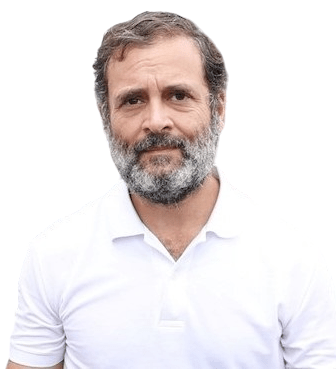
Rahul Gandhi is an Indian politician and a prominent leader of the Indian National Congress (INC). He is a Member of Parliament (MP) representing the Wayanad constituency in Kerala and has served as the former President of the Congress party. As the scion of the influential Nehru-Gandhi family, Rahul Gandhi has played a key role in Indian politics, advocating for issues like youth empowerment, social justice, and democracy, though his political career has been marked by both support and criticism.
Personal Background
- Full Name: Rahul Gandhi
- Date of Birth: June 19, 1970
- Place of Birth: New Delhi, India
- Parents: Rajiv Gandhi (former Prime Minister of India) and Sonia Gandhi (former Congress President)
- Grandparents: Indira Gandhi (former Prime Minister) and Feroze Gandhi
- Siblings: Priyanka Gandhi Vadra (politician and INC leader)
- Education:
- Attended The Doon School in Dehradun.
- Studied at St. Stephen’s College, Delhi University (transferred after one year).
- Graduated from Harvard University and later completed his B.A. in Political Science and Economics at Rollins College, Florida, USA.
- Obtained an M.Phil. in Development Studies from Trinity College, Cambridge, UK.
Political Career
Rahul Gandhi formally entered politics in 2004, although he had been involved informally in party affairs prior to that. His political career can be divided into different phases:
1. Entry into Politics (2004)
- In the 2004 General Elections, Rahul Gandhi contested from Amethi, Uttar Pradesh, a traditional Congress stronghold, and won by a large margin.
- He campaigned for Congress and emerged as a youth icon, emphasizing the need for new leadership and grassroots connections.
2. Role as General Secretary (2007–2013)
- In 2007, Rahul was appointed as the General Secretary of the Indian National Congress and given charge of the Youth Congress and the National Students’ Union of India (NSUI).
- He focused on democratizing these organizations, recruiting youth leaders from various backgrounds, and encouraging grassroots participation.
3. 2009 General Elections Success
- Rahul played a critical role in Congress’s success in the 2009 General Elections, where the party won 206 seats – its best performance since 1991.
- His efforts to connect with rural India, including visiting farmers and villages, resonated with voters.
4. Leadership Challenges and Criticism (2014 & 2019)
- 2014 General Elections: Congress suffered a historic defeat, winning just 44 seats. Rahul faced criticism for his perceived lack of leadership and strategic planning.
- Despite the setback, Rahul continued to work on strengthening the party, particularly focusing on issues like farmers’ distress, unemployment, and economic inequality.
- 2019 General Elections: Congress again faced a heavy defeat, and Rahul Gandhi lost the Amethi seat (a family bastion) to BJP leader Smriti Irani. However, he won from Wayanad with a significant margin.
5. INC President (2017–2019)
- Rahul Gandhi was elected as the President of the Indian National Congress in December 2017, succeeding Sonia Gandhi.
- Under his leadership, Congress won key state elections in Rajasthan, Madhya Pradesh, and Chhattisgarh in 2018, providing a temporary boost to the party.
- After the 2019 defeat, Rahul resigned as Congress President, taking moral responsibility. Sonia Gandhi returned as interim president.
Key Political Campaigns and Issues Advocated
Rahul Gandhi has been vocal about several issues throughout his political career:
- Anti-Corruption Movement:
He supported the introduction of the Lokpal Bill and highlighted corruption issues during his campaigns. - Farmers’ Issues:
Rahul has consistently spoken about farmers’ distress, protesting against the government’s policies on agriculture and farm laws. - Unemployment and Youth Empowerment:
He has often criticized the government for failing to create jobs and emphasized youth empowerment and education reform. - Women’s Rights and Social Justice:
Rahul has supported women’s empowerment and called for greater representation of women in politics and public life. - Bharat Jodo Yatra (2022-2023):
In an effort to revive the Congress party, Rahul launched the Bharat Jodo Yatra, a 4,000-kilometer march from Kanyakumari to Kashmir. The march aimed to promote unity, peace, and harmony while addressing issues like rising communal tensions, economic inequality, and unemployment.
Key Criticisms and Controversies
- Label of “Reluctant Politician”:
Rahul has often been criticized by opponents and sections of the media as a “reluctant politician” due to his perceived lack of aggressiveness in politics. - Parliamentary Absences:
His attendance record in Parliament has been questioned, though he has delivered impactful speeches, particularly during debates on economic policies and democratic values. - Dynastic Politics:
Critics accuse him of benefiting from dynastic politics, a common criticism directed at the Nehru-Gandhi family. - 2014 & 2019 Defeats:
His leadership was questioned after back-to-back defeats in the general elections, which weakened Congress’s standing in Indian politics.
Personal Traits and Public Image
- Known for maintaining a low profile about his personal life.
- Advocates for simplicity and often emphasizes empathy and understanding in his public speeches.
- He is known for candidly admitting his mistakes and taking responsibility, especially after electoral losses.
Current Status and Future Outlook
- Rahul Gandhi remains a prominent opposition leader, frequently raising questions on issues like inflation, farmers’ rights, women’s safety, unemployment, and freedom of speech.
- The Bharat Jodo Yatra has significantly boosted his image, with many seeing him as a more mature and determined leader.
Source : chatGPT





 BoldVoices.in
Leave a comment