
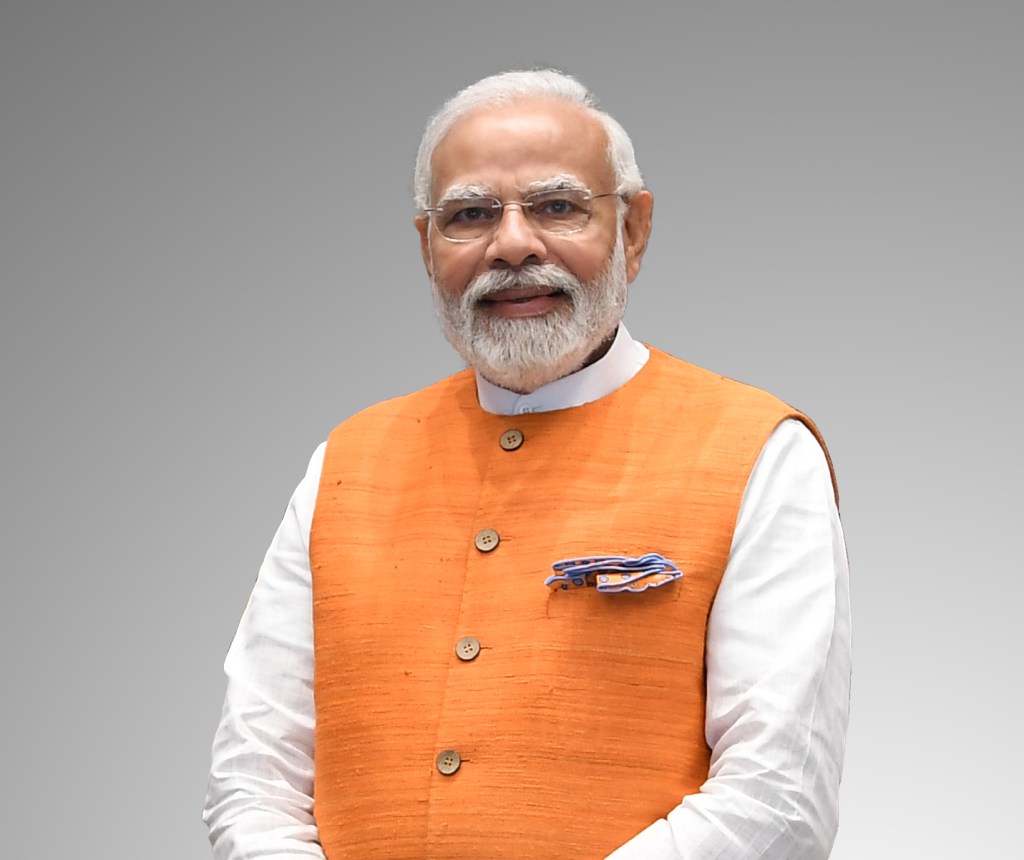
Narendra Modi is the current Prime Minister of India, serving in this role since May 26, 2014. He is a prominent Indian politician and a member of the Bharatiya Janata Party (BJP), as well as the Rashtriya Swayamsevak Sangh (RSS), a Hindu nationalist organization. Modi has been a transformative figure in Indian politics, known for his policies, leadership style, and the way he has shaped the country’s political landscape.
Early Life and Education:
- Full Name: Narendra Damodardas Modi
- Date of Birth: September 17, 1950
- Place of Birth: Vadnagar, Gujarat, India
Modi was born into a modest family and grew up in a small town in Gujarat. His early life was marked by humble beginnings, working in his family’s tea stall and later running his own tea business. His family belongs to the Modh-Ghanchi community, which is classified as an Other Backward Class (OBC).
He attended school in Vadnagar and was known for his keen interest in debates and discussions. After completing his early education, Modi pursued a Bachelor’s degree in Political Science from Delhi University, followed by a Master’s degree in Political Science from Gujarat University.
Political Career:
- Early Involvement in Politics:
Modi’s political journey began in the early 1970s when he became involved with the Rashtriya Swayamsevak Sangh (RSS), a Hindu nationalist organization. His affiliation with the RSS led him to work with the BJP. He played a significant role in organizing the BJP in Gujarat, where he eventually rose through the ranks. - Chief Minister of Gujarat (2001-2014):
Modi became the Chief Minister of Gujarat in 2001, after the resignation of Keshubhai Patel. His tenure as Chief Minister was marked by significant economic growth in the state, along with infrastructure development, although it was also controversial due to the 2002 Gujarat riots, which occurred shortly after he took office. The riots led to widespread violence between Hindus and Muslims, and Modi’s handling of the situation was heavily criticized, though he was later cleared of any wrongdoing by the Indian courts. During his tenure, Gujarat became one of the leading states in India in terms of economic growth, industrial development, and investment. - Rise to National Leadership:
Modi’s popularity grew, especially in the context of his governance in Gujarat, which he positioned as an example of good governance and economic reform. He became the BJP’s Prime Ministerial candidate for the 2014 General Election. In the election, he led the BJP to a decisive victory, securing an absolute majority in the Lok Sabha (the lower house of India’s Parliament). His campaign, which was centered around “Acche Din” (Good Days) and development over corruption, resonated strongly with voters.
Prime Minister of India:
Modi assumed office as Prime Minister on May 26, 2014. He was re-elected for a second term in 2019 with an even larger mandate. His leadership has been marked by several key reforms and initiatives:
- Economic Reforms:
- Goods and Services Tax (GST): Introduced in 2017, GST was a major reform aimed at unifying India’s complex tax system into a single tax.
- Demonetization: In November 2016, Modi announced the demonetization of ₹500 and ₹1,000 banknotes, aiming to curb black money, counterfeit currency, and corruption. While the move received mixed reactions, it was a defining moment in his tenure.
- Make in India: An initiative launched to encourage domestic and foreign companies to manufacture in India, boosting the country’s manufacturing sector.
- Social Welfare Programs:
Modi has overseen the expansion of various social welfare schemes targeting the underprivileged:- Pradhan Mantri Jan Dhan Yojana: Aimed at financial inclusion by opening bank accounts for millions of Indians who were previously unbanked.
- Swachh Bharat Abhiyan: A national cleanliness drive to promote sanitation and build toilets in rural areas.
- Pradhan Mantri Ujjwala Yojana: A scheme to provide free LPG connections to poor households, improving access to clean cooking fuel.
- Foreign Policy:
Modi has emphasized a more assertive Indian presence on the global stage. His foreign policy has focused on:- Strengthening relationships with key countries like the United States, Israel, and Japan.
- Increasing India’s role in global organizations like the United Nations, World Trade Organization, and BRICS.
- Developing the Act East Policy and strengthening ties with countries in the Indo-Pacific region.
- National Security and Defense:
Modi has taken a strong stance on national security, notably in his handling of relations with Pakistan and China. His government has advocated for a tougher approach toward terrorism, particularly in Kashmir, and has focused on improving India’s defense capabilities. - Controversial Decisions:
- Article 370 Abrogation: In August 2019, the government revoked Article 370 of the Indian Constitution, which granted special autonomy to the region of Jammu and Kashmir. This move was highly controversial and led to significant political and social unrest.
- Citizenship Amendment Act (CAA): Passed in 2019, the CAA provides a pathway to citizenship for religious minorities from neighboring countries, but critics argue it discriminates against Muslims, leading to protests and debates over its implications.
Leadership Style:
Modi is often described as a strong, decisive leader with a charismatic personality. He has a highly centralized leadership style, with key decisions often coming directly from him or his close advisers. He is also a master of communication, effectively utilizing social media and public relations to connect with the people of India.
His appeal spans various segments of society, especially the youth, who see him as a modernizer. He is also a polarizing figure, with strong support in many sections of Indian society, but also significant opposition, particularly from those critical of his policies and governance style.
Personal Life:
Modi is known for his disciplined lifestyle, often staying up late and working long hours. He is a vegetarian and follows a simple, frugal lifestyle. Modi has often cited his humble origins and personal struggles as a source of inspiration for his political career.
He remains unmarried, and his personal life has been relatively private. However, his rise from a tea vendor to the Prime Minister of India is one of the most remarkable political journeys in modern India.
Legacy and Influence:
Modi’s legacy is still being shaped, but he is regarded as one of the most transformative leaders in post-independence India. His policies and leadership have left a lasting impact on India’s domestic and foreign policies. However, his tenure has also seen growing political polarization, and his leadership continues to provoke both admiration and criticism.
Conclusion:
Narendra Modi’s tenure as Prime Minister has been marked by significant political, social, and economic changes. From his strong domestic reforms to his assertive foreign policy, Modi has undeniably transformed the landscape of Indian politics, making him one of the most prominent and influential leaders in India’s history.





 BoldVoices.in
Leave a comment