
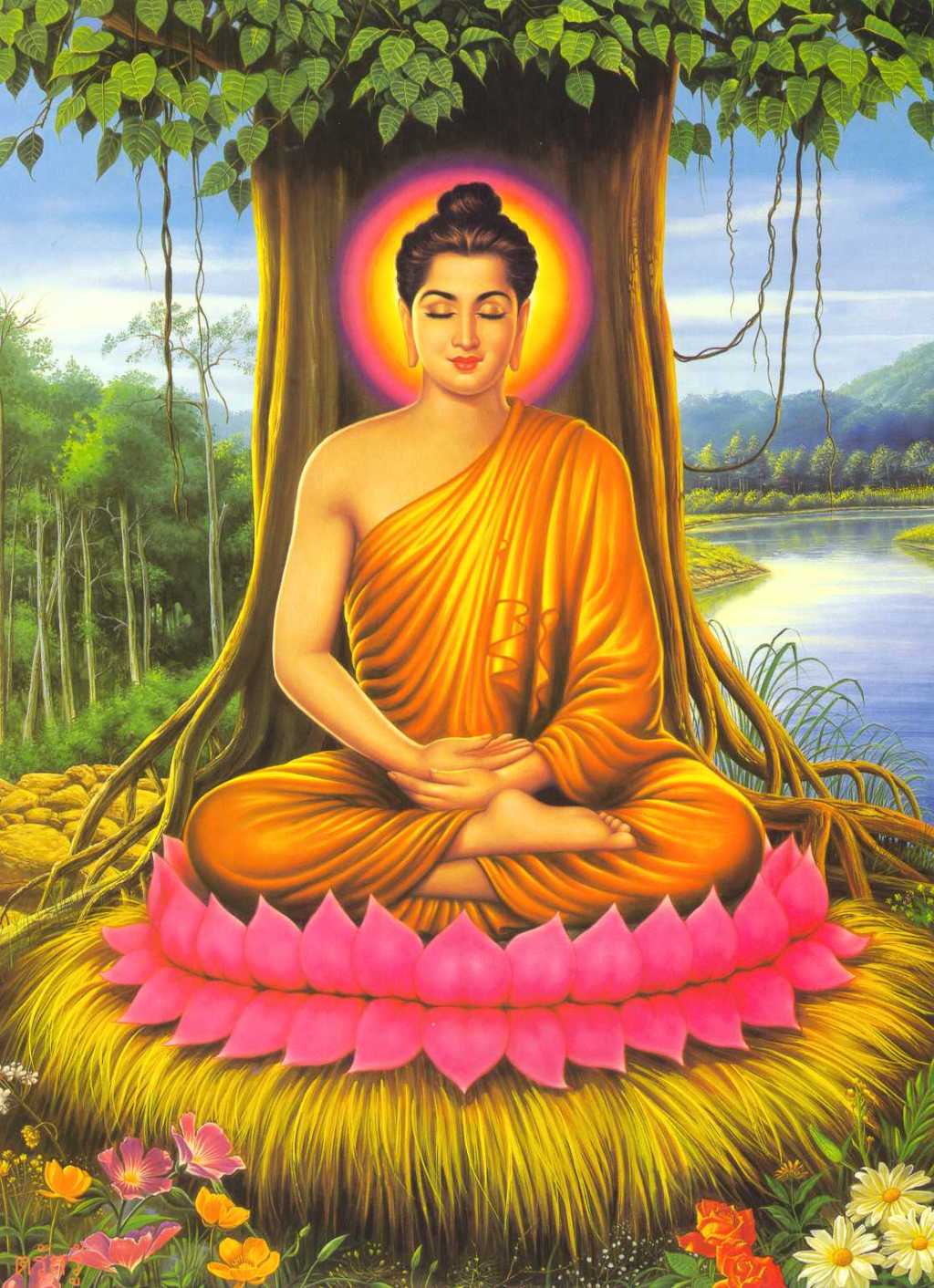
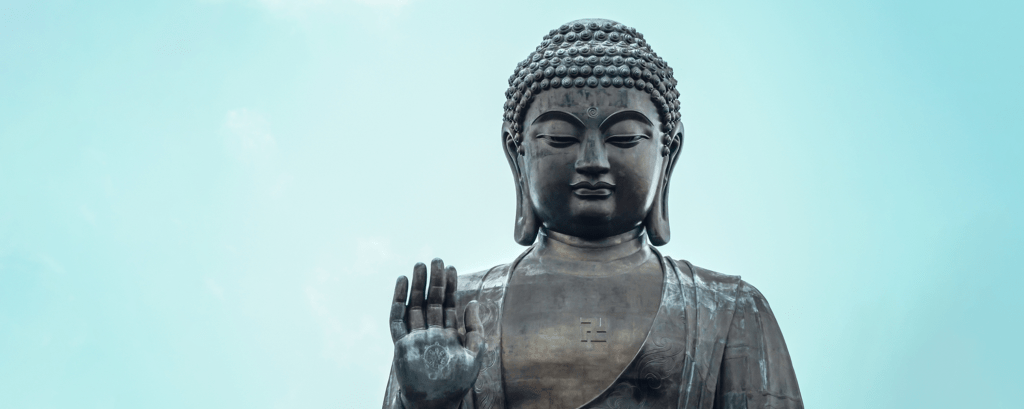
Mahatma Buddha, often known simply as Buddha. He was the founder of Buddhism and one of the most influential spiritual leaders in history.
Early Life and Birth:
- Name: Siddhartha Gautama
- Date of Birth: Around 563 BCE (the exact date is debated)
- Place of Birth: Lumbini (present-day Nepal)
Siddhartha Gautama was born into a royal family in the Shakya clan in Lumbini, which was part of ancient India (modern-day Nepal). His father, King Suddhodana, ruled the small kingdom of Kapilavastu. Siddhartha’s early life was one of luxury, and he was shielded from the suffering of the world by his father, who hoped he would become a great king.
The Four Sights and the Path to Enlightenment:
At the age of 29, Siddhartha ventured outside the palace for the first time and encountered the Four Sights that would change his life:
- An old man: He realized that aging is a natural part of life.
- A sick man: He understood that sickness is inevitable.
- A dead man: He saw the reality of death.
- A wandering ascetic: This sight inspired him, as he saw someone seeking peace and enlightenment.
These encounters led him to confront the impermanence and suffering inherent in life. Disturbed by the inevitability of aging, sickness, and death, Siddhartha decided to renounce his royal life and seek a way to understand and overcome human suffering.
The Ascetic Life and Enlightenment:
Siddhartha left his family, wealth, and comforts and became an ascetic, seeking spiritual wisdom. He studied with various teachers and practiced extreme forms of self-discipline, including meditation and fasting. However, after several years, he found that such practices did not lead to enlightenment.
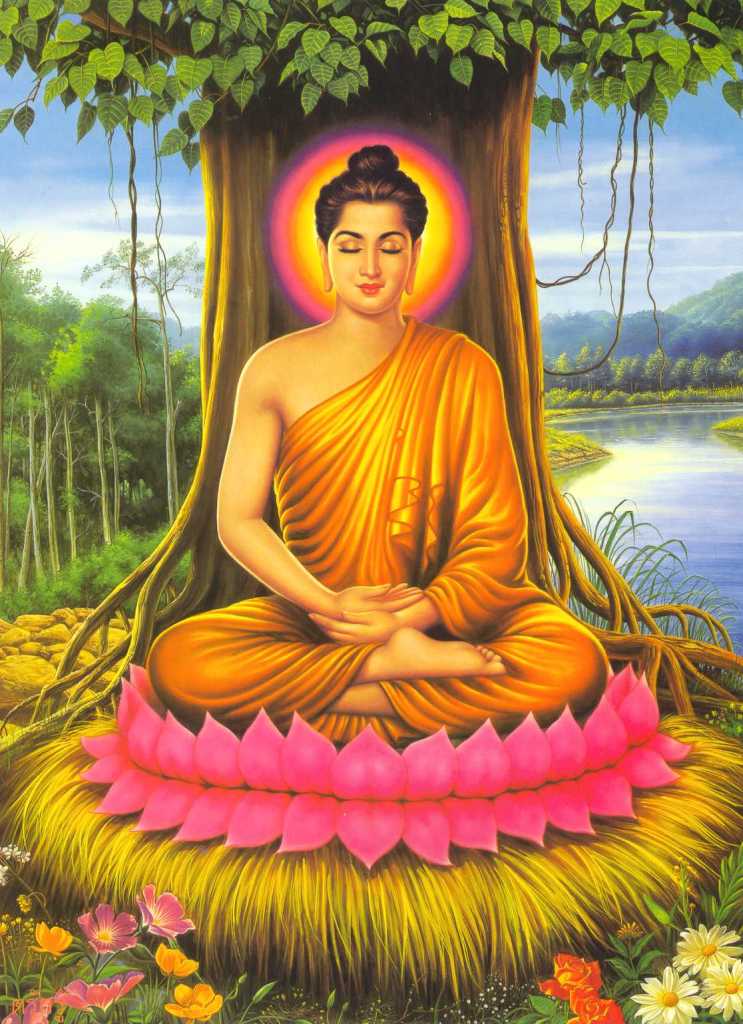
Realizing that the path of extreme asceticism was not the answer, Siddhartha adopted a middle path, avoiding both extreme indulgence and extreme deprivation. He meditated under a Bodhi tree in Bodh Gaya (modern-day India), where he vowed not to rise until he had found the truth.
After meditating for several days and nights, Siddhartha achieved enlightenment (Bodhi) at the age of 35. He realized the Four Noble Truths, which became the foundation of his teachings:
The Four Noble Truths:
- The Truth of Suffering (Dukkha): Life involves suffering, whether in the form of physical pain, emotional pain, or existential dissatisfaction.
- The Truth of the Cause of Suffering (Samudaya): The cause of suffering is attachment (desire, greed, and craving), ignorance, and the cycle of rebirth.
- The Truth of the End of Suffering (Nirodha): Suffering can end by overcoming attachment and ignorance, leading to nirvana (liberation and peace).
- The Truth of the Path Leading to the End of Suffering (Magga): The way to end suffering is by following the Eightfold Path, a set of ethical and mental practices.
The Eightfold Path:
The Eightfold Path provides a guide to living a life that leads to enlightenment. It consists of:
- Right Understanding: Understanding the Four Noble Truths.
- Right Intention: Committing to renounce attachment, ill-will, and cruelty.
- Right Speech: Speaking truthfully, avoiding lies, gossip, and harmful speech.
- Right Action: Acting ethically, avoiding harm to others.
- Right Livelihood: Earning a living in a way that does not harm others.
- Right Effort: Developing good mental habits and avoiding negative thoughts.
- Right Mindfulness: Being aware of the present moment, cultivating awareness and focus.
- Right Concentration: Practicing meditation and developing deep concentration.
Teaching and Legacy:
After attaining enlightenment, Siddhartha Gautama became known as Buddha, meaning “The Awakened One” or “The Enlightened One.” He spent the rest of his life traveling and teaching others about his insights into suffering, its causes, and how to overcome it.
His teachings attracted a wide following, and he established a community of monks and nuns, known as the Sangha, who followed his path of mindfulness and ethical living. Buddha continued to teach until his death at the age of 80, around 483 BCE.
Core Teachings of Buddhism:
- Impermanence (Anicca): Everything in life is transient and subject to change.
- Non-self (Anatta): There is no permanent, unchanging self; what we consider “self” is a collection of changing physical and mental elements.
- Interdependence: All things are connected and interdependent.
- Compassion and Loving-kindness (Metta): Buddha emphasized compassion for all living beings, advocating for non-violence and kindness.
Death and Nirvana:
Buddha passed away in Kushinagar, India, at the age of 80. He entered a state of parinirvana, a final passing into full liberation, after which he left his physical body behind. His teachings, however, continued to spread across the world.
Spread of Buddhism:
Buddhism eventually spread throughout Asia, with major branches developing in various regions:
- Theravada Buddhism: Predominantly practiced in Sri Lanka, Thailand, and Southeast Asia.
- Mahayana Buddhism: Dominant in East Asia (China, Japan, Korea) and emphasizes the Bodhisattva path.
- Vajrayana Buddhism: Practiced in Tibet and Mongolia, incorporating esoteric practices.
Today, Buddhism is one of the major world religions, with millions of followers across the globe.
Conclusion:
Mahatma Buddha, or Siddhartha Gautama, remains one of the most influential figures in human history, offering a path to overcoming suffering and attaining peace. His teachings have had a profound impact on philosophy, psychology, ethics, and spirituality, continuing to inspire individuals around the world.
Source : ChatGPT








 BoldVoices.in
Leave a comment