
Guru Gobind Singh Ji was the tenth and final Guru of Sikhism. He was born on December 22, 1666, in Patna Sahib (in present-day Bihar, India). He succeeded his father, Guru Tegh Bahadur Ji, as the Guru at the age of nine after his father’s martyrdom in 1675.
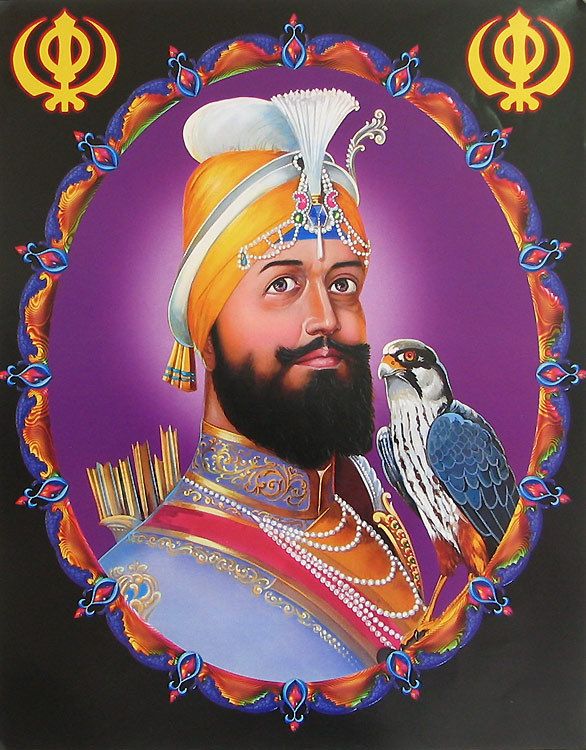
Guru Gobind Singh Ji is one of the most revered figures in Sikh history, known for his spiritual, military, and political leadership. His life was defined by his unwavering commitment to justice, equality, and the protection of religious freedom. Some of his most notable contributions to Sikhism include:
1. Creation of the Khalsa (1699):
In 1699, Guru Gobind Singh Ji established the Khalsa, a collective body of committed Sikhs who were initiated into a special order with the values of courage, discipline, and commitment to truth and justice. On Vaisakhi Day, Guru Gobind Singh Ji called upon Sikhs to be ready for sacrifice and initiated five men, known as the Panj Pyare (Five Beloved Ones), into the Khalsa by giving them Amrit (holy nectar), a ceremony that continues to be central to Sikh tradition today.
The creation of the Khalsa marked a turning point in Sikh history, as it emphasized the principles of equality, unity, and the rejection of oppression. Guru Gobind Singh Ji gave the Khalsa members the five Ks (Kakaars), symbols of their Sikh identity:
- Kesh (uncut hair)
- Kara (iron bracelet)
- Kanga (wooden comb)
- Kachera (cotton undergarments)
- Kirpan (sword)
These symbols represent a commitment to Sikh values such as discipline, equality, and defense of righteousness.
2. Spiritual Leadership:
Guru Gobind Singh Ji continued the spiritual work of his predecessors. He wrote and compiled various hymns and scriptures, most notably the Dasam Granth, a scripture containing a collection of his own writings, which include devotional hymns, prayers, and historical accounts. He was also deeply involved in spreading the message of Sikhism through his teachings, poetry, and written works.
3. Military Leadership and Defense of Faith:
Guru Gobind Singh Ji’s leadership extended beyond spiritual matters. During his time, the Mughal Empire, led by Emperor Aurangzeb, persecuted Sikhs, and many others were oppressed by the Mughal rulers. Guru Gobind Singh Ji took up arms to protect his people and defend religious freedom. He led many battles and successfully defended the Sikh community against forces trying to wipe them out. His military strategies, courage, and leadership inspired Sikhs to stand up for their rights and defend the weak.
4. The Concept of the Guru Granth Sahib as the Eternal Guru:
Before his death in 1708, Guru Gobind Singh Ji made a momentous decision that would shape the future of Sikhism. He declared that after him, the Guru Granth Sahib (the central scripture of Sikhism) would be the eternal Guru. This decision ended the line of human Gurus and affirmed the Guru Granth Sahib as the final and eternal spiritual guide for Sikhs. His last words were: “Guru Granth Ji, will be your Guru. Follow its teachings.”
5. Martyrdom and Sacrifice:
Guru Gobind Singh Ji’s life was filled with sacrifice and loss. His two sons, Sahibzada Ajit Singh and Sahibzada Jujhar Singh, fought valiantly and were martyred in battle. His younger sons, Sahibzada Zorawar Singh and Sahibzada Fateh Singh, were captured and bricked alive by the Mughal forces at a young age, showing the Guru’s commitment to his cause, despite the pain and suffering he faced.
Guru Gobind Singh Ji passed away on October 7, 1708, at the age of 41, in Nanded, Maharashtra. His legacy continues to live on, with his teachings and ideals still deeply influencing Sikhism today.
Key Teachings of Guru Gobind Singh Ji:
- Courage and fearlessness: He taught Sikhs to stand up for justice and fight against oppression.
- Equality: He stressed the importance of equality among all people, regardless of caste, creed, or gender.
- Self-reliance and discipline: He encouraged Sikhs to live disciplined lives, uphold righteousness, and be self-reliant.
- Service to humanity: Guru Gobind Singh Ji’s message was deeply rooted in the idea of helping others and serving humanity.
Guru Gobind Singh Ji’s life and teachings continue to inspire millions, and his impact on Sikhism, as well as on the world, remains profound.
Source : ChatGPT










 BoldVoices.in
Leave a comment